Abebe Shimeles – författare
2 058 kr
Skickas inom 3-6 vardagar
750 kr
Skickas inom 10-15 vardagar
2 269 kr
Skickas inom 10-15 vardagar
2 336 kr
Skickas inom 10-15 vardagar
756 kr
Skickas inom 10-15 vardagar
883 kr
Läs direkt efter köp
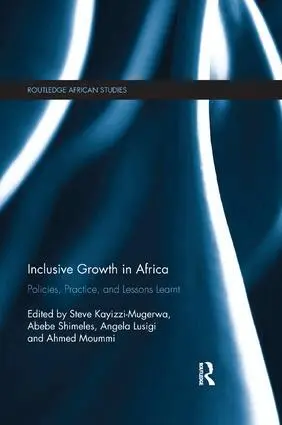
Inclusive Growth in Africa analyzes the concept of inclusion within the challenges facing Africa’s rapidly growing economies, where rising affluence for some has been accompanied almost everywhere with rising inequality.
Using a combination of political economy analyses, sector studies and econometric models, the contributors delve into a range of areas associated to the new realities on the continent. Topics covered include issues of disability, corruption, capital flight, and their implications for economic sustainability. There is also a discussion of the impact on development of dependence on externally determined prices for Africa’s natural resources. Other sector analyses look at agriculture and wind power, and the innovations required to make a difference for the poorer majority.
The book comprises of a rich array of essays on socio-economic inclusion in Africa by authors drawn from academia, African think tanks and international organizations. It would be of interest to scholars and students of many disciplines, including: Economics, Sociology, Development Studies, and African Studies.
883 kr
Läs direkt efter köp
Inclusive Growth in Africa analyzes the concept of inclusion within the challenges facing Africa’s rapidly growing economies, where rising affluence for some has been accompanied almost everywhere with rising inequality.
Using a combination of political economy analyses, sector studies and econometric models, the contributors delve into a range of areas associated to the new realities on the continent. Topics covered include issues of disability, corruption, capital flight, and their implications for economic sustainability. There is also a discussion of the impact on development of dependence on externally determined prices for Africa’s natural resources. Other sector analyses look at agriculture and wind power, and the innovations required to make a difference for the poorer majority.
The book comprises of a rich array of essays on socio-economic inclusion in Africa by authors drawn from academia, African think tanks and international organizations. It would be of interest to scholars and students of many disciplines, including: Economics, Sociology, Development Studies, and African Studies.
891 kr
Läs direkt efter köp
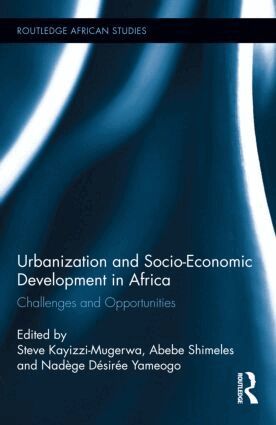
The main goal of this book is to put urbanization and its challenges squarely on Africa’s development agenda. Planned urbanization can improve living conditions for the majority, help in the expansion of the middle class, and create conditions for economic transformation. However, many African cities have developed haphazardly, resulting in the decline of public services, in slum proliferation, and increases in poverty. African cities thrive on activities characterized by easy entry and low productivity, generally referred to as the "informal sector". Indeed, today some urban dwellers are poorer than their cousins in the countryside. In spite of reform attempts, many governments have not been able to create an enabling environment, with adequate infrastructure and institutions to sustain markets for easy exchange and production. This study argues that with careful policies and planning, the situation can be changed. If the recent natural resource-led economic boom that we have seen in many African countries is used for structural reforms and urban renewal, African cities could become centers of economic opportunity. The challenge for African policymakers is to ensure that urban development is orderly and that the process is inclusive and emphasizes the protection of the environment, hence green growth.
891 kr
Läs direkt efter köp
The main goal of this book is to put urbanization and its challenges squarely on Africa’s development agenda. Planned urbanization can improve living conditions for the majority, help in the expansion of the middle class, and create conditions for economic transformation. However, many African cities have developed haphazardly, resulting in the decline of public services, in slum proliferation, and increases in poverty. African cities thrive on activities characterized by easy entry and low productivity, generally referred to as the "informal sector". Indeed, today some urban dwellers are poorer than their cousins in the countryside. In spite of reform attempts, many governments have not been able to create an enabling environment, with adequate infrastructure and institutions to sustain markets for easy exchange and production. This study argues that with careful policies and planning, the situation can be changed. If the recent natural resource-led economic boom that we have seen in many African countries is used for structural reforms and urban renewal, African cities could become centers of economic opportunity. The challenge for African policymakers is to ensure that urban development is orderly and that the process is inclusive and emphasizes the protection of the environment, hence green growth.
309 kr
Skickas inom 10-15 vardagar
546 kr
Skickas inom 10-15 vardagar
438 kr
Skickas inom 5-8 vardagar
309 kr
Skickas inom 10-15 vardagar