Abhay Kumar – författare
Visar alla böcker från författaren Abhay Kumar. Handla med fri frakt och snabb leverans.
9 produkter
9 produkter
Häftad, Engelska, 2025
1 677 kr
Skickas inom 10-15 vardagar
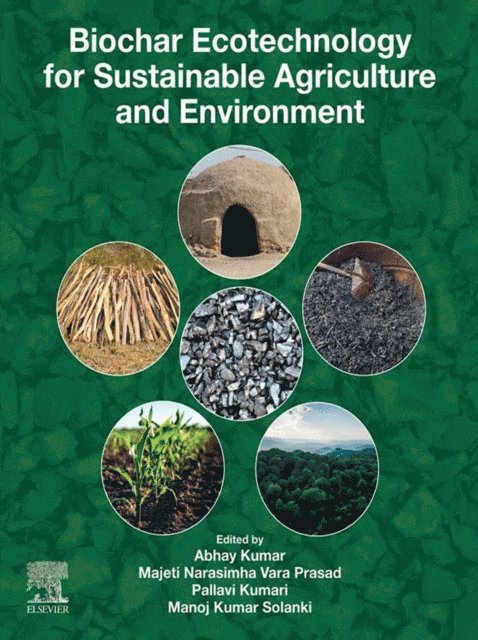
Biochar Ecotechnology for Sustainable Agriculture and Environment summarizes current accomplishments in biochar ecotechnologies for enhancing agricultural production, encouraging sustainable waste management, and fostering a circular bioeconomy by advancing the pyrolysis process at both large-scale industrial and small-scale-local levels. Chapters in the book synthesize recent breakthroughs in biochar agro-ecotechnologies for increasing agricultural productivity and promoting circular bioeconomy by advancing the pyrolysis process and add mechanisms involved in biochar-fertilizer mediated in-soil biogeochemical cycle and nutrients retention, availability and their losses, soil-microbial responses, emission of greenhouse gases, and plant responses.Finally, this book aims to increase research understanding of nanotechnological breakthroughs in the production of biochar-based slow-release fertilizers, including their Nano characteristics involved in increasing fertilizer usage efficiency and managing chemical losses, for sustainable agriculture and the environment.Describes the benefits of biochar in uplifting circular bioeconomy through sustainable waste management practicesDiscusses cutting-edge approaches for investigating biochar, plant, and environment interactions, including the use of biochar to improve soil fertility, biological functioning, and plant responsesSummarizes nanotechnological breakthroughs in the synthesis and qualities of producing biochar-based slow-release fertilizer via pre and post-pyrolysis changesProvides a grasp of the Nano characteristics of biochar that are engaged in boosting fertilizer usage efficiency and managing chemical losses
E-bok
Engelska, 20252 046 kr
Läs direkt efter köp
Biochar Ecotechnology for Sustainable Agriculture and Environment summarizes current accomplishments in biochar ecotechnologies for enhancing agricultural production, encouraging sustainable waste management, and fostering a circular bioeconomy by advancing the pyrolysis process at both large-scale industrial and small-scale-local levels. Chapters in the book synthesize recent breakthroughs in biochar agro-ecotechnologies for increasing agricultural productivity and promoting circular bioeconomy by advancing the pyrolysis process and add mechanisms involved in biochar-fertilizer mediated in-soil biogeochemical cycle and nutrients retention, availability and their losses, soil-microbial responses, emission of greenhouse gases, and plant responses.Finally, this book aims to increase research understanding of nanotechnological breakthroughs in the production of biochar-based slow-release fertilizers, including their Nano characteristics involved in increasing fertilizer usage efficiency and managing chemical losses, for sustainable agriculture and the environment.- Describes the benefits of biochar in uplifting circular bioeconomy through sustainable waste management practices- Discusses cutting-edge approaches for investigating biochar, plant, and environment interactions, including the use of biochar to improve soil fertility, biological functioning, and plant responses- Summarizes nanotechnological breakthroughs in the synthesis and qualities of producing biochar-based slow-release fertilizer via pre and post-pyrolysis changes- Provides a grasp of the Nano characteristics of biochar that are engaged in boosting fertilizer usage efficiency and managing chemical losses
Häftad, Hindi, 2021
195 kr
Skickas inom 5-8 vardagar
Häftad, Portugisiska, 2025
783 kr
Skickas inom 5-8 vardagar
Häftad, Polska, 2025
756 kr
Skickas inom 5-8 vardagar
E-bok
Engelska, 2015534 kr
Läs direkt efter köp
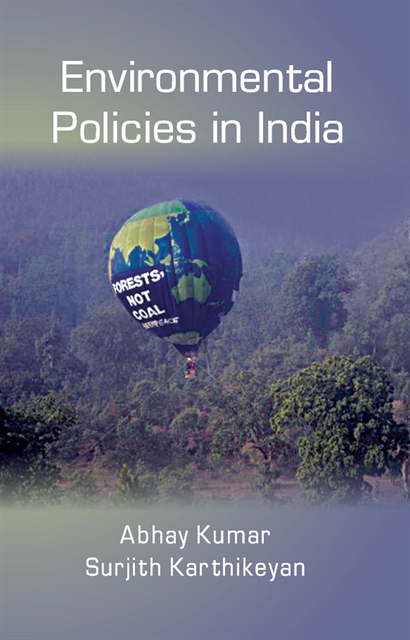
This book reviews the policies adopted towards protection of environment, abatement of pollution, green initiative legislation in India under the purview of several Ministries & other government bodies, and the basic approaches to Environmental Policy in general adopted in various Countries in the form of Eco-tax, Subsidies, Pollution Permits, Refundable Deposits for Pollution control, Allocation of Property Rights, Government Investment Programmes etc. It also concentrates on the theoretical explanation of Sustainable Development which includes economy-environment linkages focusing on Ministry of Environment, Forest and Climate Change''s initiatives towards Sustainable Development. The authors try to explain the feasibility of adopting Market Based Instruments (MBIs) such as ecological tax (eco tax) to regulate behaviour of individuals/firms towards environment and argues that under prevailing constitutional and legal framework in India, it can be imposed by the central government as part of Union budget (Finance Act) and also under the Environment (Protection) Act, 1986.
Häftad, Engelska, 2026
323 kr
Skickas
Häftad, Engelska, 2026
150 kr
Skickas inom 5-8 vardagar
Inbunden, Engelska, 2021
2 716 kr
Skickas inom 5-8 vardagar
The soils which possess characteristics that make them uneconomical for the cultivation of crops without adopting proper reclamation measures are known as problem soils. For the management of problematic soils, some general principles have to be considered for proper implementation of the reclamation measures. Some soils have serious physical and chemical limitations to cultivation. Physical limitations can be managed by irrigation, drainage, mulching, manuring, tillage, and soil conservation measures such as terracing, contouring, and cover crops, whichever is appropriate.Some chemicals are also added to the soil as an integral part of the reclamation program adopted to improve the saline, alkali and other soils.This book contains 19 chapters on Soil quality and health, Distribution of Waste land and problem soils in India and Jharkhand, Soil forming factors and Processes Reclamation and management of Saline and sodic soils, Acid soils and Acid Sulphate soils, Calcareous soils, Eroded and Compacted soils, Flooded soils, Polluted soils, Irrigation water-quality and standards, Efficient utilization of saline water in agriculture, Remote sensing and GIS in diagnosis and management of problem soils, Multipurpose tree species, Bio remediation through MPTs of soils, land capability land suitability classification, Problematic soils under different Agro-ecosystems, etc.