Abhik Ghosh – författare
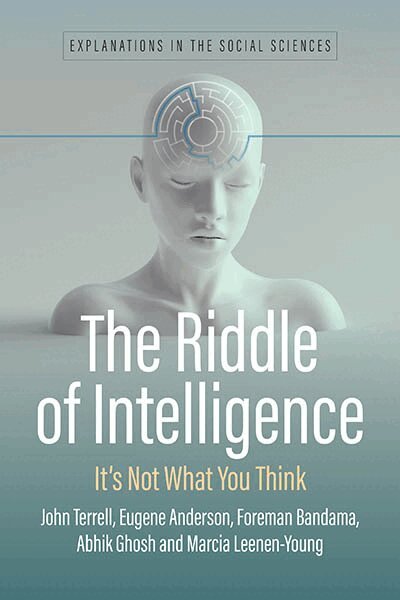
Riddle of Intelligence
It's Not What You Think
268 kr
Skickas
2 611 kr
Läs direkt efter köp
2 685 kr
Skickas inom 5-8 vardagar
2 499 kr
Skickas inom 10-15 vardagar
This is not a book on NO biology, nor about hemoglobin, nor about heme-based sensors per se. Of course, it covers all these topics and more, but above all, it aims at providing a truly multidisciplinary perspective of heme-diatomic interactions. The overarching goal is to build bridges among disciplines, to bring about a meeting of minds.
The contributors to this book hail from diverse university departments and disciplines - chemistry, biochemistry, molecular biology, microbiology, zoology, physics, medicine and surgery, bringing with them very different views of heme-diatomic interactions. The hope is that the juxtaposition of this diversity will lead to increased exchanges of ideas, approaches, and techniques across traditional disciplinary boundaries.
The authors represent a veritable Who's Who of heme protein research and include John Olson, Tom Spiro, Walter Zumft, F. Ann Walker, Teizo Kitagawa, W. Robert Scheidt, Pat Farmer, Marie-Alda Gilles-Gonzalez, and many other equally distinguished scientists.
Extremely distinguished list of authors Multidisciplinary character - equally suitable for chemists and biochemists Covers the hottest topics in heme protein research: sensors, NO biology, new roles of hemoglobin, etc.596 kr
Skickas inom 5-8 vardagar
2 522 kr
Läs direkt efter köp
2 522 kr
Läs direkt efter köp
664 kr
Läs direkt efter köp
Leading chemists share what they do, how they do it, and why they love it.
“Letters to a young …” has been a much-loved way for professionals in a field to convey their enthusiasm and the realities of what they do to the next generation. Now, Letters to a Young Chemist does the same for the chemical sciences. Written with a humorous touch by some of today’s leading chemists, this book presents missives to “Angela,” a fictional undergraduate considering a career in chemistry. The different chapters offer a mix of fundamental principles, contemporary issues, and challenges for the future. Marye Anne Fox, Chancellor of the University of California San Diego, talks about learning to do research and modern physical organic chemistry. Brothers Jonathan and Daniel Sessler explain the chemistry of anesthetics that make modern surgery possible while Elizabeth Nolan talks about biological imaging. Terry Collins talks about green chemistry, a more sustainable way of doing chemistry, while several authors including Carl Wamser, Harry Gray, John Magyar, and Penny Brothers discuss the crucial contributions that chemists can make in meeting global energy needs.
Letters to a Young Chemist gives students and professionals alike a unique window into the real world of chemistry. Entertaining, informative, and full of honest and inspiring advice, it serves as a helpful guide throughout your education and career.
“The different chapters describe both the wonders of the molecular world and the practical benefits afforded by chemistry ... and if any girl out there thinks that chemistry is a man’s world, this book should be a good antidote.” —Marye Anne Fox, Chancellor of the University of California, San Diego, and winner of the 2009 US National Medal of Science
“Letters to a Young Chemist offers significant ammunition for motivating young people to consider chemistry as a career. ... This book should also be required reading for all faculty members who teach chemistry in high schools, colleges, and universities.” —Stephen J. Lippard, Arthur Amos Noyes Professor of Chemistry, Massachusetts Institute of Technology, and winner of the 2006 US National Medal of Science
664 kr
Läs direkt efter köp
Leading chemists share what they do, how they do it, and why they love it.
“Letters to a young …” has been a much-loved way for professionals in a field to convey their enthusiasm and the realities of what they do to the next generation. Now, Letters to a Young Chemist does the same for the chemical sciences. Written with a humorous touch by some of today’s leading chemists, this book presents missives to “Angela,” a fictional undergraduate considering a career in chemistry. The different chapters offer a mix of fundamental principles, contemporary issues, and challenges for the future. Marye Anne Fox, Chancellor of the University of California San Diego, talks about learning to do research and modern physical organic chemistry. Brothers Jonathan and Daniel Sessler explain the chemistry of anesthetics that make modern surgery possible while Elizabeth Nolan talks about biological imaging. Terry Collins talks about green chemistry, a more sustainable way of doing chemistry, while several authors including Carl Wamser, Harry Gray, John Magyar, and Penny Brothers discuss the crucial contributions that chemists can make in meeting global energy needs.
Letters to a Young Chemist gives students and professionals alike a unique window into the real world of chemistry. Entertaining, informative, and full of honest and inspiring advice, it serves as a helpful guide throughout your education and career.
“The different chapters describe both the wonders of the molecular world and the practical benefits afforded by chemistry ... and if any girl out there thinks that chemistry is a man’s world, this book should be a good antidote.” —Marye Anne Fox, Chancellor of the University of California, San Diego, and winner of the 2009 US National Medal of Science
“Letters to a Young Chemist offers significant ammunition for motivating young people to consider chemistry as a career. ... This book should also be required reading for all faculty members who teach chemistry in high schools, colleges, and universities.” —Stephen J. Lippard, Arthur Amos Noyes Professor of Chemistry, Massachusetts Institute of Technology, and winner of the 2006 US National Medal of Science
857 kr
Skickas inom 5-8 vardagar
996 kr
Läs direkt efter köp
Involved as it is with 95% of the periodic table, inorganic chemistry is one of the foundational subjects of scientific study. Inorganic catalysts are used in crucial industrial processes and the field, to a significant extent, also forms the basis of nanotechnology. Unfortunately, the subject is not a popular one for undergraduates. This book aims to take a step to change this state of affairs by presenting a mechanistic, logical introduction to the subject.
Organic teaching places heavy emphasis on reaction mechanisms - "arrow-pushing" - and the authors of this book have found that a mechanistic approach works just as well for elementary inorganic chemistry. As opposed to listening to formal lectures or learning the material by heart, by teaching students to recognize common inorganic species as electrophiles and nucleophiles, coupled with organic-style arrow-pushing, this book serves as a gentle and stimulating introduction to inorganic chemistry, providing students with the knowledge and opportunity to solve inorganic reaction mechanisms. • The first book to apply the arrow-pushing method to inorganic chemistry teaching • With the reaction mechanisms approach ("arrow-pushing"), students will no longer have to rely on memorization as a device for learning this subject, but will instead have a logical foundation for this area of study • Teaches students to recognize common inorganic species as electrophiles and nucleophiles, coupled with organic-style arrow-pushing • Provides a degree of integration with what students learn in organic chemistry, facilitating learning of this subject • Serves as an invaluable companion to any introductory inorganic chemistry textbook
996 kr
Läs direkt efter köp
Involved as it is with 95% of the periodic table, inorganic chemistry is one of the foundational subjects of scientific study. Inorganic catalysts are used in crucial industrial processes and the field, to a significant extent, also forms the basis of nanotechnology. Unfortunately, the subject is not a popular one for undergraduates. This book aims to take a step to change this state of affairs by presenting a mechanistic, logical introduction to the subject.
Organic teaching places heavy emphasis on reaction mechanisms - "arrow-pushing" - and the authors of this book have found that a mechanistic approach works just as well for elementary inorganic chemistry. As opposed to listening to formal lectures or learning the material by heart, by teaching students to recognize common inorganic species as electrophiles and nucleophiles, coupled with organic-style arrow-pushing, this book serves as a gentle and stimulating introduction to inorganic chemistry, providing students with the knowledge and opportunity to solve inorganic reaction mechanisms. • The first book to apply the arrow-pushing method to inorganic chemistry teaching • With the reaction mechanisms approach ("arrow-pushing"), students will no longer have to rely on memorization as a device for learning this subject, but will instead have a logical foundation for this area of study • Teaches students to recognize common inorganic species as electrophiles and nucleophiles, coupled with organic-style arrow-pushing • Provides a degree of integration with what students learn in organic chemistry, facilitating learning of this subject • Serves as an invaluable companion to any introductory inorganic chemistry textbook
1 735 kr
Skickas inom 3-6 vardagar
994 kr
Skickas inom 5-8 vardagar