ABN Chad A. Noggle, PhD – författare
1 634 kr
Läs direkt efter köp
"This book, in both its direct and indirect inferences, points to the need for disease-specific neurocognitive methods in broadly occurring CNS and non-CNS cancers... All in all, this is a beautifully conceptualized book that should be on the bookshelves of many specialists who work in the very challenging field of Oncology."--Carol L. Armstrong, PhD, Children''s Hospital of Pennsylvania, Archives of Clinical Neuropsychology
Interest in the neurocognitive and sensory impairments resulting from many cancers and their interventions has grown considerably over the past decades as an important aspect of quality of life issues for cancer patients and survivors. The Neuropsychology of Cancer and Oncology features current findings on the neuropsychological effects of these cancers and their treatments along with the most promising neuropsychological and behavioral health interventions available to mitigate these deficits. This edited volume, part of the Contemporary Neuropsychology series, bridges the gap between the knowledge of neuropsychologists, who are grounded in the biological and physiological bases of cognition and behavior but not in pathology, and that of oncologists, who often lack expertise in the neuropsychological aspects of cancer.
This text first addresses the biological components and medical care of these cancers, and issues relating to bioimaging. It then discusses the neurological impact of these cancers as they affect different functions, such as memory, learning, and sensory-motor ability, as well as discusses the effects of childhood cancers on neurological development. State-of-the-art neuropsychological and behavioral health interventions are considered, including neuropsychological/cognitive rehabilitation and habituation, pharmacological interventions, and collaborative medical practices. This text is a unique and timely resource for clinical neuropsychologists, clinical psychologists, neurologists, oncologists, oncology nurses, and neurorehabilitation professionals.
Key Features:Bridges the gap of knowledge between neuropsychologists and oncologistsExplores the most current research on the neuropsychological effects of various cancers and their treatmentsProvides state-of-the-art information on promising neuropsychological and behavioralñhealth interventions for impairments created by cancers and their treatmentsRepresents a collaboration between some of the foremost scholars and practitioners in neuropsychology and oncology1 634 kr
Läs direkt efter köp
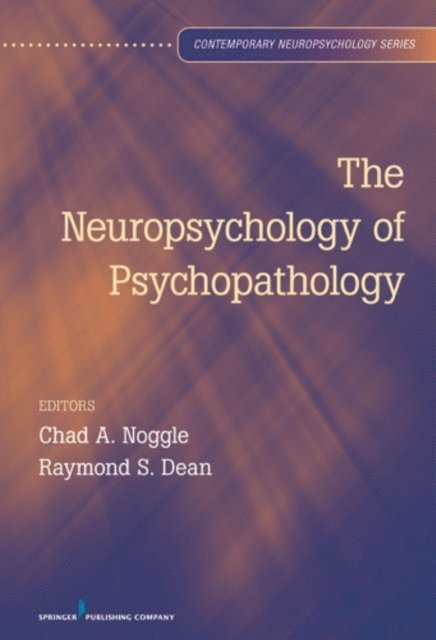
This clinical reference book presents state-of-the-science knowledge about the neurobiology and genetics of the major mental disorders and how this corresponds with their psychiatric features and neuropsychological traits. The text demonstrates how the application of neuropsychology to these disorders provides a more comprehensive foundation for greater accuracy in assessment, diagnosis, and treatment. The book focuses on the neuropathological and pathophysiological basis of the various symptoms, emphasizing the biological basis of each disorder. This approach stresses the importance of looking at the other functional impacts of these manifestations (for example, cognitive deficits secondary to depression).
The text compares adult versus child presentation of psychiatric disorders and covers the major forms of psychopathology including ADHD; Learning Disabilities; Pervasive Developmental Disorders; Mood, Anxiety, Personality, and Schizophrenic Disorders; Cortical and Subcortical Dementias; and Delirium. The book is written for clinical professionals to increase diagnostic accuracy and intervention success and to provide a way to approach psychopathologies as disorders of the neurological system.
Key Features:Provides state-of-the-science knowledge about the application of neuropsychological practice to the major forms of psychopathologyExamines neurological and neuropsychological features of the major forms of psychopathologyDemonstrates how the application of neurobiology and genetics to psychiatric disorders can increase accuracy of assessment, diagnosis, and treatmentConsiders adult versus child presentation of psychiatric disorders1 569 kr
Läs direkt efter köp
"Neuropsychological Rehabilitation provides useful introductory material and backgroundinformation on various disorders, assessments, and rehabilitative interventions for adult andgeriatric populations...This book is essential for psychologists or clinical neuropsychologists who have a stronginterest in understanding the current medical aspects of neuropsychological rehabilitation."--PsycCRITIQUES
This volume disseminates knowledge about the most advanced practices and techniques in the rehabilitation of neuropsychological deficits, covering both specific neuropsychological domains and approaches in neurorehabilitation. It adheres to the philosophy that it is not enough to identify a deficit or diagnose a disease unless doing so helps to direct rehabilitation efforts to improve function. Intended to advance clinical skills, the book goes beyond surface diagnostic practice to foster rehabilitative efforts in response to residual deficits and disease.
The volume begins by addressing the foundations of neuropsychology in rehabilitation and discussing, in depth, domain-specific rehabilitation practices, with a focus on functioning. This is followed by a discussion of supplemental applications and practices that go beyond function-specific methodology including neuroimaging and pharmacological agents. Also covered is the role of system/environmental manipulation and transitioning strategies. The final section attends to those presentations/groupings most commonly seen in rehabilitation practice for which there is no prototypical form.
Key Features:Presents in depth the most advanced clinical applications for neuropsychological rehabilitationCovers neuropsychological rehabilitation in terms of specific cognitive domains (attention, language, memory) and approaches to and practices in neurorehabilitation (neuroimaging, vocational rehabilitation, pharmacological rehabilitation)Written by the foremost scholars in the field1 454 kr
Läs direkt efter köp
"This book provides an overview of the cognitive and behavioral profiles of the cortical dementias in a readable and clinically relevant manner. Its emphasis on disease entities primarily affecting cortical structures allows for a more comprehensive description of the latest insights into the pathogenesis and assessment of a number of different disease processes... Weighted Numerical Score: 98 - 5 Stars!"
Melissa Jones, MD (University of Illinois at Chicago College of Medicine)Doody''s Medical Reviews
The Neuropsychology of Cortical Dementias addresses in depth the neuropsychological impact and features of the full range of cortical dementias. It examines the differential neuropathological and pathophysiological bases of these dementias and emphasizes their behavioral and cognitive aspects in assessment, diagnosis, and treatment. The book also presents the most advanced techniques and strategies for disease-specific treatment. Important legal/ethical issues and the role of caregivers in treating dementia patients are also covered.
Featuring contributions from such diverse disciplines as neuropsychology, neurology, psychiatry, and clinical psychology, this volume provides a broad interdisciplinary perspective for practicing clinical neuropsychologists, neurologists, psychiatrists, gerontologists, and psychologists who work with patients with dementia.
Key Features:
Includes comprehensive, clinically focused coverage of all major cortical dementiasCovers neuroanatomy, assessment, diagnosis, treatment, and management of dementia patients, as well as legal and ethical issuesDiscusses assessment and diagnosis from the perspectives of neuroimaging and cognitive and behavioral symptomsDiscusses a range of interventions (pharmacological, cognitive behavioral, etc.) and management issues related to dementia treatmentInformed by contributions from such diverse disciplines as neuropsychology, neurology, psychiatry, and clinical psychology2 859 kr
Läs direkt efter köp
"I am pleased to include this text in my library, and I am confident that it will serve as an excellent resource for years to come."--PsycCRITIQUES
This book serves as an A-Z reference that addresses the neuropsychological aspects of 300 neurological, neuropsychiatric, and neuromedical disorders. Each entry follows a 5 section structure that will cover (1) essential features of the disorder (2) physiological basis of the disorder (3) neuropsychological and other clinical presentation (4) assessment and diagnostic practices (5) evidence-based treatments and interventions. This book is written for clinical professionals and students in training to aid in clinical awareness, diagnostic accuracy, and intervention successfulness.
The text goes beyond the emotional and behavioral aspects of each disorder and views the broader impacts of the symptoms. This approach emphasizes the importance of looking at the other functional impacts of these manifestations (e.g. cognitive deficits secondary to depression, orthodopaedic ambulation issues). The emphasis on neuropsychological sequelae, physiological basis, and means of diagnosing and treating of 300 conditions across the lifespan make this the most comprehensive resource available to professionals in and around neuropsychology, neuropsychiatry and the behavioral neurosciences.
Key Features:Presents 300 highly-structured entries providing disorder features, pathology and physiology, clinical representation, assessment and diagnosis, and evidence-based treatments and interventions Covers neurological, neuropsychiatric, and neuromedical disorders across the lifespan (pediatric, adult, and geriatric populations)Includes interventions and methods of treatment for the outcomes patients may experience