Abraham Kaplan - Böcker
Visar alla böcker från författaren Abraham Kaplan. Handla med fri frakt och snabb leverans.
10 produkter
10 produkter
2 289 kr
Skickas inom 10-15 vardagar
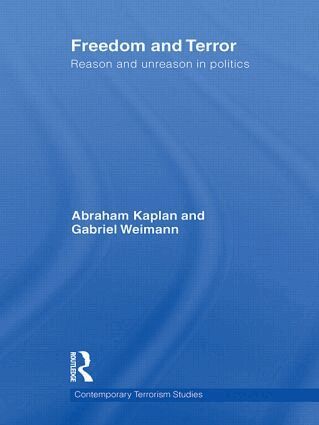
This book examines reason and unreason in the legal and political responses to terrorism.Terrorism is often perceived as sheer madness, unreasonable use of extreme violence and senseless, futile political action. These assertions are challenged by this book. Combining ‘traditional’ thought (by Kaplan) on reason and unreason in terrorism with empirical explorations of post-modern terrorism and its use of communication platforms (by Weimann) the work uses interdisciplinary and cross disciplinary dimensions to provide a multidimensional picture of critical issues in current politics and a deeper examination of their implications than previously available.The book looks at various aspects of modern politics, from terrorism to protest, from decision-making to political discourse, applying the perspective of philosophical thought. To do so, political issues and actions are examined by using concepts such as reason, emotions, madness, magic, morality, absolutism, extremism, psychopathology, rationality and others. The analysis is rooted in theories and concepts derived from history, philosophy, religion, art, sociology, psychology, and political science.This book, which was mostly written by the late Abraham Kaplan, an American philosopher, and edited and updated by Gabriel Weimann, will be of much interest to students of political violence/terrorism, philosophy, war and conflict studies and political science in general.

698 kr
Skickas inom 10-15 vardagar
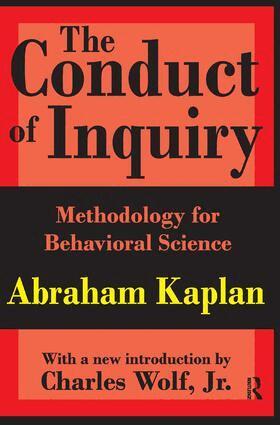
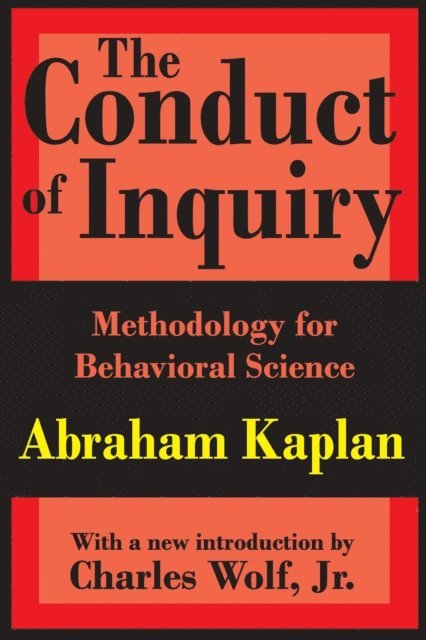
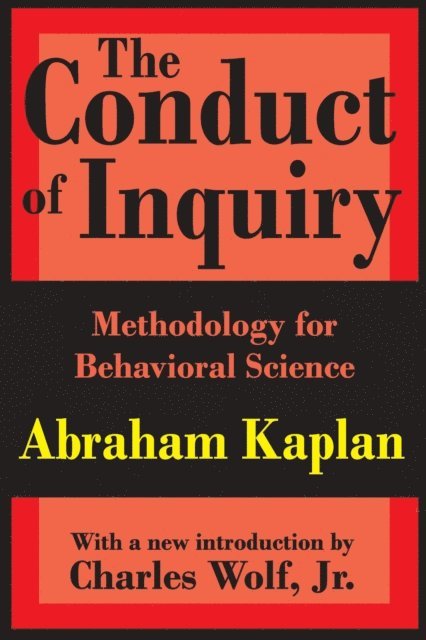
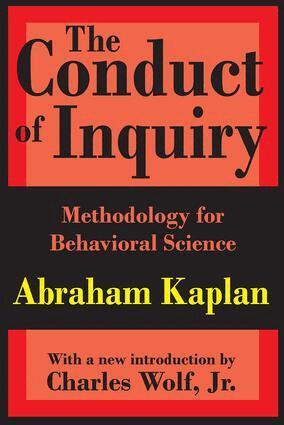
In arguably the finest text ever written in the philosophy of social science, Abraham Kaplan emphasizes what unites the behavioral sciences more than what distinguishes them from one another. Kaplan avoids the bitter disputes among people doing methodology, claiming instead that what is important are those qualities intrinsic to the overall aspirations of the social sciences. He deals with special problems of various disciplines only so far as may be helpful in clarifying the general method of inquiry.The Conduct of Inquiry is a systematic, rounded, and wide-ranging inquiry into behavioral science. Kaplan is guided by the experience of sciences with longer histories, but he is bound neither to their problems nor to their solutions. Instead, he addresses the methodology of behavioral science in the broad sense of both method and science. The work is not a formal exercise in the philosophy of science but rather a critical and constructive assessment of the developing standards and strategies of contemporary social inquiry. He emphasizes the tasks, achievements, limitations, and dilemmas of the newer disciplines.Philosophers of science usually choose to write about the most fully developed sciences because problems are clearer there. The result is ordinarily of little benefit to the behavioral scientist, whose task is clarification of method; here the precedents and analogies of physical science are obscure or inappropriate. The Conduct of Inquiry goes a long way in drawing upon the strengths of social research insights without simplifying the common concerns of the scientific enterprise as a whole. As Leonard Broom noted when the book initially appeared: "Kaplan fills a gap and does so with admirable clarity and often engaging wit. It lacks pomposity, pedantry, and pretension, and it is bound to make an impact on the teaching of and, with luck, research in the behavioral sciences."
747 kr
Skickas inom 10-15 vardagar
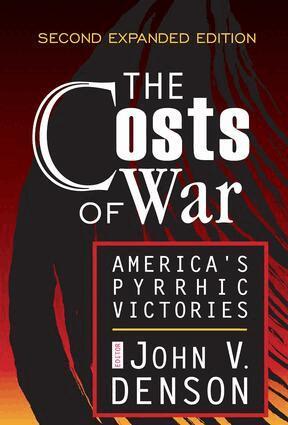
The greatest accomplishment of Western civilization is arguably the achievement of individual liberty through limits on the power of the state. In the war-torn twentieth century, we rarely hear that one of the main costs of armed conflict is long-term loss of liberty to winners and losers alike. Beyond the obvious and direct costs of dead and wounded soldiers, there is the lifetime struggle of veterans to live with their nightmares and their injuries; the hidden economic costs of inflation, debts, and taxes; and more generally the damages caused to our culture, our morality, and to civilization at large. The new edition is now available in paperback, with a number of new essays. It represents a large-scale collective effort to pierce the veils of myth and propaganda to reveal the true costs of war, above all, the cost to liberty.Central to this volume are the views of Ludwig von Mises on war and foreign policy. Mises argued that war, along with colonialism and imperialism, is the greatest enemy of freedom and prosperity, and that peace throughout the world cannot be achieved until the central governments of the major nations become limited in scope and power. In the spirit of these theorems by Mises, the contributors to this volume consider the costs of war generally and assess specific corrosive effects of major American wars since the Revolution. The first section includes chapters on the theoretical and institutional dimensions of the relationship between war and society, including conscription, infringements on freedom, the military as an engine of social change, war and literature, and the right of citizens to bear arms. The second group includes reconsiderations of Lincoln and Churchill, an analysis of the anti-interventionist idea in American politics, a discussion of the meaning of the "just war," an assessment of how World War I changed the course of Western civilization, and finally two eyewitness accounts of the true horrors of actual combat by veterans of World War II. The Costs of War is unique in its combination of historical scope and timeliness for current debates about foreign policy and military intervention. It will be of interest to historians, political scientists, economists, and sociologists.
2 224 kr
Skickas inom 10-15 vardagar
In arguably the finest text ever written in the philosophy of social science, Abraham Kaplan emphasizes what unites the behavioral sciences more than what distinguishes them from one another. Kaplan avoids the bitter disputes among people doing methodology, claiming instead that what is important are those qualities intrinsic to the overall aspirations of the social sciences. He deals with special problems of various disciplines only so far as may be helpful in clarifying the general method of inquiry.The Conduct of Inquiry is a systematic, rounded, and wide-ranging inquiry into behavioral science. Kaplan is guided by the experience of sciences with longer histories, but he is bound neither to their problems nor to their solutions. Instead, he addresses the methodology of behavioral science in the broad sense of both method and science. The work is not a formal exercise in the philosophy of science but rather a critical and constructive assessment of the developing standards and strategies of contemporary social inquiry. He emphasizes the tasks, achievements, limitations, and dilemmas of the newer disciplines.Philosophers of science usually choose to write about the most fully developed sciences because problems are clearer there. The result is ordinarily of little benefit to the behavioral scientist, whose task is clarification of method; here the precedents and analogies of physical science are obscure or inappropriate. The Conduct of Inquiry goes a long way in drawing upon the strengths of social research insights without simplifying the common concerns of the scientific enterprise as a whole. As Leonard Broom noted when the book initially appeared: "Kaplan fills a gap and does so with admirable clarity and often engaging wit. It lacks pomposity, pedantry, and pretension, and it is bound to make an impact on the teaching of and, with luck, research in the behavioral sciences."
2 357 kr
Skickas inom 10-15 vardagar
The greatest accomplishment of Western civilization is arguably the achievement of individual liberty through limits on the power of the state. In the war-torn twentieth century, we rarely hear that one of the main costs of armed conflict is long-term loss of liberty to winners and losers alike. Beyond the obvious and direct costs of dead and wounded soldiers, there is the lifetime struggle of veterans to live with their nightmares and their injuries; the hidden economic costs of inflation, debts, and taxes; and more generally the damages caused to our culture, our morality, and to civilization at large. The new edition is now available in paperback, with a number of new essays. It represents a large-scale collective effort to pierce the veils of myth and propaganda to reveal the true costs of war, above all, the cost to liberty.Central to this volume are the views of Ludwig von Mises on war and foreign policy. Mises argued that war, along with colonialism and imperialism, is the greatest enemy of freedom and prosperity, and that peace throughout the world cannot be achieved until the central governments of the major nations become limited in scope and power. In the spirit of these theorems by Mises, the contributors to this volume consider the costs of war generally and assess specific corrosive effects of major American wars since the Revolution. The first section includes chapters on the theoretical and institutional dimensions of the relationship between war and society, including conscription, infringements on freedom, the military as an engine of social change, war and literature, and the right of citizens to bear arms. The second group includes reconsiderations of Lincoln and Churchill, an analysis of the anti-interventionist idea in American politics, a discussion of the meaning of the "just war," an assessment of how World War I changed the course of Western civilization, and finally two eyewitness accounts of the true horrors of actual combat by veterans of World War II. The Costs of War is unique in its combination of historical scope and timeliness for current debates about foreign policy and military intervention. It will be of interest to historians, political scientists, economists, and sociologists.
2 289 kr
Skickas inom 10-15 vardagar
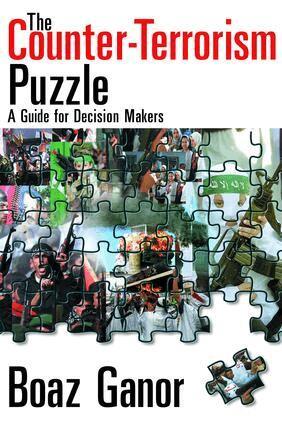
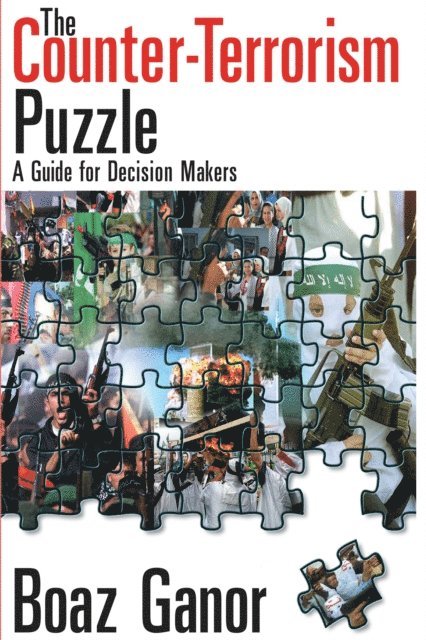
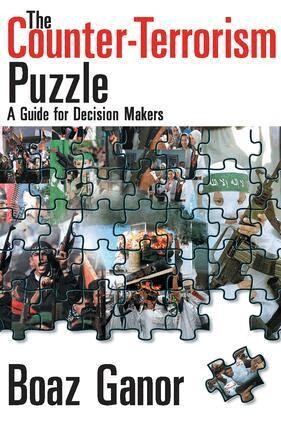
The expansion and escalation of global terrorism has left populations across the world and decision-makers responsible for contending with it unprepared. This book, now in paperback, is the first attempt of its kind to create a manual of counter-terrorism measures on all the relevant operational levels. The author's main purpose is to give decision-makers the tools to make rational and effective decisions in both preventing and countering terrorism.The need to contend with terrorism can be found in almost every sphere of life: security, prevention and suppression of terrorism, legal and ethical dilemmas regarding democratic issues, such as the individual's human rights, intelligence interrogations, the right of the public to know, as well as coping with social, psychological, and media-related issues.
725 kr
Skickas inom 10-15 vardagar
This book examines reason and unreason in the legal and political responses to terrorism.Terrorism is often perceived as sheer madness, unreasonable use of extreme violence and senseless, futile political action. These assertions are challenged by this book. Combining ‘traditional’ thought (by Kaplan) on reason and unreason in terrorism with empirical explorations of post-modern terrorism and its use of communication platforms (by Weimann) the work uses interdisciplinary and cross disciplinary dimensions to provide a multidimensional picture of critical issues in current politics and a deeper examination of their implications than previously available.The book looks at various aspects of modern politics, from terrorism to protest, from decision-making to political discourse, applying the perspective of philosophical thought. To do so, political issues and actions are examined by using concepts such as reason, emotions, madness, magic, morality, absolutism, extremism, psychopathology, rationality and others. The analysis is rooted in theories and concepts derived from history, philosophy, religion, art, sociology, psychology, and political science.This book, which was mostly written by the late Abraham Kaplan, an American philosopher, and edited and updated by Gabriel Weimann, will be of much interest to students of political violence/terrorism, philosophy, war and conflict studies and political science in general.
671 kr
Skickas inom 10-15 vardagar
The expansion and escalation of global terrorism has left populations across the world and decision-makers responsible for contending with it unprepared. This book, now in paperback, is the first attempt of its kind to create a manual of counter-terrorism measures on all the relevant operational levels. The author's main purpose is to give decision-makers the tools to make rational and effective decisions in both preventing and countering terrorism.The need to contend with terrorism can be found in almost every sphere of life: security, prevention and suppression of terrorism, legal and ethical dilemmas regarding democratic issues, such as the individual's human rights, intelligence interrogations, the right of the public to know, as well as coping with social, psychological, and media-related issues.
Splendid Encounters: Memoirs of Collaborations, Interactions, and Conversations with Many of the Most Celebrated Musicians of the Twentieth Century
Häftad, Engelska, 2009
180 kr
Skickas inom 5-8 vardagar
Splendid Encounters
Memoirs of Collaborations, Interactions, and Conversations with Many of the Most Celebrated Musicians of the Twentieth
Inbunden, Engelska, 2009
292 kr
Skickas inom 5-8 vardagar