Abraham Wagner – författare
Visar alla böcker från författaren Abraham Wagner. Handla med fri frakt och snabb leverans.
7 produkter
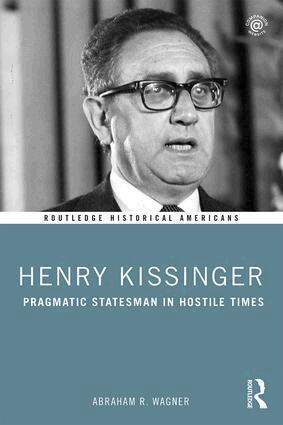
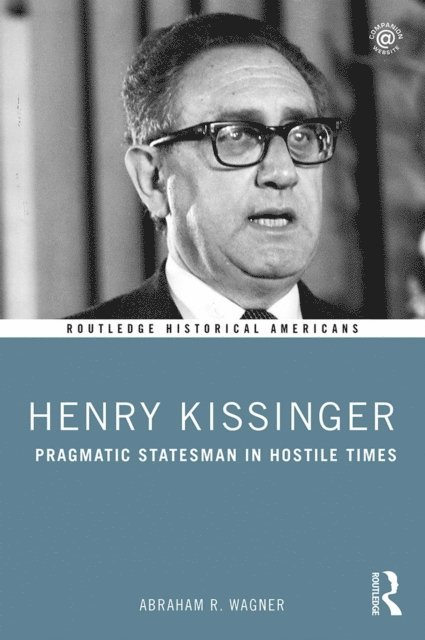
Henry Kissinger
Pragmatic Statesman in Hostile Times
Häftad, 2019
667 kr
Lägg i varukorg
Henry Kissinger: Pragmatic Statesman in Hostile Times explores the influence of statesman Henry Kissinger in American foreign relations and national security during 1969 to 1977.Henry Kissinger arrived in the U.S. as a young Jewish refugee and went on to serve as National Security Advisor and …
Lessons Of Modern War
Volume I: The Arabisraeli Conflicts, 19731989
Av Anthony H Cordesman, Abraham Wagner
Häftad, 2024
648 kr
Lägg i varukorg
This volume, the first in a series of three, covers the lessons of the 1973-1989 Arab-Israeli arms race and of the conflicts of 1973 and 1982. It draws on interviews with Arab and Israeli sources and reveals that if truth is the first casualty of war, then history is the first casualty of peace.
Henry Kissinger
Pragmatic Statesman in Hostile Times
Inbunden, 2019
2586 kr
Lägg i varukorg
Henry Kissinger: Pragmatic Statesman in Hostile Times explores the influence of statesman Henry Kissinger in American foreign relations and national security during 1969 to 1977.Henry Kissinger arrived in the U.S. as a young Jewish refugee and went on to serve as National Security Advisor and …
Lessons Of Modern War
Volume I: The Arabisraeli Conflicts, 19731989
Av Abraham Wagner, Anthony H Cordesman
E-bok, 2020
785 kr
Lägg i varukorg
This volume, the first in a series of three, covers the lessons of the 1973-1989 Arab-Israeli arms race and of the conflicts of 1973 and 1982. It draws on interviews with Arab and Israeli sources and reveals that if truth is the first casualty of war, then history is the first casualty of peace.
Lessons Of Modern War
Volume I: The Arabisraeli Conflicts, 19731989
Av Abraham Wagner, Anthony H Cordesman
E-bok, 2020
785 kr
Lägg i varukorg
This volume, the first in a series of three, covers the lessons of the 1973-1989 Arab-Israeli arms race and of the conflicts of 1973 and 1982. It draws on interviews with Arab and Israeli sources and reveals that if truth is the first casualty of war, then history is the first casualty of peace.
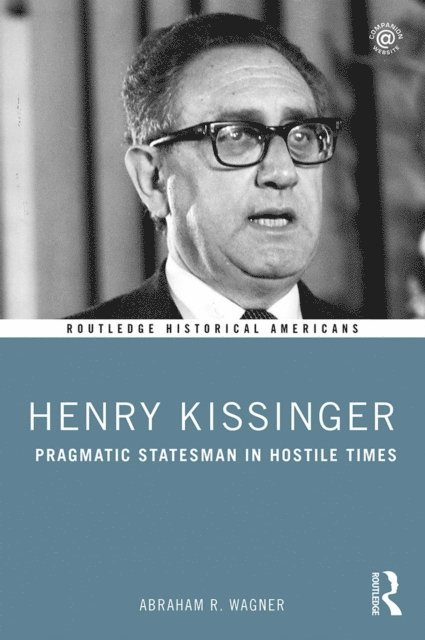
Henry Kissinger
Pragmatic Statesman in Hostile Times
E-bok, 2019
785 kr
Lägg i varukorg
Henry Kissinger: Pragmatic Statesman in Hostile Times explores the influence of statesman Henry Kissinger in American foreign relations and national security during 1969 to 1977. Henry Kissinger arrived in the U.S. as a young Jewish refugee and went on to serve as National Security Advisor and …
Henry Kissinger
Pragmatic Statesman in Hostile Times
E-bok, 2019
785 kr
Lägg i varukorg
Henry Kissinger: Pragmatic Statesman in Hostile Times explores the influence of statesman Henry Kissinger in American foreign relations and national security during 1969 to 1977. Henry Kissinger arrived in the U.S. as a young Jewish refugee and went on to serve as National Security Advisor and …