Adah Sachs – författare
Visar alla böcker från författaren Adah Sachs. Handla med fri frakt och snabb leverans.
9 produkter
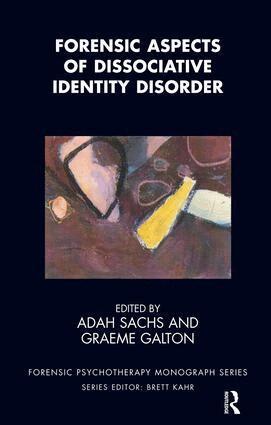
Forensic Aspects of Dissociative Identity Disorder
Inbunden, 2019
2433 kr
Lägg i varukorg
This ground-breaking book examines the role of crime in the lives of people with Dissociative Identity Disorder, formerly known as Multiple Personality Disorder, a condition which appears to be caused by prolonged trauma in infancy and childhood. This trauma may be linked with crimes committed …
Forensic Aspects of Dissociative Identity Disorder
E-bok, 2018
655 kr
Lägg i varukorg
This ground-breaking book examines the role of crime in the lives of people with Dissociative Identity Disorder, formerly known as Multiple Personality Disorder, a condition which appears to be caused by prolonged trauma in infancy and childhood. This trauma may be linked with crimes committed …
Forensic Aspects of Dissociative Identity Disorder
E-bok, 2018
669 kr
Lägg i varukorg
This ground-breaking book examines the role of crime in the lives of people with Dissociative Identity Disorder, formerly known as Multiple Personality Disorder, a condition which appears to be caused by prolonged trauma in infancy and childhood. This trauma may be linked with crimes committed …
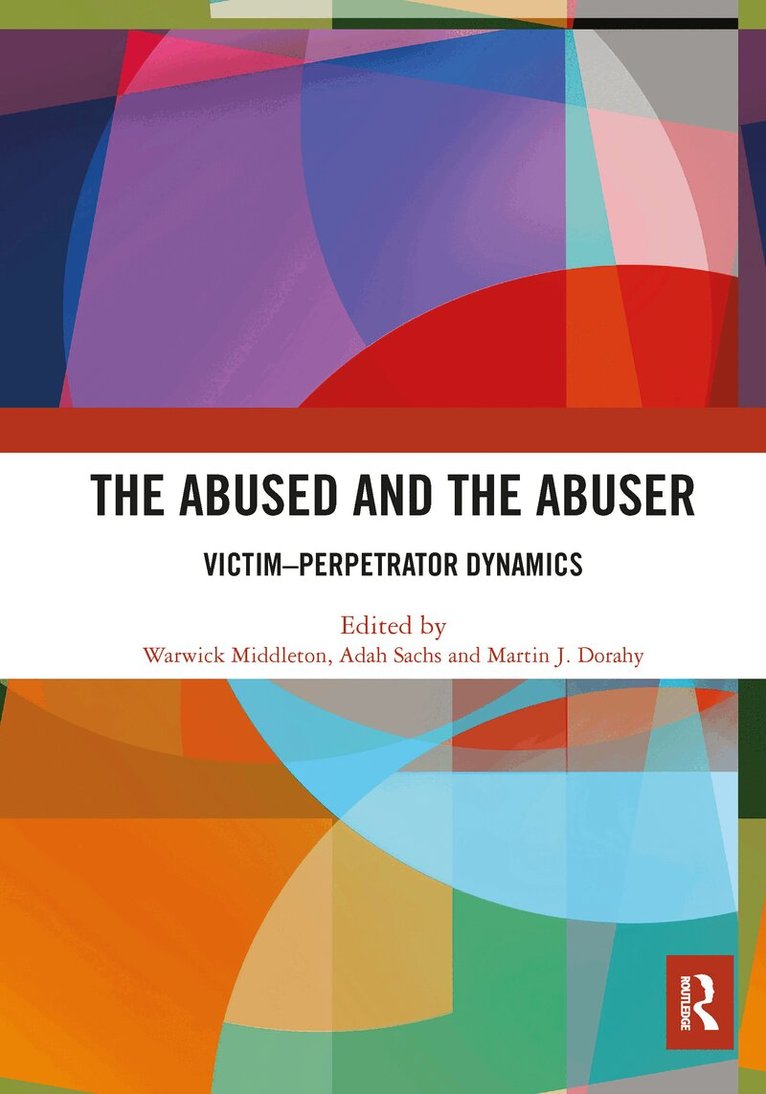
Abused and the Abuser
Victim–Perpetrator Dynamics
Av Warwick Middleton, Adah Sachs m. fl.
Inbunden, 2018
2504 kr
Lägg i varukorg
Severe abuse often occurs in settings where the grouping, whether based around a family or a community organisation or institution, outwardly appears to be very respectable. The nature of attachment dynamics allied with threat, discrediting, the manipulation of the victim's dissociative defences, …
Abused and the Abuser
Victim–Perpetrator Dynamics
Av Warwick Middleton, Adah Sachs m. fl.
Häftad, 2021
646 kr
Lägg i varukorg
Severe abuse often occurs in settings where the grouping, whether based around a family or a community organisation or institution, outwardly appears to be very respectable. The nature of attachment dynamics allied with threat, discrediting, the manipulation of the victim's dissociative defences, …
Abused and the Abuser
Victim–Perpetrator Dynamics
Av Martin J. Dorahy, Adah Sachs m. fl.
E-bok, 2019
785 kr
Lägg i varukorg
Severe abuse often occurs in settings where the grouping, whether based around a family or a community organisation or institution, outwardly appears to be very respectable. The nature of attachment dynamics allied with threat, discrediting, the manipulation of the victim''s dissociative defences, …
Abused and the Abuser
Victim–Perpetrator Dynamics
Av Martin J. Dorahy, Adah Sachs m. fl.
E-bok, 2019
785 kr
Lägg i varukorg
Severe abuse often occurs in settings where the grouping, whether based around a family or a community organisation or institution, outwardly appears to be very respectable. The nature of attachment dynamics allied with threat, discrediting, the manipulation of the victim''s dissociative defences, …
Forensic Aspects of Dissociative Identity Disorder
Häftad, 2008
635 kr
Lägg i varukorg
This ground-breaking book examines the role of crime in the lives of people with Dissociative Identity Disorder, formerly known as Multiple Personality Disorder, a condition which appears to be caused by prolonged trauma in infancy and childhood. This trauma may be linked with crimes committed …
Psychotherapist and the Professional Complaint
The Shadow Side of Therapy
Av Adah Sachs, Valerie Sinason
Häftad, 2023
373 kr
Lägg i varukorg
This outstanding book is an update on where the mental health profession’s complaints system is now. Its timely analysis follows in the wake of prior work on reform, which include the attempt in 2001 at the House of Lords to statutorily regulate psychotherapists in the UK. (Alderdice/Casement et al …