Adam Brandenburger – författare
Visar alla böcker från författaren Adam Brandenburger. Handla med fri frakt och snabb leverans.
2 produkter
2 produkter
E-bok
Engelska, 2009128 kr
Läs direkt efter köp
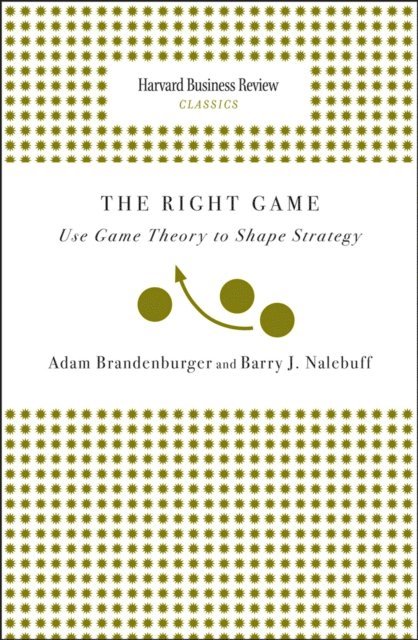
Business is like war: The best combatant wins while the worst loses, right? Not necessarily. Companies can succeed spectacularly without destroying others. And they can lose miserably after competing well. Exceptional businesses win by actively shaping the game they''re playing, not playing the game they find. The Right Game shows you how to do this-by altering who''s competing, what value each player brings to the table, and which rules and tactics players use. Since 1922, Harvard Business Review has been a leading source of breakthrough management ideas-many of which still speak to and influence us today. The Harvard Business Review Classics series now offers readers the opportunity to make these seminal pieces a part of your permanent management library. Each highly readable volume contains a groundbreaking idea that continues to shape best practices and inspire countless managers around the world-and will have a direct impact on you today and for years to come.
Del 5 - World Scientific Series In Economic Theory
Language Of Game Theory, The: Putting Epistemics Into The Mathematics Of Games
Inbunden, Engelska, 2014
1 462 kr
Skickas inom 3-6 vardagar
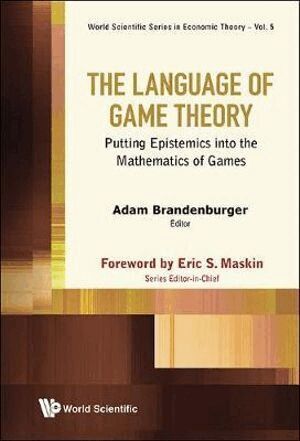
This volume contains eight papers written by Adam Brandenburger and his co-authors over a period of 25 years. These papers are part of a program to reconstruct game theory in order to make how players reason about a game a central feature of the theory. The program — now called epistemic game theory — extends the classical definition of a game model to include not only the game matrix or game tree, but also a description of how the players reason about one another (including their reasoning about other players' reasoning). With this richer mathematical framework, it becomes possible to determine the implications of how players reason for how a game is played. Epistemic game theory includes traditional equilibrium-based theory as a special case, but allows for a wide range of non-equilibrium behavior.