Adam Crabtree - Böcker
Visar alla böcker från författaren Adam Crabtree. Handla med fri frakt och snabb leverans.
10 produkter
10 produkter
984 kr
Skickas inom 5-8 vardagar
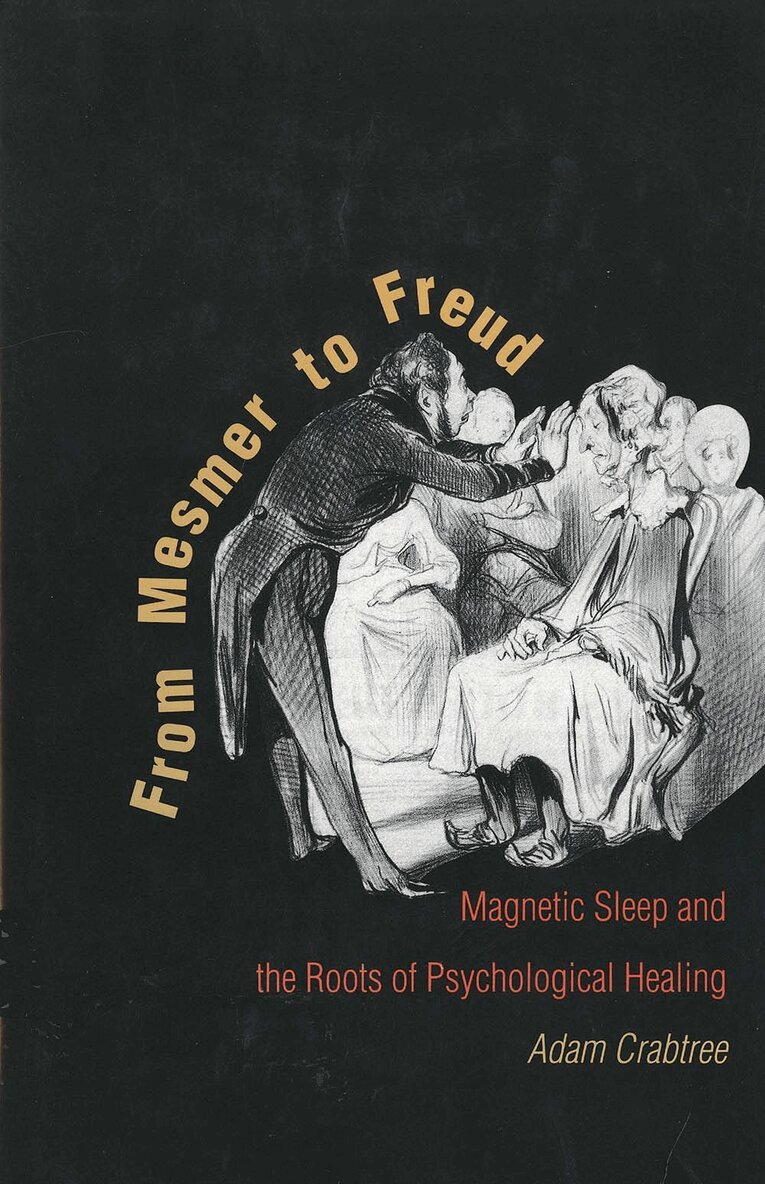
The discovery of magnetic sleep—an artificially induced trance-like state—in 1784 marked the beginning of the modern era of psychological healing. Magnetic sleep revealed a realm of mental activity that was not available to the conscious mind but could affect conscious thought and action. This book tells the story of the discovery of magnetic sleep and its relationship to psychotherapy.Adam Crabtree describes how in the 1770s Franz Anton Mesmer developed a technique based on "animal magnetism," which he felt could cure a wide variety of ailments when the healer directed "magnetic fluid" through the body of the sufferer. In 1784 Mesmer's pupil the marquis de Puysegur attempted to heal a patient with this method and discovered that animal magnetism could also be used to induce a trance in the subject that revealed a second consciousness quite distinct from the normal waking state. Puysegur's discovery of an alternate consciousness was taken up and elaborated by practitioners and thinkers for the next hundred years. Crabtree traces the history of the discovery of animal magnetism, shows how it was brought to bear on physical healing, and explains its relationship to paranormal phenomena, hypnotism, psychological healing, and the diagnosis and investigation of dissociative phenomena such as multiple personality. He documents how the systematic investigation of alternate consciousness reached its height in the 1880s and 1890s, fell into neglect with the appearance of psychoanalysis, and is now experiencing renewed attention as a treatment for multiple personality disorders that may arise from childhood sexual abuse.
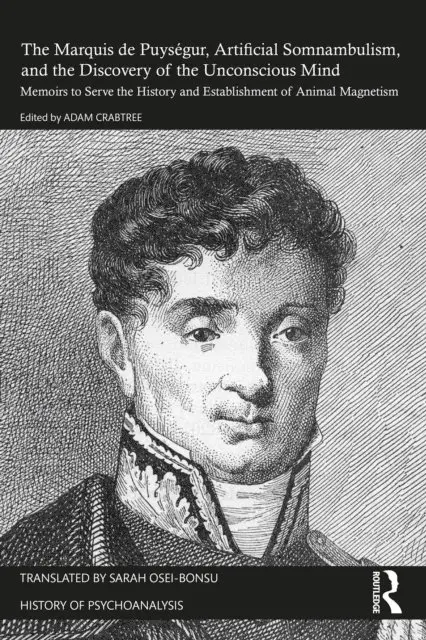
Marquis de Puységur, Artificial Somnambulism, and the Discovery of the Unconscious Mind
Memoirs to Serve the History and Establishment of Animal Magnetism
Häftad, Engelska, 2024
551 kr
Skickas inom 10-15 vardagar
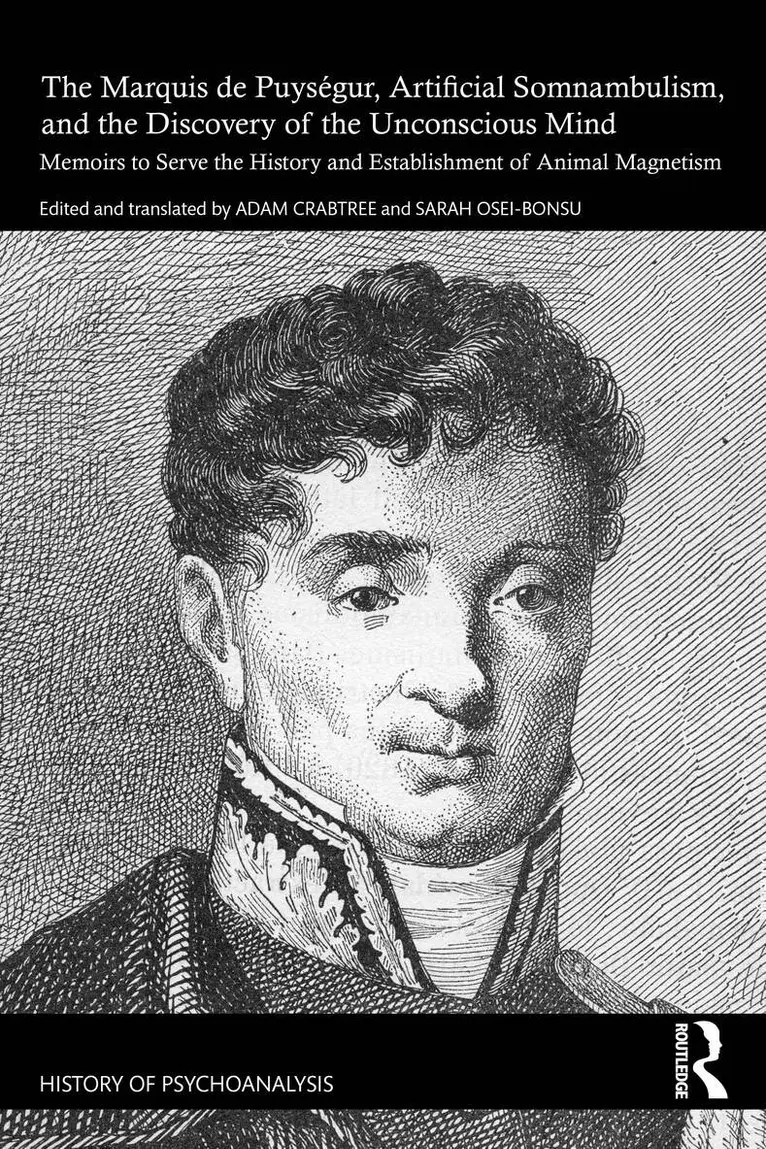
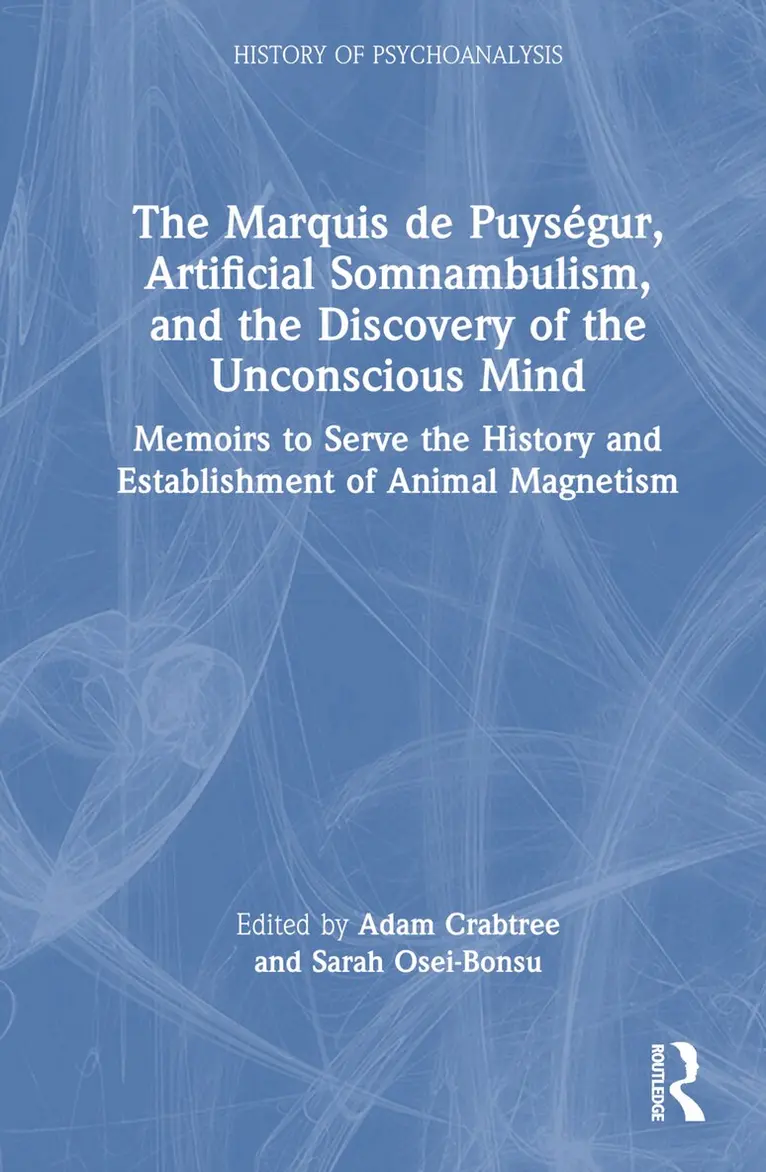
The Marquis de Puységur, Artificial Somnambulism, and the Discovery of the Unconscious Mind presents the first full English translation of a foundational text in the history of psychodynamic thinking, and provides a contextual explanation of its contemporary significance.Written by Puységur in 1784, Memoirs to Serve the History and Establishment of Animal Magnetism describes the author’s exploration and discovery of “artificial somnambulism,” a state that reveals insights into the subconscious mind. Building on the healing techniques of Franz Anton Mesmer, Puységur kept detailed notes on his practice with patients, including their names, symptoms, and follow-up information, providing a unique insight into his process. The full text of this original publication is presented here, complemented by a historical introduction and editor’s notes.The Marquis de Puységur, Artificial Somnambulism, and the Discovery of the Unconscious Mind will be of great interest to academics and scholars of psychoanalysis, psychotherapy, and the history of psychology, hypnosis, and mental health. It will also appeal to practicing clinicians.
Marquis de Puységur, Artificial Somnambulism, and the Discovery of the Unconscious Mind
Memoirs to Serve the History and Establishment of Animal Magnetism
Inbunden, Engelska, 2024
2 081 kr
Skickas inom 10-15 vardagar
The Marquis de Puységur, Artificial Somnambulism, and the Discovery of the Unconscious Mind presents the first full English translation of a foundational text in the history of psychodynamic thinking, and provides a contextual explanation of its contemporary significance.Written by Puységur in 1784, Memoirs to Serve the History and Establishment of Animal Magnetism describes the author’s exploration and discovery of “artificial somnambulism,” a state that reveals insights into the subconscious mind. Building on the healing techniques of Franz Anton Mesmer, Puységur kept detailed notes on his practice with patients, including their names, symptoms, and follow-up information, providing a unique insight into his process. The full text of this original publication is presented here, complemented by a historical introduction and editor’s notes.The Marquis de Puységur, Artificial Somnambulism, and the Discovery of the Unconscious Mind will be of great interest to academics and scholars of psychoanalysis, psychotherapy, and the history of psychology, hypnosis, and mental health. It will also appeal to practicing clinicians.
721 kr
Skickas inom 10-15 vardagar
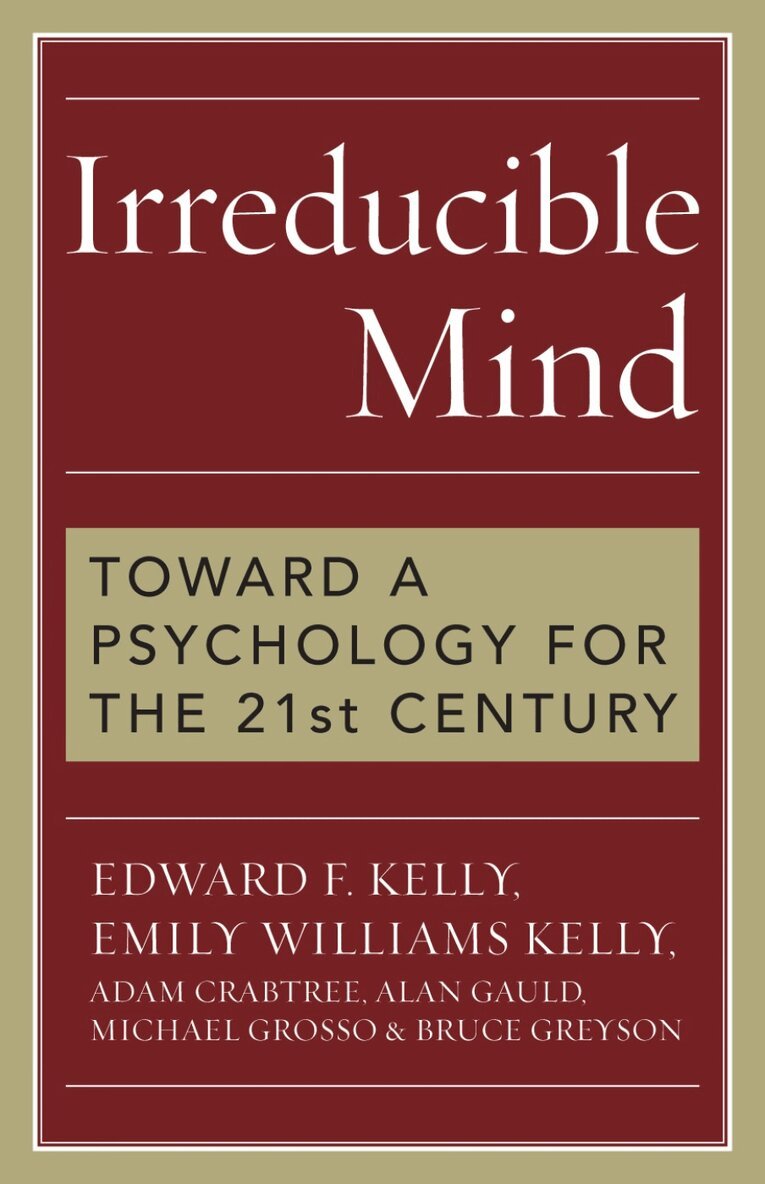
Current mainstream opinion in psychology, neuroscience, and philosophy of mind holds that all aspects of human mind and consciousness are generated by physical processes occurring in brains. Views of this sort have dominated recent scholarly publication. The present volume, however, demonstrates_empirically_that this reductive materialism is not only incomplete but false. The authors systematically marshal evidence for a variety of psychological phenomena that are extremely difficult, and in some cases clearly impossible, to account for in conventional physicalist terms. Topics addressed include phenomena of extreme psychophysical influence, memory, psychological automatisms and secondary personality, near-death experiences and allied phenomena, genius-level creativity, and 'mystical' states of consciousness both spontaneous and drug-induced. The authors further show that these rogue phenomena are more readily accommodated by an alternative 'transmission' or 'filter' theory of mind/brain relations advanced over a century ago by a largely forgotten genius, F. W. H. Myers, and developed further by his friend and colleague William James. This theory, moreover, ratifies the commonsense conception of human beings as causally effective conscious agents, and is fully compatible with leading-edge physics and neuroscience. The book should command the attention of all open-minded persons concerned with the still-unsolved mysteries of the mind.
942 kr
Skickas inom 10-15 vardagar
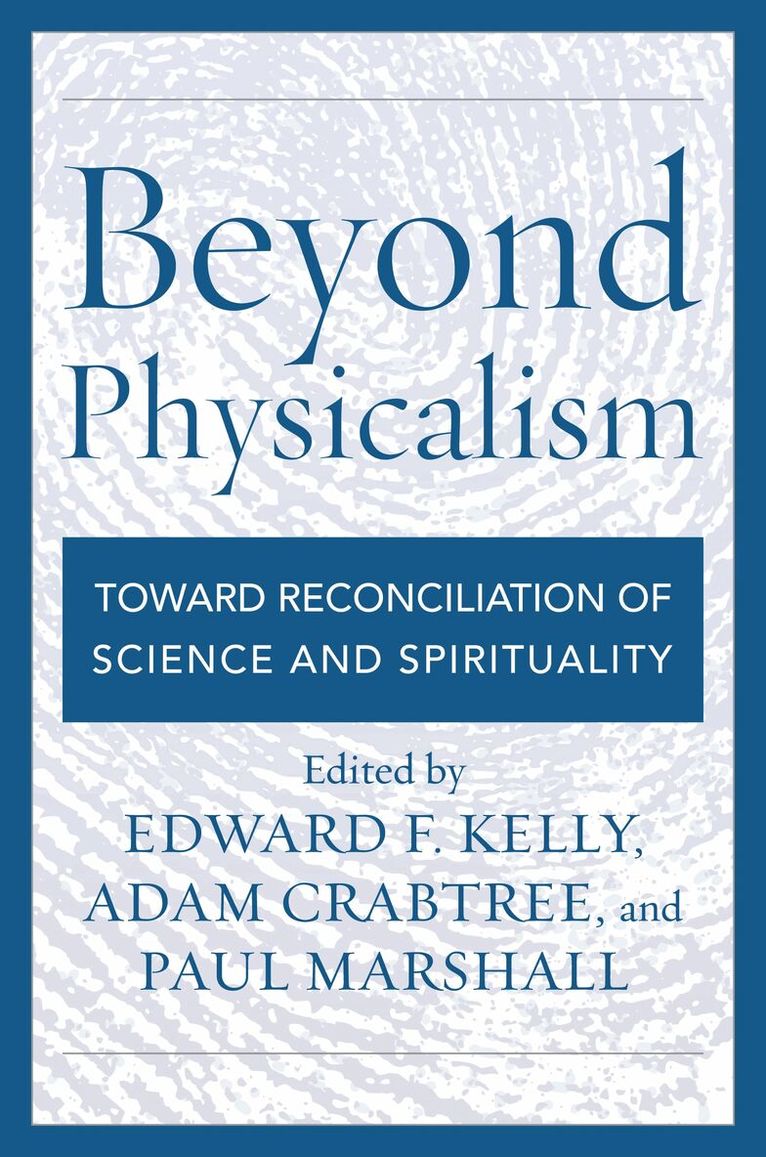
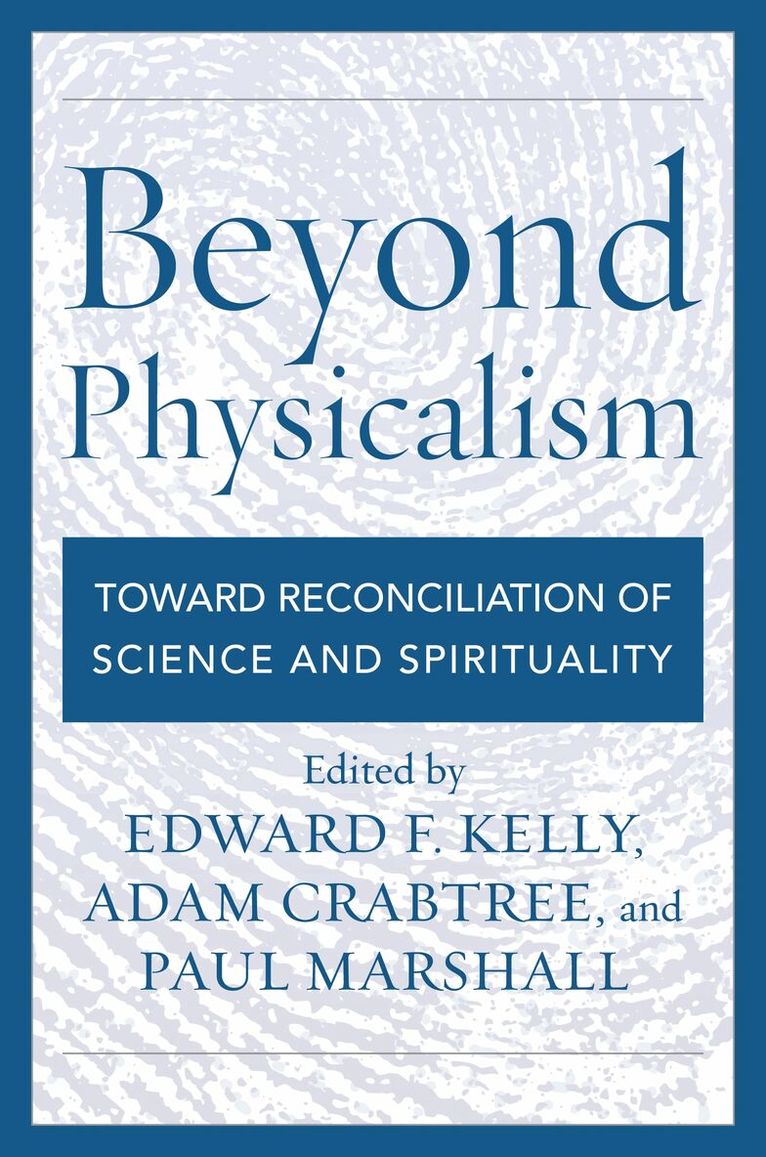
The rise of modern science has brought with it increasing acceptance among intellectual elites of a worldview that conflicts sharply both with everyday human experience and with beliefs widely shared among the world’s great cultural traditions. Most contemporary scientists and philosophers believe that reality is at bottom purely physical, and that human beings are nothing more than extremely complicated biological machines. On such views our everyday experiences of conscious decision-making, free will, and the self are illusory by-products of the grinding of our neural machinery. It follows that mind and personality are necessarily extinguished at death, and that there exists no deeper transpersonal or spiritual reality of any sort.Beyond Physicalism is the product of an unusual fellowship of scientists and humanities scholars who dispute these views. In their previous publication, Irreducible Mind, they argued that physicalism cannot accommodate various well-evidenced empirical phenomena including paranormal or psi phenomena, postmortem survival, and mystical experiences. In this new theory-oriented companion volume they go further by attempting to understand how the world must be constituted in order that these “rogue” phenomena can occur. Drawing upon empirical science, metaphysical philosophy, and the mystical traditions, the authors work toward an improved “big picture” of the general character of reality, one which strongly overlaps territory traditionally occupied by the world’s institutional religions, and which attempts to reconcile science and spirituality by finding a middle path between the polarized fundamentalisms, religious and scientific, that have dominated recent public discourse.Contributions by: Harald Atmanspacher, Loriliai Biernacki, Bernard Carr, Wolfgang Fach, Michael Grosso, Michael Murphy, David E. Presti, Gregory Shaw, Henry P. Stapp, Eric M. Weiss, and Ian Whicher
511 kr
Skickas inom 5-8 vardagar
371 kr
Skickas inom 5-8 vardagar
486 kr
Skickas inom 5-8 vardagar
360 kr
Skickas inom 5-8 vardagar
530 kr
Skickas inom 10-15 vardagar
The rise of modern science has brought with it increasing acceptance among intellectual elites of a worldview that conflicts sharply both with everyday human experience and with beliefs widely shared among the world’s great cultural traditions. Most contemporary scientists and philosophers believe that reality is at bottom purely physical, and that human beings are nothing more than extremely complicated biological machines. On such views our everyday experiences of conscious decision-making, free will, and the self are illusory by-products of the grinding of our neural machinery. It follows that mind and personality are necessarily extinguished at death, and that there exists no deeper transpersonal or spiritual reality of any sort.Beyond Physicalism is the product of an unusual fellowship of scientists and humanities scholars who dispute these views. In their previous publication, Irreducible Mind, they argued that physicalism cannot accommodate various well-evidenced empirical phenomena including paranormal or psi phenomena, postmortem survival, and mystical experiences. In this new theory-oriented companion volume they go further by attempting to understand how the world must be constituted in order that these “rogue” phenomena can occur. Drawing upon empirical science, metaphysical philosophy, and the mystical traditions, the authors work toward an improved “big picture” of the general character of reality, one which strongly overlaps territory traditionally occupied by the world’s institutional religions, and which attempts to reconcile science and spirituality by finding a middle path between the polarized fundamentalisms, religious and scientific, that have dominated recent public discourse.Contributions by: Harald Atmanspacher, Loriliai Biernacki, Bernard Carr, Wolfgang Fach, Michael Grosso, Michael Murphy, David E. Presti, Gregory Shaw, Henry P. Stapp, Eric M. Weiss, and Ian Whicher