Adam D. Moore – författare
Visar alla böcker från författaren Adam D. Moore. Handla med fri frakt och snabb leverans.
7 produkter
7 produkter
482 kr
Skickas inom 5-8 vardagar
We all know that Google stores huge amounts of information about everyone who uses its search tools, that Amazon can recommend new books to us based on our past purchases, and that the U.S. government engaged in many data-mining activities during the Bush administration to acquire information about us, including involving telecommunications companies in monitoring our phone calls (currently the subject of a bill in Congress). Control over access to our bodies and to special places, like our homes, has traditionally been the focus of concerns about privacy, but access to information about us is raising new challenges for those anxious to protect our privacy. In Privacy Rights, Adam Moore adds informational privacy to physical and spatial privacy as fundamental to developing a general theory of privacy that is well grounded morally and legally.
616 kr
Skickas inom 10-15 vardagar
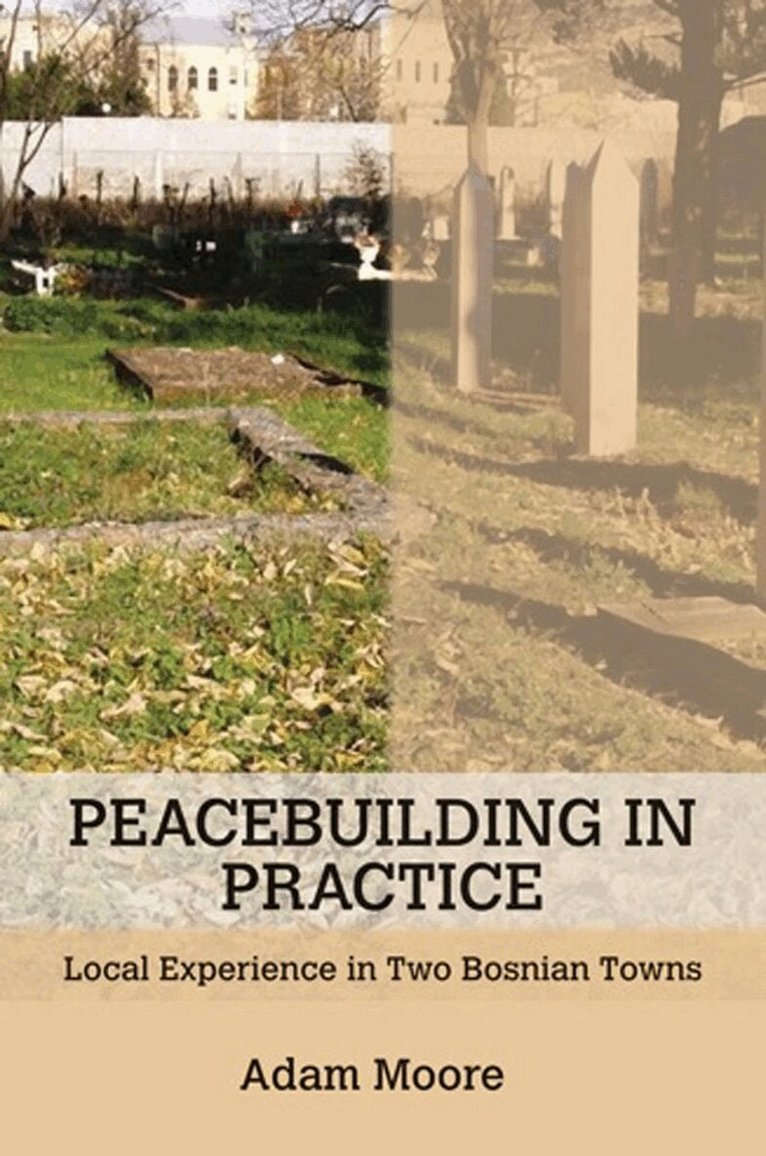
In November 2007 Adam Moore was conducting fieldwork in Mostar when the southern Bosnian city was rocked by two days of violent clashes between Croat and Bosniak youth. It was not the city's only experience of ethnic conflict in recent years. Indeed, Mostar's problems are often cited as emblematic of the failure of international efforts to overcome deep divisions that continue to stymie the postwar peace process in Bosnia. Yet not all of Bosnia has been plagued by such troubles. Mostar remains mired in distrust and division, but the Brčko District in the northeast corner of the country has become a model of what Bosnia could be. Its multiethnic institutions operate well compared to other municipalities, and are broadly supported by those who live there; it also boasts the only fully integrated school system in the country. What accounts for the striking divergence in postwar peacebuilding in these two towns?Moore argues that a conjunction of four factors explains the contrast in peacebuilding outcomes in Mostar and Brčko: The design of political institutions, the sequencing of political and economic reforms, local and regional legacies from the war, and the practice and organization of international peacebuilding efforts in the two towns. Differences in the latter, in particular, have profoundly shaped relations between local political elites and international officials. Through a grounded analysis of localized peacebuilding dynamics in these two cities Moore generates a powerful argument concerning the need to rethink how peacebuilding is done—that is, a shift in the habitus or culture that governs international peacebuilding activities and priorities today.
323 kr
Tillfälligt slut
As the expansion of the Internet and the digital formatting of all kinds of creative works move us further into the information age, intellectual property issues have become paramount. Computer programs costing thousands of research dollars are now copied in an instant. People who would recoil at the thought of stealing cars, computers, or VCRs regularly steal software or copy their favorite music from a friend's CD. Since the Web has no national boundaries, these issues are international concerns. The contributors-philosophers, legal theorists, and business scholars, among others-address questions such as: Can abstract ideas be owned? How does the violation of intellectual property rights compare to the violation of physical property rights? Can computer software and other digital information be protected? And how should legal systems accommodate the ownership of intellectual property in an information age? Intellectual Property is a lively examination of these and other issues, and an invaluable resource for librarians, lawyers, businesspeople, and scholars.
1 258 kr
Skickas inom 7-10 vardagar
Intellectual property rights - and the very concept of such rights - are coming under attack in our modern world, in which there is widespread sharing of content across a spectrum which extends from agreed open access to outright piracy. Institutions and legal systems that protect intellectual property, both domestically and internationally, stand in need of justification. In this book five different philosophical justifications for intellectual property are presented and defended. Additionally, all of the major criticisms of intellectual property are examined and ultimately rejected. The discussion includes the issues and controversies surrounding generative artificial intelligence and the challenges which it poses to current systems of intellectual property protection. As a result of this thorough and wide-ranging analysis, readers in philosophy, law, political science, information science, and media studies will be in a better position to determine the benefits and burdens of patents, copyrights, trademarks, and trade secrets.
312 kr
Skickas inom 10-15 vardagar
In a dramatic unveiling of the little-known world of contracted military logistics, Adam Moore examines the lives of the global army of laborers who support US overseas wars. Empire's Labor brings us the experience of the hundreds of thousands of men and women who perform jobs such as truck drivers and administrative assistants at bases located in warzones in the Middle East and Africa. He highlights the changes the US military has undergone since the Vietnam War, when the ratio of contractors to uniformed personnel was roughly 1:6. In Afghanistan it has been as high as 4:1. This growth in logistics contracting represents a fundamental change in how the US fights wars, with the military now dependent on a huge pool of contractors recruited from around the world. It also, Moore demonstrates, has social, economic, and political implications that extend well beyond the battlefields.Focusing on workers from the Philippines and Bosnia, two major sources of "third country national" (TCN) military labor, Moore explains the rise of large-scale logistics outsourcing since the end of the Cold War; describes the networks, infrastructures, and practices that span the spaces through which people, information, and goods circulate; and reveals the experiences of foreign workers, from the hidden dynamics of labor activism on bases, to the economic and social impacts these jobs have on their families and the communities they hail from. Through his extensive fieldwork and interviews, Moore gives voice to the agency and aspirations of the many thousands of foreigners who labor for the US military.Thanks to generous funding from UCLA and its participation in TOME (Toward an Open Monograph Ecosystem), the ebook editions of this book are available as Open Access volumes from Cornell Open (cornellpress.cornell.edu/cornell-open) and other repositories.
1 889 kr
Skickas inom 10-15 vardagar
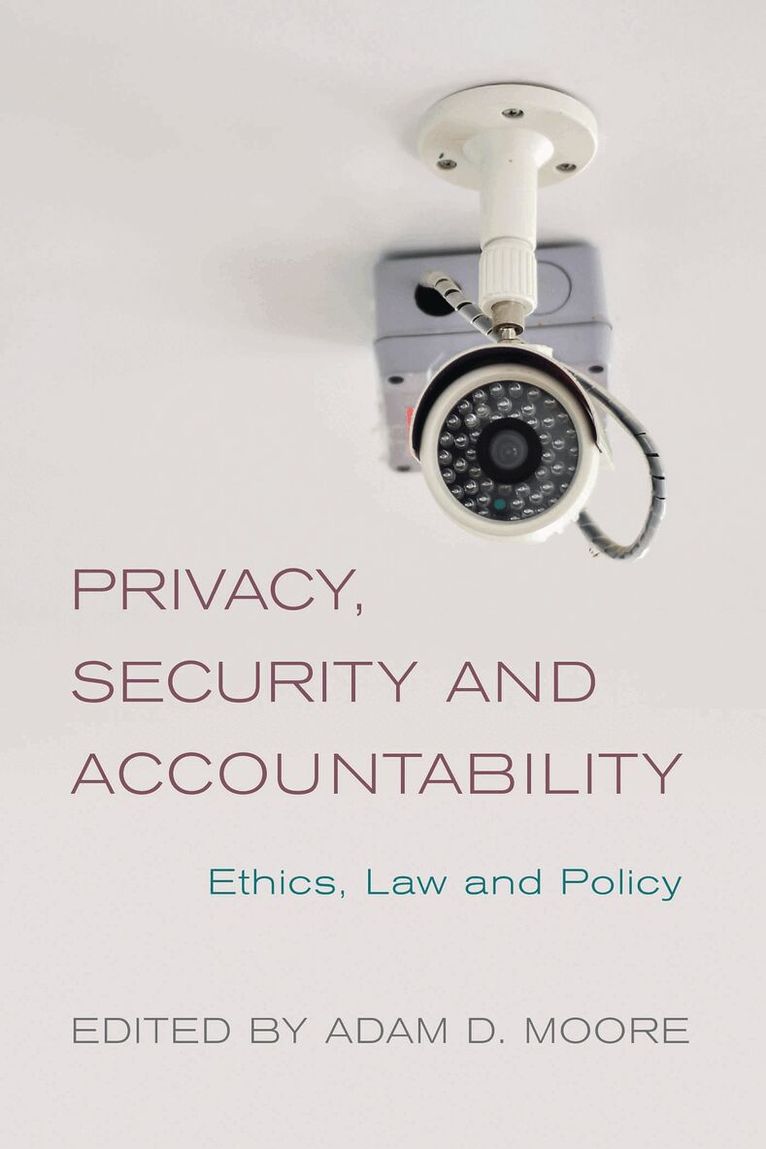
What is the appropriate balance between privacy, security, and accountability? What do we owe each other in terms of information sharing and access? Why is privacy valuable and is it more or less important than other values like security or free speech? Is Edward Snowden a hero or villain? Within democratic societies, privacy, security, and accountability are seen as important values that must be balanced appropriately. If there is too much privacy, then there may be too little accountability – and more alarmingly, too little security. On the other hand, where there is too little privacy, individuals may not have the space to grow, experiment, and engage in practices not generally accepted by the majority. Moreover, allowing overly limited control over access to and uses of private places and information may itself be a threat to security.By clarifying the moral, legal, and social foundations of privacy, security, and accountability, this book helps determine the appropriate balance between these contested values. Twelve specially commissioned essays provide the ideal resource for students and academics in information and applied ethics.
679 kr
Skickas inom 10-15 vardagar
What is the appropriate balance between privacy, security, and accountability? What do we owe each other in terms of information sharing and access? Why is privacy valuable and is it more or less important than other values like security or free speech? Is Edward Snowden a hero or villain? Within democratic societies, privacy, security, and accountability are seen as important values that must be balanced appropriately. If there is too much privacy, then there may be too little accountability – and more alarmingly, too little security. On the other hand, where there is too little privacy, individuals may not have the space to grow, experiment, and engage in practices not generally accepted by the majority. Moreover, allowing overly limited control over access to and uses of private places and information may itself be a threat to security.By clarifying the moral, legal, and social foundations of privacy, security, and accountability, this book helps determine the appropriate balance between these contested values. Twelve specially commissioned essays provide the ideal resource for students and academics in information and applied ethics.