Adam Drazin - Böcker
Visar alla böcker från författaren Adam Drazin. Handla med fri frakt och snabb leverans.
4 produkter
4 produkter
Design Anthropology in Context
An Introduction to Design Materiality and Collaborative Thinking
Inbunden, Engelska, 2020
2 160 kr
Skickas inom 10-15 vardagar
This book explores the broad territory of design anthropology, covering key approaches, ways of working and areas of debate and tension. It understands design as fundamentally human centred and argues for a design anthropology based primarily on collaboration and communication. Adam Drazin suggests the most important collaborative knowledges which design anthropology develops are heuristic, emerging as engagements between fieldwork sites and design studios. The chapters draw on material culture literature and include a wide range of examples of different projects and outputs. Highlighting the importance of design as a topic in the study of contemporary culture, this is valuable reading for students and scholars of anthropology and design as well as practitioners.
Design Anthropology in Context
An Introduction to Design Materiality and Collaborative Thinking
Häftad, Engelska, 2020
596 kr
Skickas inom 10-15 vardagar
This book explores the broad territory of design anthropology, covering key approaches, ways of working and areas of debate and tension. It understands design as fundamentally human centred and argues for a design anthropology based primarily on collaboration and communication. Adam Drazin suggests the most important collaborative knowledges which design anthropology develops are heuristic, emerging as engagements between fieldwork sites and design studios. The chapters draw on material culture literature and include a wide range of examples of different projects and outputs. Highlighting the importance of design as a topic in the study of contemporary culture, this is valuable reading for students and scholars of anthropology and design as well as practitioners.
2 151 kr
Skickas inom 10-15 vardagar
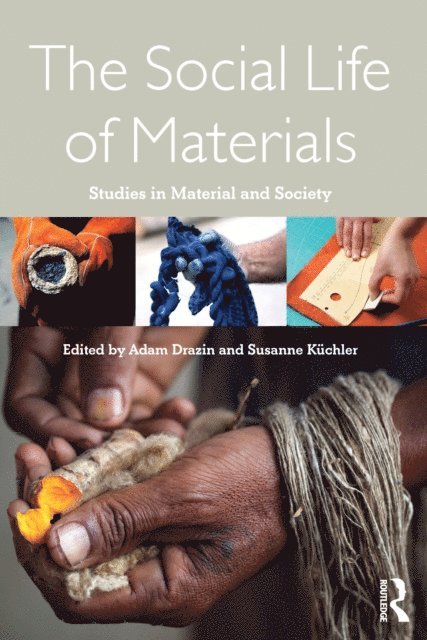
Materials play a central role in society. Beyond the physical and chemical properties of materials, their cultural properties have often been overlooked in anthropological studies: finished products have been perceived as ‘social’ yet the materials which comprise them are considered ‘raw’ or natural’. The Social Life of Materials proposes a new perspective in this interdisciplinary field. Diverting attention from the consumption of objects, the book looks towards the properties of materials and how these exist through many transformations in a variety of cultural contexts.Human societies have always worked with materials. However, the customs and traditions surrounding this differ according to the place, the time and the material itself. Whether or not the material is man-made, materials are defined by social intervention. Today, these constitute one of the most exciting areas of global scientific research and innovation, harboring the potential to act as key vehicles of change in the world. But this ‘materials revolution’ has complex social implications. Smart materials are designed to anticipate our actions and needs, yet we are increasingly unable to apprehend the composite materials which comprise new products.Bringing together ethnographic studies of cultures from around the world, this collection explores the significance of materials by moving beyond questions of what may be created from them. Instead, the text argues that the materials themselves represent a shifting ground around which relationships, identities and powers are constantly formed and dissolved in the act of making and remaking.
482 kr
Skickas inom 10-15 vardagar
Materials play a central role in society. Beyond the physical and chemical properties of materials, their cultural properties have often been overlooked in anthropological studies: finished products have been perceived as ‘social’ yet the materials which comprise them are considered ‘raw’ or natural’. The Social Life of Materials proposes a new perspective in this interdisciplinary field. Diverting attention from the consumption of objects, the book looks towards the properties of materials and how these exist through many transformations in a variety of cultural contexts.Human societies have always worked with materials. However, the customs and traditions surrounding this differ according to the place, the time and the material itself. Whether or not the material is man-made, materials are defined by social intervention. Today, these constitute one of the most exciting areas of global scientific research and innovation, harboring the potential to act as key vehicles of change in the world. But this ‘materials revolution’ has complex social implications. Smart materials are designed to anticipate our actions and needs, yet we are increasingly unable to apprehend the composite materials which comprise new products.Bringing together ethnographic studies of cultures from around the world, this collection explores the significance of materials by moving beyond questions of what may be created from them. Instead, the text argues that the materials themselves represent a shifting ground around which relationships, identities and powers are constantly formed and dissolved in the act of making and remaking.