Adamatzky Andrew Adamatzky – författare
Visar alla böcker från författaren Adamatzky Andrew Adamatzky. Handla med fri frakt och snabb leverans.
7 produkter
7 produkter
E-bok
PDF, Engelska, 20214 812 kr
Läs direkt efter köp
Did you know that computation can be implemented with cytoskeleton networks, chemical reactions, liquid marbles, plants, polymers and dozens of other living and inanimate substrates? Do you know what is reversible computing or a DNA microscopy? Are you aware that randomness aids computation? Would you like to make logical circuits from enzymatic reactions? Have you ever tried to implement digital logic with Minecraft? Do you know that eroding sandstones can compute too?This volume reviews most of the key attempts in coming up with an alternative way of computation. In doing so, the authors show that we do not need computers to compute and we do not need computation to infer. It invites readers to rethink the computer and computing, and appeals to computer scientists, mathematicians, physicists and philosophers. The topics are presented in a lively and easily accessible manner and make for ideal supplementary reading across a broad range of subjects.
E-bok
PDF, Engelska, 2012616 kr
Läs direkt efter köp
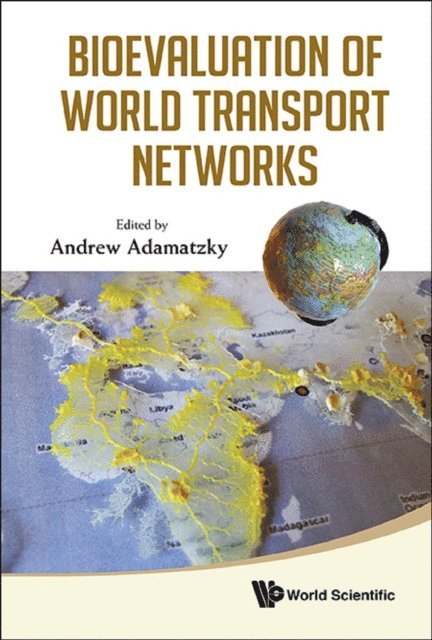
Slime mould Physarum polycephalum is a monstrous single cell well known for its task-solving abilities — solves computational geometry and logical problems, navigates robots and generates music.The slime mould could also build motorways, highways and expressways. It is used to analyse transport networks of Africa, Australia, Belgium, Brazil, Canada, China, Germany, Iberia, Italy, Malaysia, Mexico, The Netherlands, UK and USA. The largest cities are represented by oat flakes and the slime mould is inoculated in a capital. When all oat flakes are covered by the slime mould, the structure of the protoplasmic networks formed are analyzed. In the laboratory experiments and theoretical analyses, intriguing country-specific properties of the motorway networks are uncovered and compared with the man-made and slime mould networks. They are studied as proximity graphs, leading to hierarchies of complexity and bio-rationality of the motorways.The book will inspire novel and original thoughts, paradigms and approaches for re-evaluation of historical findings on the emergence of ancient roads and will help to design future transcontinental pathways. The book is self-contained and does not require any special training or knowledge. This lavishly illustrated text will be appreciated by readers from all walks of life.
E-bok
PDF, Engelska, 2013702 kr
Läs direkt efter köp
This invaluable book is a unique collection of tributes to outstanding discoveries pioneered by Leon Chua in nonlinear circuits, cellular neural networks, and chaos. It is comprised of three parts. The first — cellular nonlinear networks, nonlinear circuits and cellular automata — deals with Chua''s Lagrangian circuits, cellular wave computers, bio-inspired robotics and neuro-morphic architectures, toroidal chaos, synaptic cellular automata, history of Chua''s circuits, cardiac arrhythmias, local activity principle, symmetry breaking and complexity, bifurcation trees, and Chua''s views on nonlinear dynamics of cellular automata. Dynamical systems and chaos is the scope of the second part of the book, where we find genius accounts on theory and application of Julia set, stability of dynamical networks, chaotic neural networks and neocortical dynamics, dynamics of piecewise linear systems, chaotic mathematical circuitry, synchronization of oscillators, models of catastrophic events, control of chaotic systems, symbolic dynamics, and solitons. First hand accounts on the discovery of memristors in HP Labs, historical excursions into ‘ancient memristors’, analytical analysis of memristors, and hardware memristor emulators are presented in the third and final part of the book.The book is quintessence of ideas on future and emergent hardware, analytic theories of complex dynamical systems and interdisciplinary physics. It is a true Renaissance volume where bright ideas of electronics, mathematics and physics enlighten facets of modern science.The unique DVD covers the artistic aspects of chaos, such as several stunningly melodious musical compositions using chaotic atttractors, a virtual gallery of hundreds of colorful attractors, and even a cartoon-like play on the genesis of Chua''s circuit that was based on a widely acclaimed performance in Rome and other venues in Italy. In short, it is a veritable kaleiscope of never-before-published historical, pedagogical, and futuristic technical visions on three timely topics of intense interest for both lay readers and experts alike.

E-bok
PDF, Engelska, 2010520 kr
Läs direkt efter köp
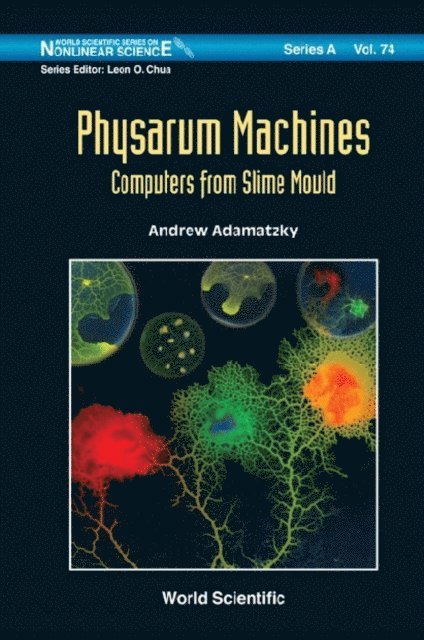
A Physarum machine is a programmable amorphous biological computer experimentally implemented in the vegetative state of true slime mould Physarum polycephalum. It comprises an amorphous yellowish mass with networks of protoplasmic veins, programmed by spatial configurations of attracting and repelling gradients.This book demonstrates how to create experimental Physarum machines for computational geometry and optimization, distributed manipulation and transportation, and general-purpose computation. Being very cheap to make and easy to maintain, the machine also functions on a wide range of substrates and in a broad scope of environmental conditions. As such a Physarum machine is a ‘green’ and environmentally friendly unconventional computer.The book is readily accessible to a nonprofessional reader, and is a priceless source of experimental tips and inventive theoretical ideas for anyone who is inspired by novel and emerging non-silicon computers and robots.
E-bok
PDF, Engelska, 2005602 kr
Läs direkt efter köp
A crowd-mind emerges when formation of a crowd causes fusion of individual minds into one collective mind. Members of the crowd lose their individuality. The deindividuation leads to derationalization: emotional, impulsive and irrational behavior, self-catalytic activities, memory impairment, perceptual distortion, hyper-responsiveness, and distortion of traditional forms and structures. This book presents unique results of computational studies on cognitive and affective space-time processes in large-scale collectives of abstract agents being far from mental equilibrium. Computational experiments demonstrate that the irrational and nonsensical behavior of individual entities of crowd-mind results in complex, rich and non-trivial spatio-temporal dynamics of the agent collectives. Mathematical methods employ theory and techniques of cellular-automata and lattice swarms, applied algebra, theory of finite automata and Markov chains, and elementary differential equations.
E-bok
Engelska, 2015289 kr
Läs direkt efter köp
This book introduces art projects that resulted from unconventional explorations, curious experiments and their creative translations into sensorial experiences. Using electronic and digital art, bioart, sculpture and installations, sound and performance, the authors are removing boundaries between natural and artificial, real and imaginary, science and culture.The invited artists and researchers come from cutting-edge fields of art production that focuses on creating aesthetic experiences and performative situations. Their artworks create a spatial aesthetic experience for visitors by manifesting themselves in physical space. Experiencing the Unconventional is a unique selection of works by artists not based on formal similarities, but on investigative practices. It offers in-depth insights and first-hand working experiences into current production of art works at the edge of art, science and technology.
E-bok
Engelska, 2015459 kr
Läs direkt efter köp
The slime mould Physarum polycephalum is a large cell visible by the unaided eye. It behaves as an intelligent nonlinear spatially extended active medium encapsulated in an elastic membrane. The cell optimises its growth patterns in configurations of attractants and repellents. This behaviour is interpreted as computation. Numerous prototypes of slime mould computers were designed to solve problems of computational geometry, graphs and transport networks and to implement universal computing circuits.In this unique set of scientific photographs and micrographs, the leading experts in computer science, biology, chemistry and material science illustrate in superb detail the nature of the slime mould computers and hybrid devices. Every photograph or micrograph in this book is of real scientific, theoretical or technological interest. Each entry includes a self-contained description of how the visualised phenomenon is used in the relevant slime mould computer. This atlas is unique in providing the depth and breadth of knowledge in harnessing behaviour of the slime mould to perform computation. It will help readers to understand how exploitation of biological processes has sparked new ideas and spurred progress in many fields of science and engineering.