Adebayo O. Oyebade – författare
Visar alla böcker från författaren Adebayo O. Oyebade. Handla med fri frakt och snabb leverans.
5 produkter
Culture and Customs of Angola
E-bok, 2006
803 kr
Lägg i varukorg
Angola has been brutalized by the civil war, which only ended in 1992. The war's adverse effect on every facet of Angola's post-independence life is clearly evident in the range of topics covered in this volume. The human cost of the war can be counted in the enormous loss of life and large-scale …
Culture and Customs of Angola
Inbunden, 2006
732 kr
Lägg i varukorg
Angola has been brutalized by the civil war, which only ended in 1992. The war's adverse effect on every facet of Angola's post-independence life is clearly evident in the range of topics covered in this volume. The human cost of the war can be counted in the enormous loss of life and large-scale …
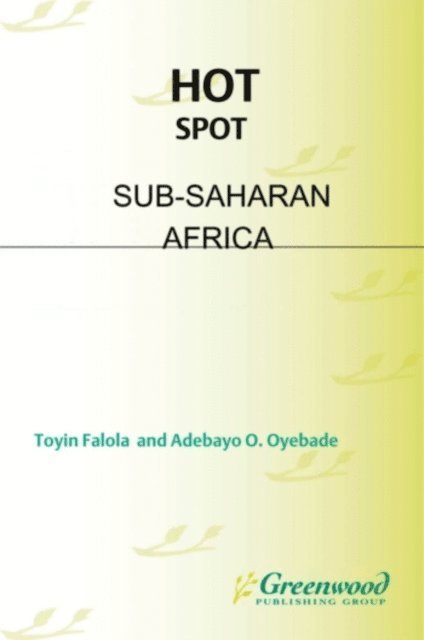
Hot Spot: Sub-Saharan Africa
Av Toyin Falola, Adebayo O. Oyebade
Inbunden, 2010
950 kr
Lägg i varukorg
This book provides an extensive examination of the major conflicts in the extremely volatile region of sub-Saharan Africa and their ramifications throughout the continent and beyond.Conflict has been a critical factor in the making of contemporary Africa, and its study is key to understanding the …
Hot Spot: Sub-Saharan Africa
Av Toyin Falola, Adebayo O. Oyebade
E-bok, 2010
1044 kr
Lägg i varukorg
This book provides an extensive examination of the major conflicts in the extremely volatile region of sub-Saharan Africa and their ramifications throughout the continent and beyond. Conflict has been a critical factor in the making of contemporary Africa, and its study is key to understanding the …
Hot Spot: Sub-Saharan Africa
Av Toyin Falola, Adebayo O. Oyebade
E-bok, 2010
1044 kr
Lägg i varukorg
This book provides an extensive examination of the major conflicts in the extremely volatile region of sub-Saharan Africa and their ramifications throughout the continent and beyond. Conflict has been a critical factor in the making of contemporary Africa, and its study is key to understanding the …