Adel Abdel Ghafar - Böcker
Visar alla böcker från författaren Adel Abdel Ghafar. Handla med fri frakt och snabb leverans.
7 produkter
7 produkter
373 kr
Skickas inom 7-10 vardagar
This lucid and timely volume sheds a sober and thought-provoking light on the immense social and political changes that have taken place in the Middle East and North Africa over recent years. A range of emerging scholars and established academics at the cutting edge of their fields provide interpretations challenging conventional assumptions relating to governance, social placidity, the use of social media, state-driven reform, and the role of traditionally marginalised groups in these strategically vital regions.This volume offers a strong response to the often misinformed and underdeveloped mainstream conceptions of revolutionary change and reform in the Middle East and North Africa. Seeking to recast and re-evaluate the paradigms used to interpret change in the Arab, Persian and Turkish worlds, the chapters in this volume will spark debate and provide much needed clarity to the current issues rocking the Middle East and North Africa.
1 343 kr
Skickas inom 10-15 vardagar
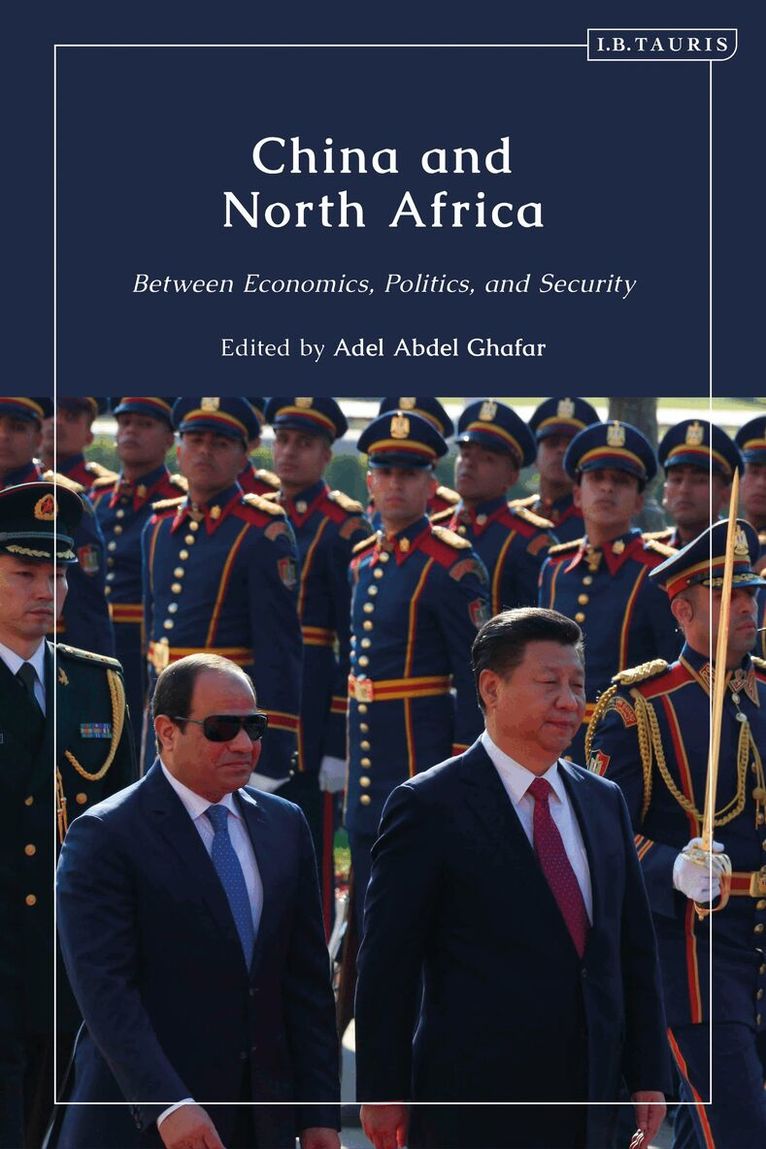
As the United States slowly disengages from the Middle East and Europe faces internal challenges, a new actor is quietly exerting greater influence across North Africa: China.Beijing’s growing footprint in North Africa encompasses, but is not limited to, trade, infrastructure development, ports, shipping, financial cooperation, tourism and manufacturing. It is continuing to expand its co-operation with North African countries, not only in the economic and cultural spheres, but also those of diplomacy and defence. This engagement with North Africa relates to the key aim of President Xi Jinping’s Belt and Road Initiative (BRI), which wants to connect Asia, Africa and Europe and sees potential in North Africa’s strategic geographic location.This book is the first to analyse China’s role in North Africa. It comprises of five leading country experts - Anouar Boukhars, Yahia Zoubir, Sarah Yerkes, Tareki Magresi and Nael Shama – who examine the various socio-economic, political and security aspects of China’s relationship with Algeria, Morocco, Libya, Tunisia and Egypt. The book explores how China is displaying a development model that seeks to combine authoritarianism with economic growth, a model and that has an eager audience among regimes across the MENA region. It reveals how the China-North Africa relationship fits within the broader dynamics of increasing China-US rivalry. In doing so, contributors explain why China’s growing role in North Africa is likely to have far-reaching economic and geopolitical consequences for both countries in the region and around the world.
408 kr
Skickas inom 10-15 vardagar
As the United States slowly disengages from the Middle East and Europe faces internal challenges, a new actor is quietly exerting greater influence across North Africa: China.Beijing’s growing footprint in North Africa encompasses, but is not limited to, trade, infrastructure development, ports, shipping, financial cooperation, tourism and manufacturing. It is continuing to expand its co-operation with North African countries, not only in the economic and cultural spheres, but also those of diplomacy and defence. This engagement with North Africa relates to the key aim of President Xi Jinping’s Belt and Road Initiative (BRI), which wants to connect Asia, Africa and Europe and sees potential in North Africa’s strategic geographic location.This book is the first to analyse China’s role in North Africa. It comprises of five leading country experts - Anouar Boukhars, Yahia Zoubir, Sarah Yerkes, Tareki Magresi and Nael Shama – who examine the various socio-economic, political and security aspects of China’s relationship with Algeria, Morocco, Libya, Tunisia and Egypt. The book explores how China is displaying a development model that seeks to combine authoritarianism with economic growth, a model and that has an eager audience among regimes across the MENA region. It reveals how the China-North Africa relationship fits within the broader dynamics of increasing China-US rivalry. In doing so, contributors explain why China’s growing role in North Africa is likely to have far-reaching economic and geopolitical consequences for both countries in the region and around the world.
595 kr
Skickas inom 10-15 vardagar
How Europe can hit the reset button after years of failed responses to North African turmoilThe ongoing upheaval in North Africa has presented many challenges to Europe, which previously had been comfortable with the status quo of authoritarian leadership in much of the region. Now in its ninth year, the turmoil has forced European leaders to rethink their approaches to the region, based on the now-obvious reality that the brief hopes of early 2011 for the spread of democracy and economic progress will not be fulfilled anytime soon.In this book, experts from Europe, the United States, and the Middle East discuss what has happened since the so-called Arab Spring emerged and how those often-bewildering events have affected both North Africa and the European states across the Mediterranean. The book is based on papers presented at a March 2018 conference sponsored by the South Mediterranean Regional Program of the Konrad Adenauer Stiftung. Chapters focus on events in Algeria, Egypt, Libya, Morocco, and Tunisiaand offer ideas for how the European Union can adopt fresh approaches to the region, moving beyond its frequently uncertain and shifting responses of recent years.
528 kr
Skickas inom 10-15 vardagar
All of the GCC countries—Bahrain, Kuwait, Oman, Qatar, Saudi Arabia, and the United Arab Emirates—are undergoing historic socio-economic transitions. They are facing enormous strains on public finances and challenging economic outlooks, due to fluctuating oil prices, demographic pressures, high unemployment rates, and a lack of economic diversification. These countries also are likely to feel the rising impact of climate change, and global policies to deal with it, over the coming decades. In addition, seemingly unstoppable shifts in the long-standing international order, notably the rise of China and uncertainties about U.S. leadership, have potentially serious implications for the Middle East and beyond.This by noted scholars and experts considers the key trends shaping Gulf Cooperation Council (GCC) countries--Bahrain, Kuwait, Oman, Qatar, Saudi Arabia, and the United Arab Emirate-- ranging from the COVID-19 pandemic, to climate change, economic disruptions, demographics and other domestic concerns, and shifts in the global order.The book’s chapters address such questions as: How will global megatrends impact the GCC? How can GCC states adjust and diversify their economies to meet the dual challenges of fluctuating oil prices and climate change? How can these states adjust their labor markets to absorb and support women and youth? How will inter GCC disagreements impact the region moving forward? And how will GCC relations with international actors shift in the coming years?This timely book, with its comprehensive analyses and policy recommendations, will be of interest to a wide range of readers interested in the GCC region, including policymakers, academics, and researchers at think tanks and nongovernmental organizations.
1 209 kr
Skickas inom 10-15 vardagar
All of the GCC countries—Bahrain, Kuwait, Oman, Qatar, Saudi Arabia, and the United Arab Emirates—are undergoing historic socio-economic transitions. They are facing enormous strains on public finances and challenging economic outlooks, due to fluctuating oil prices, demographic pressures, high unemployment rates, and a lack of economic diversification. These countries also are likely to feel the rising impact of climate change, and global policies to deal with it, over the coming decades. In addition, seemingly unstoppable shifts in the long-standing international order, notably the rise of China and uncertainties about U.S. leadership, have potentially serious implications for the Middle East and beyond.This by noted scholars and experts considers the key trends shaping Gulf Cooperation Council (GCC) countries--Bahrain, Kuwait, Oman, Qatar, Saudi Arabia, and the United Arab Emirate-- ranging from the COVID-19 pandemic, to climate change, economic disruptions, demographics and other domestic concerns, and shifts in the global order.The book’s chapters address such questions as: How will global megatrends impact the GCC? How can GCC states adjust and diversify their economies to meet the dual challenges of fluctuating oil prices and climate change? How can these states adjust their labor markets to absorb and support women and youth? How will inter GCC disagreements impact the region moving forward? And how will GCC relations with international actors shift in the coming years?This timely book, with its comprehensive analyses and policy recommendations, will be of interest to a wide range of readers interested in the GCC region, including policymakers, academics, and researchers at think tanks and nongovernmental organizations.
1 275 kr
Skickas inom 10-15 vardagar
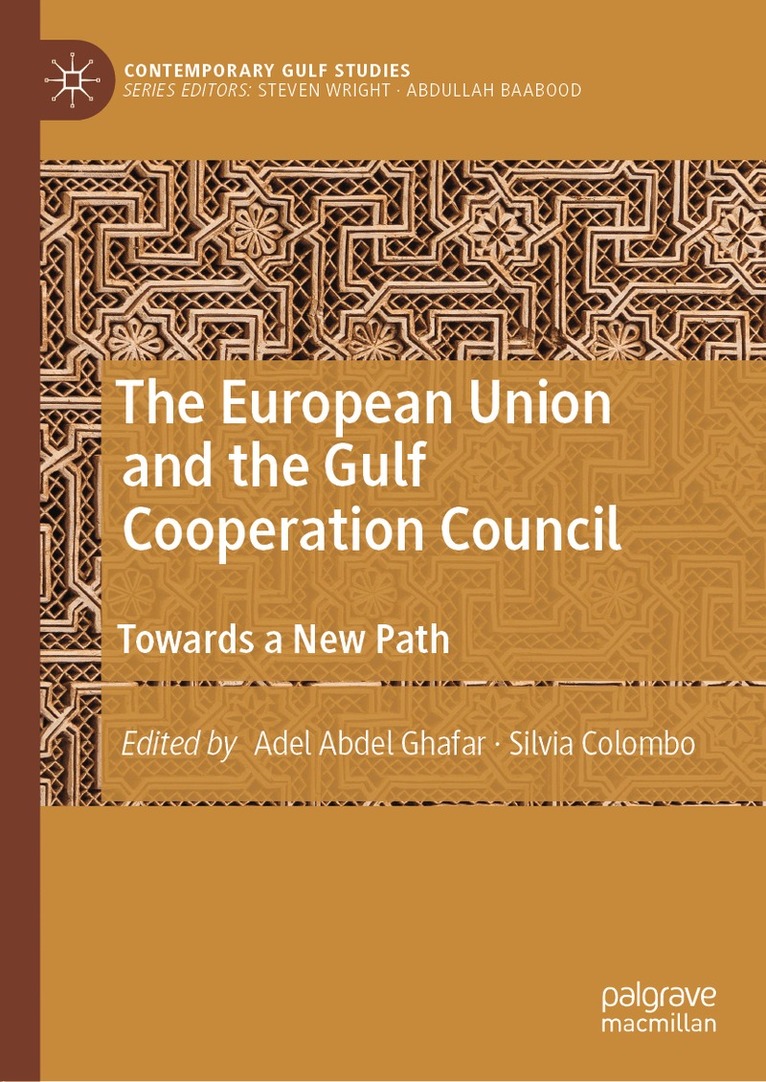
This book provides a comprehensive assessment of the various dimensions of the relationship between the European Union and the Gulf Cooperation Council, and highlights how relations are yet to reach their full potential.