Adel Helmy – författare
Visar alla böcker från författaren Adel Helmy. Handla med fri frakt och snabb leverans.
10 produkter
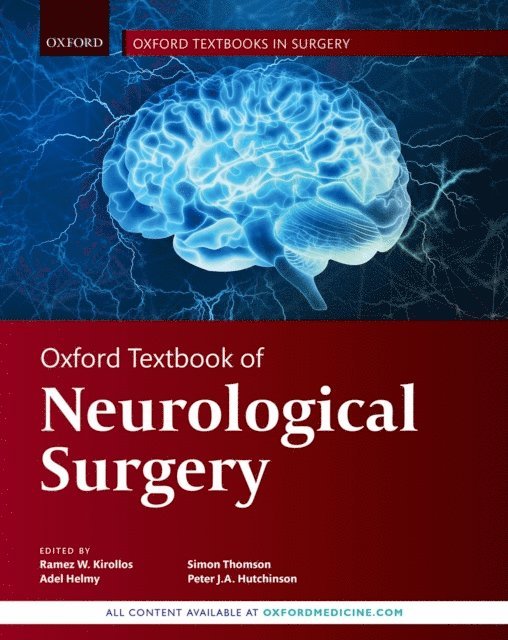
Oxford Textbook of Neurological Surgery
Av Peter Hutchinson, Simon Thomson m. fl.
E-bok, 2019
4323 kr
Lägg i varukorg
Neurosurgery is a rapidly developing and technically demanding branch of surgery that requires a detailed knowledge of the basic neuro-sciences and a thorough clinical approach. The Oxford Textbook of Neurological Surgery is an up-to-date, objective and readable text that covers the full scope of …
Oxford Textbook of Neurological Surgery
Av Peter Hutchinson, Simon Thomson m. fl.
E-bok, 2019
4323 kr
Lägg i varukorg
Neurosurgery is a rapidly developing and technically demanding branch of surgery that requires a detailed knowledge of the basic neuro-sciences and a thorough clinical approach. The Oxford Textbook of Neurological Surgery is an up-to-date, objective and readable text that covers the full scope of …
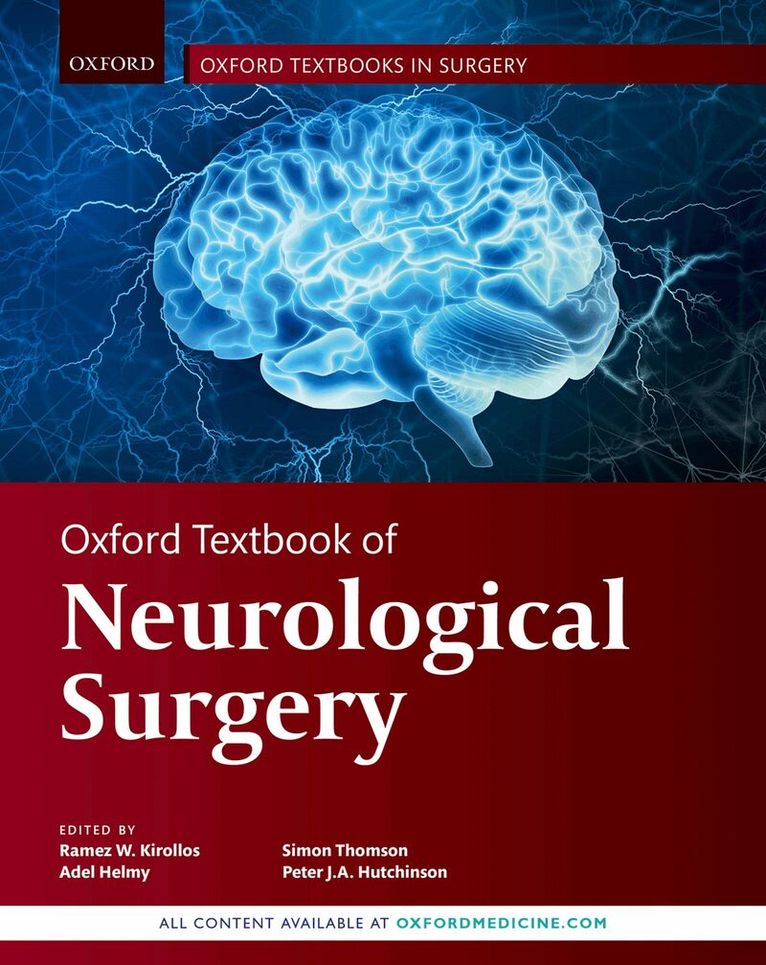
Oxford Textbook of Neurological Surgery
Av Ramez Kirollos, Adel Helmy m. fl.
Inbunden, 2019
4874 kr
Lägg i varukorg
Neurosurgery is a rapidly developing and technically demanding branch of surgery that requires a detailed knowledge of the basic neuro-sciences and a thorough clinical approach. The Oxford Textbook of Neurological Surgery is an up-to-date, objective and readable text that covers the full scope of …
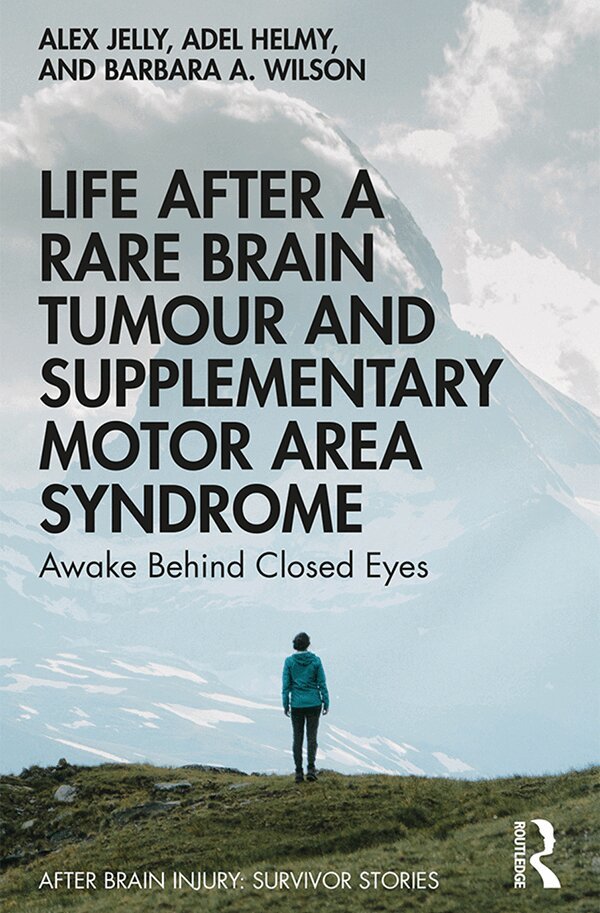
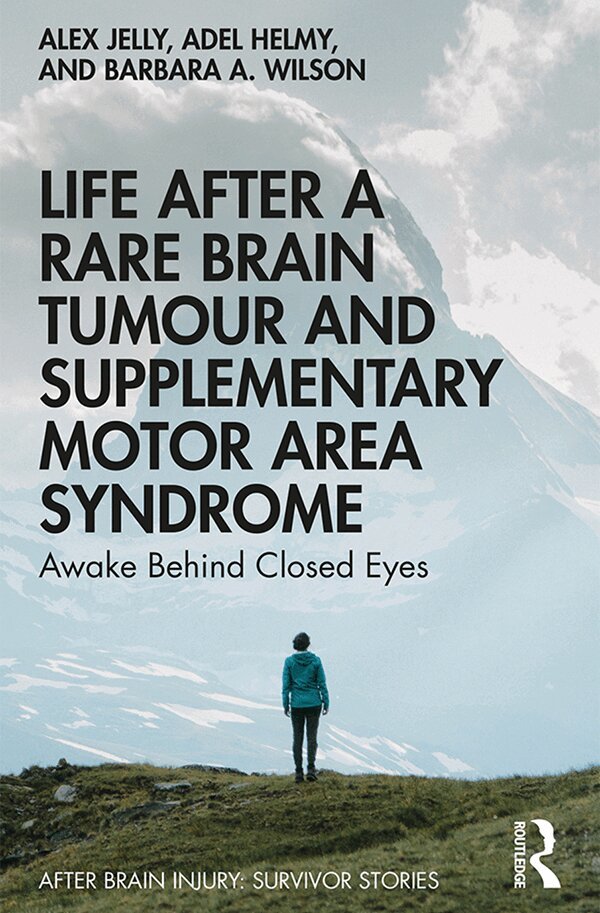
Life After a Rare Brain Tumour and Supplementary Motor Area Syndrome
Awake Behind Closed Eyes
Av Alex Jelly, Adel Helmy m. fl.
Inbunden, 2019
2195 kr
Lägg i varukorg
This book offers a personal insight into the experience of Alex Jelly, a professional fundraiser who developed a rare brain tumour, a papillary meningioma, which was successfully removed. She was left with Supplementary Motor Area Syndrome and associated problems including motor and speech …
Life After a Rare Brain Tumour and Supplementary Motor Area Syndrome
Awake Behind Closed Eyes
Av Alex Jelly, Adel Helmy m. fl.
Häftad, 2019
427 kr
Lägg i varukorg
This book offers a personal insight into the experience of Alex Jelly, a professional fundraiser who developed a rare brain tumour, a papillary meningioma, which was successfully removed. She was left with Supplementary Motor Area Syndrome and associated problems including motor and speech …
Life After a Rare Brain Tumour and Supplementary Motor Area Syndrome
Awake Behind Closed Eyes
Av Barbara A. Wilson, Adel Helmy m. fl.
E-bok, 2019
515 kr
Lägg i varukorg
This book offers a personal insight into the experience of Alex Jelly, a professional fundraiser who developed a rare brain tumour, a papillary meningioma, which was successfully removed. She was left with Supplementary Motor Area Syndrome and associated problems including motor and speech …
Life After a Rare Brain Tumour and Supplementary Motor Area Syndrome
Awake Behind Closed Eyes
Av Barbara A. Wilson, Adel Helmy m. fl.
E-bok, 2019
504 kr
Lägg i varukorg
This book offers a personal insight into the experience of Alex Jelly, a professional fundraiser who developed a rare brain tumour, a papillary meningioma, which was successfully removed. She was left with Supplementary Motor Area Syndrome and associated problems including motor and speech …
Management of Moderate or Severe Traumatic Brain Injury
Av Adel Helmy, Ari Ercole m. fl.
E-bok, 2025
286 kr
Lägg i varukorg
Management of Moderate or Severe Traumatic Brain Injury
Av Adel Helmy, Ari Ercole m. fl.
E-bok, 2025
286 kr
Lägg i varukorg
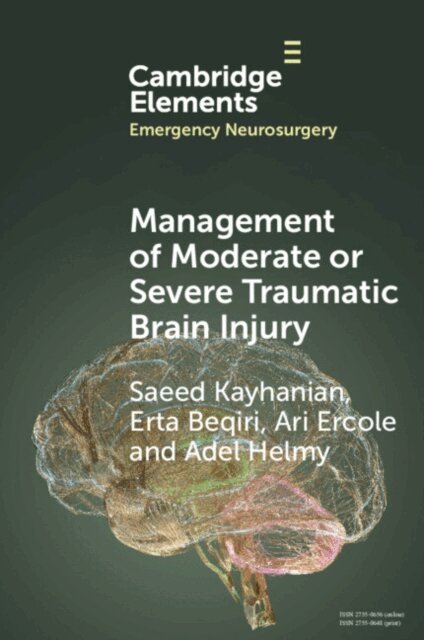
Management of Moderate or Severe Traumatic Brain Injury
Av Saeed Kayhanian, Erta Beqiri m. fl.
Häftad, 2025
275 kr
Lägg i varukorg
The management of patients with moderate and severe traumatic brain injury (TBI) is centred on the intensive care management to limit the extent of secondary injury to the brain, following the primary trauma. This management aims to optimise the homeostatic environment of the brain after injury and …