Adelle Blackett - Böcker
Visar alla böcker från författaren Adelle Blackett. Handla med fri frakt och snabb leverans.
9 produkter
9 produkter
2 305 kr
Skickas inom 10-15 vardagar
Regional trade agreements have expanded exponentially over the past decade, and have become a significant, if controversial, factor in the expanse of economic globalization. Social Regionalism in the Global Economy attempts to take a fresh, interdisciplinary approach to addressing labour regulation by drawing upon insights from industrial relations, comparative capitalism, and new governance schools of thought. It stands for the proposition that an interdisciplinary study of regional regulation holds the potential to offer a fuller account of social regionalism. Its focus is to consider how institutions and labour market actors reconstruct and renegotiate regulatory space in a changing economic environment characterized by regional impulses. It argues that there is a dynamic interplay between institutions and actors of social regulation. This interplay occurs at many levels. The book therefore maps both how actors shape institutions as well as how institutions shape social actors’ ability to affect regulatory processes.The editors bring together leading international specialists willing to move beyond textual analyses of regional agreements to offer alternative accounts of regional integration. The work emphasizes that institutional context and social actors at multiple governance levels are integral to the progressive construction and regulation of regional space. It further contributes to the literature by combining insights from overlooked regional entities in transition and developing countries with original analyses from the European Union and the NAFTA. These aims will be achieved by combining original research that is empirically grounded with theoretically informed analysis.
725 kr
Skickas inom 10-15 vardagar
Regional trade agreements have expanded exponentially over the past decade, and have become a significant, if controversial, factor in the expanse of economic globalization. Social Regionalism in the Global Economy attempts to take a fresh, interdisciplinary approach to addressing labour regulation by drawing upon insights from industrial relations, comparative capitalism, and new governance schools of thought. It stands for the proposition that an interdisciplinary study of regional regulation holds the potential to offer a fuller account of social regionalism. Its focus is to consider how institutions and labour market actors reconstruct and renegotiate regulatory space in a changing economic environment characterized by regional impulses. It argues that there is a dynamic interplay between institutions and actors of social regulation. This interplay occurs at many levels. The book therefore maps both how actors shape institutions as well as how institutions shape social actors’ ability to affect regulatory processes.The editors bring together leading international specialists willing to move beyond textual analyses of regional agreements to offer alternative accounts of regional integration. The work emphasizes that institutional context and social actors at multiple governance levels are integral to the progressive construction and regulation of regional space. It further contributes to the literature by combining insights from overlooked regional entities in transition and developing countries with original analyses from the European Union and the NAFTA. These aims will be achieved by combining original research that is empirically grounded with theoretically informed analysis.
Everyday Transgressions
Domestic Workers' Transnational Challenge to International Labor Law
Häftad, Engelska, 2019
315 kr
Skickas inom 10-15 vardagar
The book's breadth and grounding in labor law make it most accessible and useful to a professional audience, but even nonspecialists and lay readers will appreciate Blackett's insights about law and domestic work and provocative issues such as social stratification and immigration.â• ChoiceAdelle Blackett tells the story behind the International Labour Organization's (ILO) Decent Work for Domestic Workers Convention No. 189, and its accompanying Recommendation No. 201 which in 2011 created the first comprehensive international standards to extend fundamental protections and rights to the millions of domestic workers laboring in other peoples' homes throughout the world. As the principal legal architect, Blackett is able to take us behind the scenes to show us how Convention No. 189 transgresses the everyday law of the household workplace to embrace domestic workers' human rights claim to be both workers like any other, and workers like no other.In doing so, she discusses the importance of understanding historical forms of invisibility, recognizes the influence of the domestic workers themselves, and weaves in poignant experiences, infusing the discussion of laws and standards with intimate examples and sophisticated analyses. Looking to the future, she ponders how international institutions such as the ILO will address labor market informality alongside national and regional law reform. Regardless of what comes next, Everyday Transgressions establishes that domestic workers' victory is a victory for the ILO and for all those who struggle for an inclusive, transnational vision of labor law, rooted in social justice.
Everyday Transgressions
Domestic Workers' Transnational Challenge to International Labor Law
Inbunden, Engelska, 2019
1 406 kr
Skickas inom 10-15 vardagar
The book's breadth and grounding in labor law make it most accessible and useful to a professional audience, but even nonspecialists and lay readers will appreciate Blackett's insights about law and domestic work and provocative issues such as social stratification and immigration.â• ChoiceAdelle Blackett tells the story behind the International Labour Organization's (ILO) Decent Work for Domestic Workers Convention No. 189, and its accompanying Recommendation No. 201 which in 2011 created the first comprehensive international standards to extend fundamental protections and rights to the millions of domestic workers laboring in other peoples' homes throughout the world. As the principal legal architect, Blackett is able to take us behind the scenes to show us how Convention No. 189 transgresses the everyday law of the household workplace to embrace domestic workers' human rights claim to be both workers like any other, and workers like no other.In doing so, she discusses the importance of understanding historical forms of invisibility, recognizes the influence of the domestic workers themselves, and weaves in poignant experiences, infusing the discussion of laws and standards with intimate examples and sophisticated analyses. Looking to the future, she ponders how international institutions such as the ILO will address labor market informality alongside national and regional law reform. Regardless of what comes next, Everyday Transgressions establishes that domestic workers' victory is a victory for the ILO and for all those who struggle for an inclusive, transnational vision of labor law, rooted in social justice.
3 964 kr
Skickas inom 7-10 vardagar
The editors' substantive introduction and the specially commissioned chapters in this Handbook explore the emergence of transnational labour law and its contested contours by juxtaposing the expansion of traditional legal methods with the proliferation of contemporary alternatives such as indicators, framework agreements and consumer-led initiatives. Key international (ILO, IMF, OECD) and regional (EU, IACHR, SADC) institutions are studied for their coverage of such classic topics as freedom of association, equality, and sectoral labour standard-setting, as well as for the space they provide for dialogue. The volume underscores transnational labour law's capacity to build hard and soft law bridges to migration, climate change and development. The volume roots transnational labour law in a counter-hegemonic struggle for social justice.Bringing together the scholarship of 41 experts from around the globe, this book encompasses and goes beyond the role of international and regional organizations in relation to labour standards and their enforcement, providing new insights into debates around freedom of association, equality and the elimination of forced labour and child labour. By including the influence of consumers in supply chains alongside the more traditional actors in this field such as trade unions, it combines a range of perspectives both theoretical and contextual. Several chapters interrogate whether transnational labour law can challenge domestic labour law's traditional exclusions through expansive approaches to equality.The volume moves beyond WTO linkage debates of the past to consider emerging developments toward social regionalism. Several chapters explore and challenge public and private international aspects of transnational labour law, revealing some fragmentation alongside dynamic experimentation and normative settling. The book argues that 'social justice' is at least as important to the project of transnational labour law today as it was to the establishment of international labour law.Academics, students and practitioners in the fields of labour law, international law, human rights, political science, transnational studies, and corporate social responsibility, will benefit from this critical resource, given the book s eye-opening examination of labour governance in the contemporary economy.Contributors: Z. Adams, P.C. Albertson, J. Allain, R.-M.B. Antoine, A. Asante, P.H. Bamu, M. Barenberg, J.R. Bellace, G. Bensusán, A. Blackett, L. Boisson de Chazournes, S. Charnovitz, B. Chigara, K. Claussen, L. Compa, S. Cooney, S. Deakin, J.M. Diller, D.J. Doorey, R.-C. Drouin, P.M. Dumas, F.C. Ebert, C. Estlund, A. van Hoek, J. Hunt, K. Kolben, C. La Hovary, B. Langille, J. López López, I. Martin, F. Maupain, F. Milman-Sivan, R.S. Mudarikwa, A. Nononsi, T. Novitz, C. Sheppard, A.A. Smith, A. Suktahnkar, J.-M. Thouvenin, A. Trebilcock, R. Zimmer
780 kr
Skickas inom 7-10 vardagar
The editors' substantive introduction and the specially commissioned chapters in this Handbook explore the emergence of transnational labour law and its contested contours by juxtaposing the expansion of traditional legal methods with the proliferation of contemporary alternatives such as indicators, framework agreements and consumer-led initiatives. Key international (ILO, IMF, OECD) and regional (EU, IACHR, SADC) institutions are studied for their coverage of such classic topics as freedom of association, equality, and sectoral labour standard-setting, as well as for the space they provide for dialogue. The volume underscores transnational labour law's capacity to build hard and soft law bridges to migration, climate change and development. The volume roots transnational labour law in a counter-hegemonic struggle for social justice.Bringing together the scholarship of 41 experts from around the globe, this book encompasses and goes beyond the role of international and regional organizations in relation to labour standards and their enforcement, providing new insights into debates around freedom of association, equality and the elimination of forced labour and child labour. By including the influence of consumers in supply chains alongside the more traditional actors in this field such as trade unions, it combines a range of perspectives both theoretical and contextual. Several chapters interrogate whether transnational labour law can challenge domestic labour law's traditional exclusions through expansive approaches to equality.The volume moves beyond WTO linkage debates of the past to consider emerging developments toward social regionalism. Several chapters explore and challenge public and private international aspects of transnational labour law, revealing some fragmentation alongside dynamic experimentation and normative settling. The book argues that 'social justice' is at least as important to the project of transnational labour law today as it was to the establishment of international labour law.Academics, students and practitioners in the fields of labour law, international law, human rights, political science, transnational studies, and corporate social responsibility, will benefit from this critical resource, given the book s eye-opening examination of labour governance in the contemporary economy.Contributors: Z. Adams, P.C. Albertson, J. Allain, R.-M.B. Antoine, A. Asante, P.H. Bamu, M. Barenberg, J.R. Bellace, G. Bensusán, A. Blackett, L. Boisson de Chazournes, S. Charnovitz, B. Chigara, K. Claussen, L. Compa, S. Cooney, S. Deakin, J.M. Diller, D.J. Doorey, R.-C. Drouin, P.M. Dumas, F.C. Ebert, C. Estlund, A. van Hoek, J. Hunt, K. Kolben, C. La Hovary, B. Langille, J. López López, I. Martin, F. Maupain, F. Milman-Sivan, R.S. Mudarikwa, A. Nononsi, T. Novitz, C. Sheppard, A.A. Smith, A. Suktahnkar, J.-M. Thouvenin, A. Trebilcock, R. Zimmer
Del 34 - Ius Comparatum - Global Studies in Comparative Law
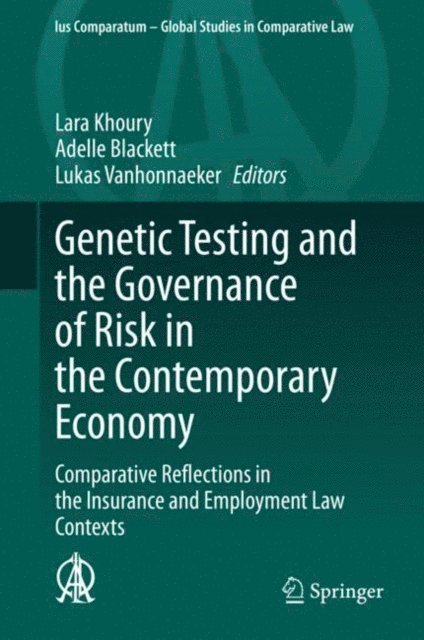
Genetic Testing and the Governance of Risk in the Contemporary Economy
Comparative Reflections in the Insurance and Employment Law Contexts
Inbunden, Engelska, 2020
987 kr
Skickas inom 10-15 vardagar
This book addresses emerging questions concerning who should bear responsibility for shouldering risk, as well as the viability of existing and experimental governance mechanisms in connection with new technologies. Scholars from 14 jurisdictions unite their efforts in this edited collection to provide a comparative analysis of how various legal systems are tackling the challenges produced by the legal aspects of genetic testing in insurance and employment. They cover the diverse set of norms that surround this issue, and share insights into relevant international, regional and national incursions into the field. By doing so, the authors offer a basis for comparative reflection, including on whether transnational standard setting might be useful or necessary for the legal aspects of genetic testing as they relate to the insurance and employment contexts. The respective texts cover a broad range of topics, including the prevalence of genetic testing in the contexts of insurance and employment, and policy factors that might affect this prevalence, such as the design of national health or social insurance systems, of private insurance schemes or the availability of low-cost direct-to-consumer genetic testing. Further, the field of genetics is gaining in importance at the international and regional levels. Relevant concepts – mainly genetic tests and genetic data/information – have been internationally defined, and these definitions have influenced definitions adopted nationally. International law also recognizes a “special status” for human genetic data. The authors therefore also consider these definitions and the recognition of the special status of human genetic data within regional and national legal orders. They investigate the range of norms that specifically address the use of genetic testing in employment and insurance, encompassing international sources – including human rights norms – that may be binding or non-binding, as well national statutory, regulatory and soft-law mechanisms. Accordingly, some of the texts examine general frameworks relevant to genetic testing in each country, including those that stem from general anti-discrimination rules and norms protecting rights to autonomy, self-determination, confidentiality and privacy. In closing, the authors provide an overview of the efficiency of their respective legal regimes’ approaches – specific and generalist – to genetic testing or disclosure of genetic information in the employment or insurance contexts, including the effect of lack of legal guidance. In this regard, some of the authors highlight the need for transnational action in the field and make recommendation for future legal developments.
Del 34 - Ius Comparatum - Global Studies in Comparative Law
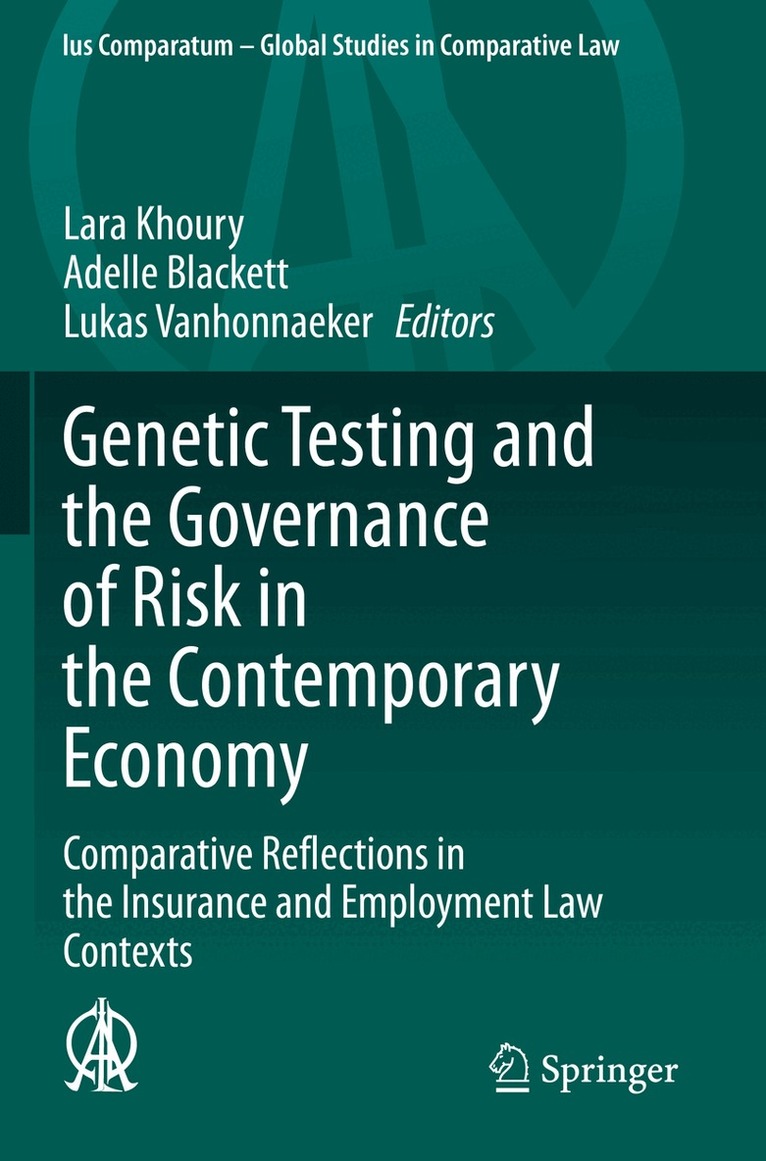
Genetic Testing and the Governance of Risk in the Contemporary Economy
Comparative Reflections in the Insurance and Employment Law Contexts
Häftad, Engelska, 2021
987 kr
Skickas inom 10-15 vardagar
This book addresses emerging questions concerning who should bear responsibility for shouldering risk, as well as the viability of existing and experimental governance mechanisms in connection with new technologies. Scholars from 14 jurisdictions unite their efforts in this edited collection to provide a comparative analysis of how various legal systems are tackling the challenges produced by the legal aspects of genetic testing in insurance and employment. They cover the diverse set of norms that surround this issue, and share insights into relevant international, regional and national incursions into the field. By doing so, the authors offer a basis for comparative reflection, including on whether transnational standard setting might be useful or necessary for the legal aspects of genetic testing as they relate to the insurance and employment contexts. The respective texts cover a broad range of topics, including the prevalence of genetic testing in the contexts of insurance and employment, and policy factors that might affect this prevalence, such as the design of national health or social insurance systems, of private insurance schemes or the availability of low-cost direct-to-consumer genetic testing. Further, the field of genetics is gaining in importance at the international and regional levels. Relevant concepts – mainly genetic tests and genetic data/information – have been internationally defined, and these definitions have influenced definitions adopted nationally. International law also recognizes a “special status” for human genetic data. The authors therefore also consider these definitions and the recognition of the special status of human genetic data within regional and national legal orders. They investigate the range of norms that specifically address the use of genetic testing in employment and insurance, encompassing international sources – including human rights norms – that may be binding or non-binding, as well national statutory, regulatory and soft-law mechanisms. Accordingly, some of the texts examine general frameworks relevant to genetic testing in each country, including those that stem from general anti-discrimination rules and norms protecting rights to autonomy, self-determination, confidentiality and privacy. In closing, the authors provide an overview of the efficiency of their respective legal regimes’ approaches – specific and generalist – to genetic testing or disclosure of genetic information in the employment or insurance contexts, including the effect of lack of legal guidance. In this regard, some of the authors highlight the need for transnational action in the field and make recommendation for future legal developments.
Del 7 - Ius Comparatum
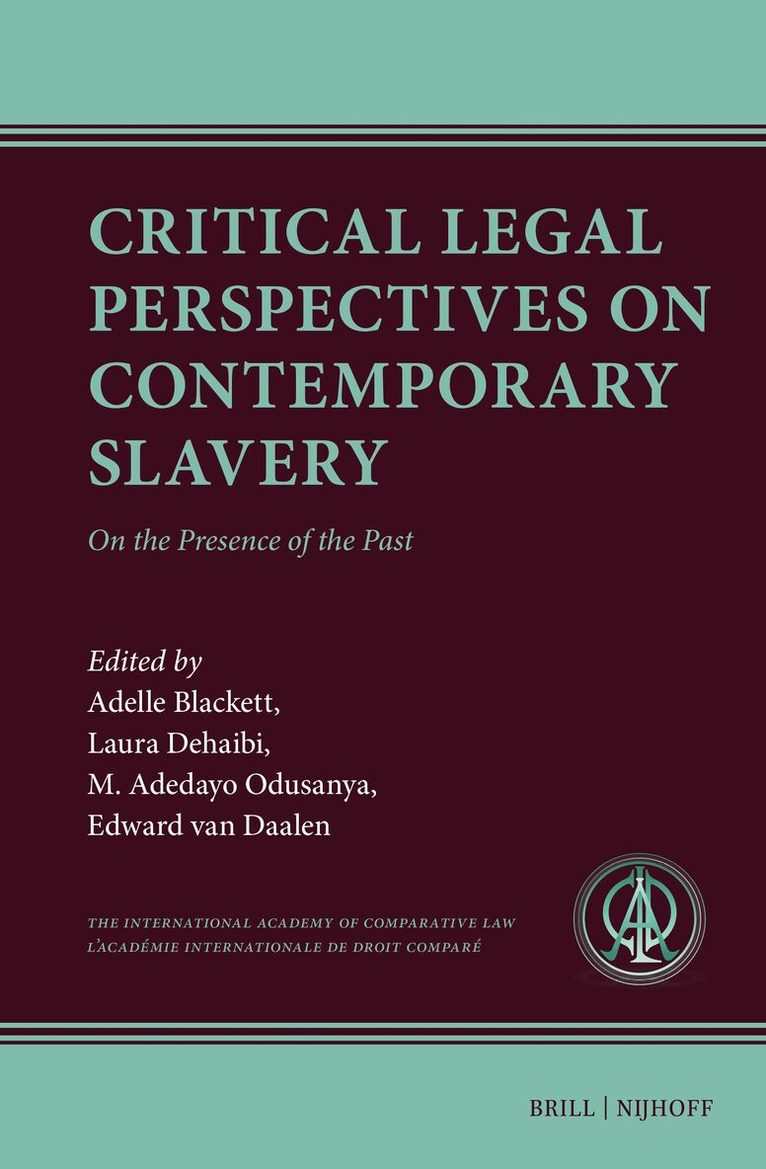
Critical Legal Perspectives on Contemporary Slavery
On the Presence of the Past
Inbunden, Engelska, 2025
2 801 kr
Skickas inom 3-6 vardagar
This edited volume examines contemporary forms of slavery and the law through an historical and comparative lens. The volume consists of a general report and 15 national reports from a wide cross-section of jurisdictions that include Canada, Peru, the Netherlands, Barbados and Ghana. Each chapter provides in-depth engagement with slavery as a global institution in dialogue with slavery in its contemporary forms, including their causes and consequences. The book explores slavery and the Atlantic slave trade, its historical legacies in the persistence of racial capitalism, and points of continuity and disjuncture with contemporary attempts to redress severe labour exploitation in global supply and global care chains.