Adrian Newton - Böcker
Visar alla böcker från författaren Adrian Newton. Handla med fri frakt och snabb leverans.
3 produkter
3 produkter
935 kr
Skickas inom 7-10 vardagar
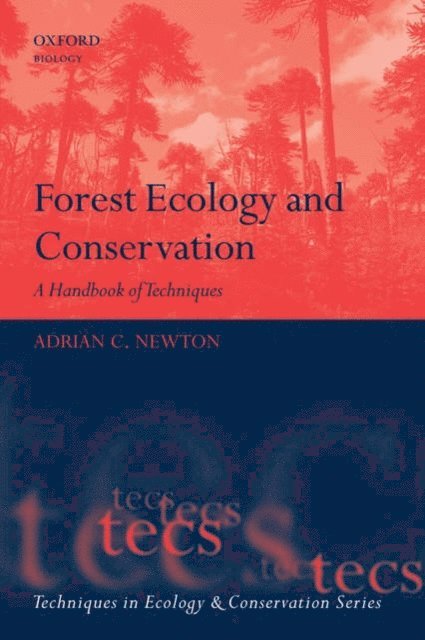
Forest conservation has become one of the most important environmental issues currently facing humanity, as a result of widespread deforestation and forest degradation. Pressures on remaining natural forests continue to intensify, leading to high rates of biodiversity loss. Understanding how human activities influence ecological processes within forests is essential for developing effective conservation action. This book describes research methods and techniques relevant to understanding forest ecology, with a particular focus on those that are relevant to practical conservation and sustainable forest management. This information is currently disparate and difficult to locate and, as with other books in this series, the intention is to provide a comprehensive synthesis for use by graduate students, researchers and practising conservationists. Methods are presented for assessing forest extent and condition, structure and composition, and forest dynamics at a variety of scales. Techniques for assessing genetic variation and reproductive ecology, and for evaluating the habitat value of forests are also described. Particular emphasis is given to state-of-the-art techniques such as remote sensing, GIS, computer modelling and molecular markers. However, traditional methods of forest mensuration and ecological survey are also presented. The methods and techniques described are generally applicable to all forest types, including both temperate and tropical forest ecosystems.
863 kr
Skickas inom 7-10 vardagar
Mahogany (Swietenia macrophylla) is one of the best-known and most valuable tropical timbers currently traded internationally. Concern has increased over the exploitation of mahogany, particularly as most timber is currently derived from natural forests which are not managed sustainably. Such concerns have resulted in an increased research effort focusing on the ecology of the species in natural forest. The potential of mahogany plantations as an alternative source of timber has received relatively little attention. However, evidence suggests mahogany may be a viable plantation species in many countries. The successful development of such plantations could make a major contribution towards meeting future demands for mahogany timber, and thereby help to reduce pressures on natural forest. The main aim of this book is to produce a comprehensive account of mahogany silviculture, with a particular emphasis on plantations, by bringing together the findings of foresters and researchers from mahogany-growing countries around the world. There is a logical progression through the stages of seed collection, plantation establishment, maintenance, prediction of growth and yield, protection and management of both natural stands and plantations under suitable silvicultural systems. This book is an indispensable guide and reference for those involved in growing and managing mahogany and will also be valuable to ecologists and land managers as well as students of forestry.
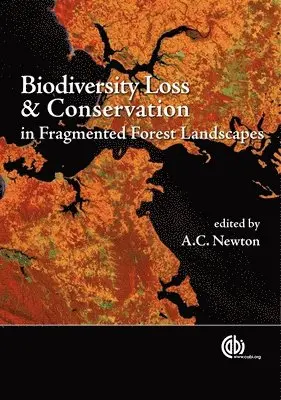
Biodiversity Loss and Conservation in Fragmented Forest Landscapes
The Forests of Montane Mexico and Temperate South America
Inbunden, Engelska, 2007
2 117 kr
Skickas inom 7-10 vardagar
Increasing concern surrounding the loss of natural forests and the decline in biodiversity has lead to a rise in research and policy initiatives in recent years. However, interest has focused primarily on lowland tropical rainforests. Tropical montane and temperate rainforests, which face similar pressures from human activities and play major roles in the livelihood of rural communities, are often ignored. Biodiversity Loss and Conservation in Fragmented Forest Landscapes is the product of over 10 years of intensive field research into the changing montane and temperate rainforests of Mexico and South America. By concentrating on these largely overlooked environments, the studies reported allow for comparative analysis across areas and help identify how human disturbance has impacted the biodiversity of all forest types. Chapters incorporate features of landscape ecology, floristic biodiversity, conservation and policy and vary from in-depth investigations of a single study area to integrated examinations across regions.