Adrian Salceanu – författare
Visar alla böcker från författaren Adrian Salceanu. Handla med fri frakt och snabb leverans.
2 produkter
2 produkter
Häftad, Engelska, 2018
634 kr
Skickas inom 5-8 vardagar
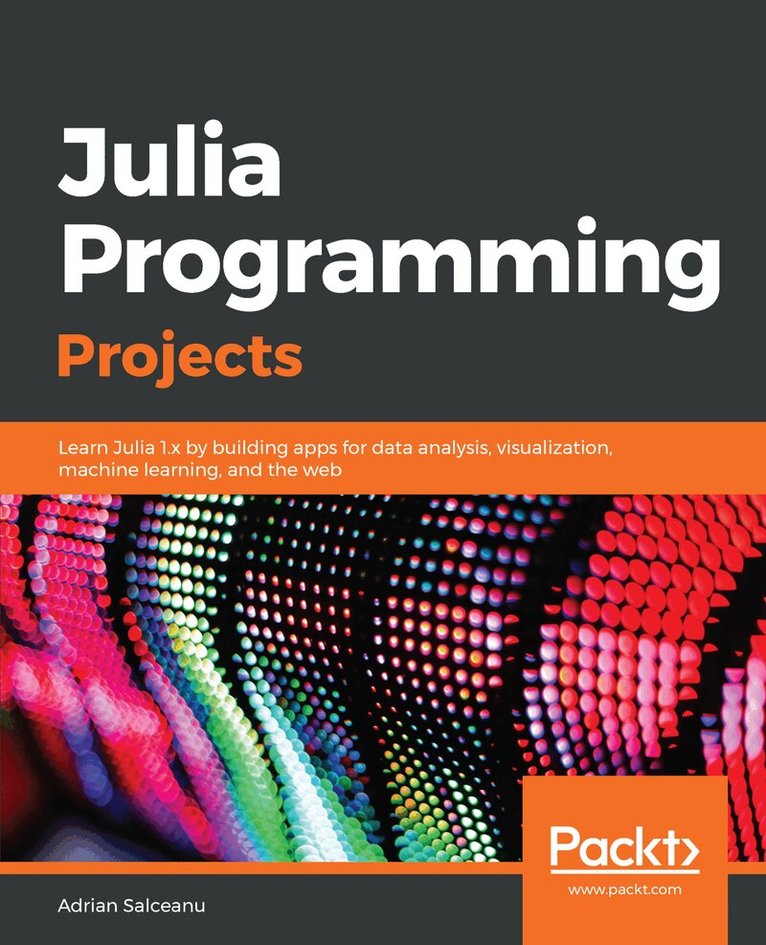
A step-by-step guide that demonstrates how to build simple-to-advanced applications through examples in Julia Lang 1.x using modern toolsKey FeaturesWork with powerful open-source libraries for data wrangling, analysis, and visualizationDevelop full-featured, full-stack web applicationsLearn to perform supervised and unsupervised machine learning and time series analysis with JuliaBook DescriptionJulia is a new programming language that offers a unique combination of performance and productivity. Its powerful features, friendly syntax, and speed are attracting a growing number of adopters from Python, R, and Matlab, effectively raising the bar for modern general and scientific computing.After six years in the making, Julia has reached version 1.0. Now is the perfect time to learn it, due to its large-scale adoption across a wide range of domains, including fintech, biotech, education, and AI.Beginning with an introduction to the language, Julia Programming Projects goes on to illustrate how to analyze the Iris dataset using DataFrames. You will explore functions and the type system, methods, and multiple dispatch while building a web scraper and a web app. Next, you'll delve into machine learning, where you'll build a books recommender system. You will also see how to apply unsupervised machine learning to perform clustering on the San Francisco business database. After metaprogramming, the final chapters will discuss dates and time, time series analysis, visualization, and forecasting.We'll close with package development, documenting, testing and benchmarking.By the end of the book, you will have gained the practical knowledge to build real-world applications in Julia.What you will learnLeverage Julia s strengths, its top packages, and main IDE optionsAnalyze and manipulate datasets using Julia and DataFramesWrite complex code while building real-life Julia applicationsDevelop and run a web app using Julia and the HTTP packageBuild a recommender system using supervised machine learningPerform exploratory data analysisApply unsupervised machine learning algorithmsPerform time series data analysis, visualization, and forecastingWho this book is forData scientists, statisticians, business analysts, and developers who are interested in learning how to use Julia to crunch numbers, analyze data and build apps will find this book useful. A basic knowledge of programming is assumed.
Häftad, Engelska, 2019
613 kr
Skickas inom 5-8 vardagar
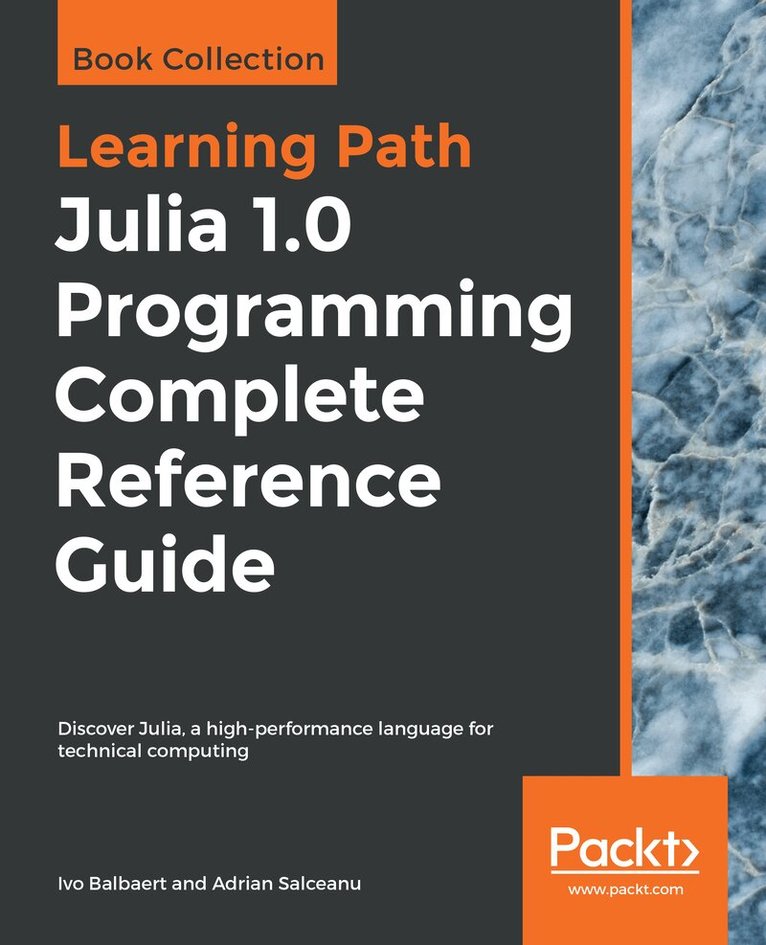
Learn dynamic programming with Julia to build apps for data analysis, visualization, machine learning, and the webKey FeaturesLeverage Julia's high speed and efficiency to build fast, efficient applicationsPerform supervised and unsupervised machine learning and time series analysisTackle problems concurrently and in a distributed environmentBook DescriptionJulia offers the high productivity and ease of use of Python and R with the lightning-fast speed of C++. There’s never been a better time to learn this language, thanks to its large-scale adoption across a wide range of domains, including fintech, biotech and artificial intelligence (AI).You will begin by learning how to set up a running Julia platform, before exploring its various built-in types. This Learning Path walks you through two important collection types: arrays and matrices. You’ll be taken through how type conversions and promotions work, and in further chapters you'll study how Julia interacts with operating systems and other languages. You’ll also learn about the use of macros, what makes Julia suitable for numerical and scientific computing, and how to run external programs.Once you have grasped the basics, this Learning Path goes on to how to analyze the Iris dataset using DataFrames. While building a web scraper and a web app, you’ll explore the use of functions, methods, and multiple dispatches. In the final chapters, you'll delve into machine learning, where you'll build a book recommender system.By the end of this Learning Path, you’ll be well versed with Julia and have the skills you need to leverage its high speed and efficiency for your applications.This Learning Path includes content from the following Packt products:Julia 1.0 Programming - Second Edition by Ivo BalbaertJulia Programming Projects by Adrian SalceanuWhat you will learnCreate your own types to extend the built-in type systemVisualize your data in Julia with plotting packagesExplore the use of built-in macros for testing and debuggingIntegrate Julia with other languages such as C, Python, and MATLABAnalyze and manipulate datasets using Julia and DataFramesDevelop and run a web app using Julia and the HTTP packageBuild a recommendation system using supervised machine learningWho this book is forIf you are a statistician or data scientist who wants a quick course in the Julia programming language while building big data applications, this Learning Path is for you. Basic knowledge of mathematics and programming is a must.