Adrian X. Esparza - Böcker
Visar alla böcker från författaren Adrian X. Esparza. Handla med fri frakt och snabb leverans.
4 produkter
4 produkter
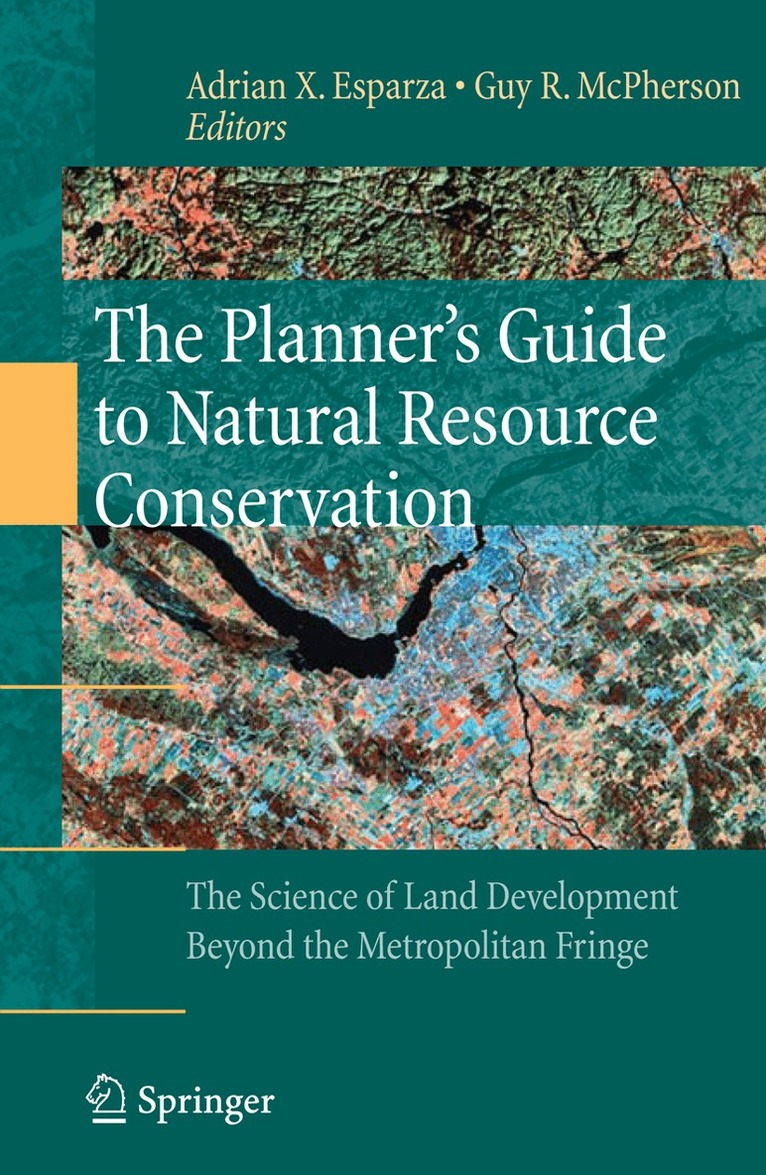
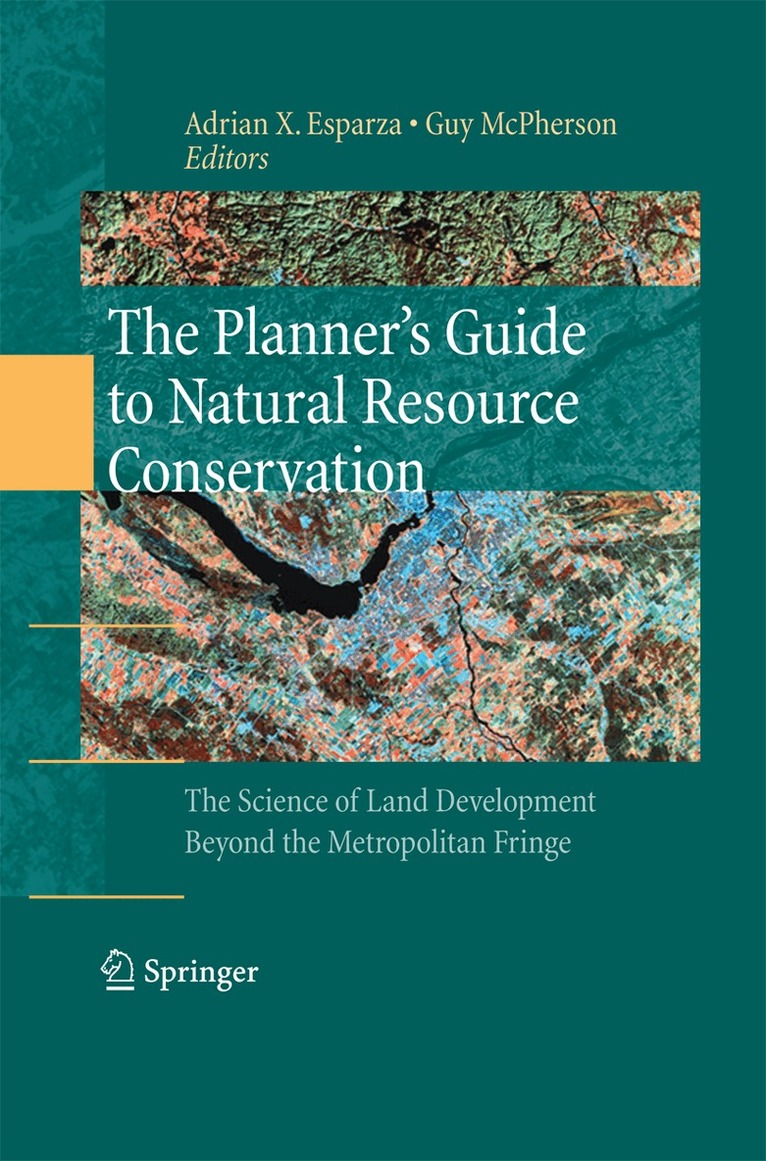
Planner’s Guide to Natural Resource Conservation:
The Science of Land Development Beyond the Metropolitan Fringe
Inbunden, Engelska, 2009
1 064 kr
Skickas inom 10-15 vardagar
Much of the country’s recent population growth is situated in exurban areas. By many accounts exurbanization has become the dominant pattern of land development in the country and there is no indication it will slow in the foreseeable future (Theobald 2005; Brown et al. 2005; Glennon and Kretser 2005). By definition, exurban development takes place beyond the metropolitan fringe, often in rural and remote areas. The development of new exurban communities is a growing trend, especially in the West. In this case, developers and homebuilders seek large tracts of land, up to thousands of acres, in rural areas (typically within 50 miles of a large city) where they plan entire communities consisting of commercial, retail and residential land uses. Recreational amenities such as golf courses and hiking/biking trails are often included in these master-planned developments. Our philosophy is reflected in the book’s two objectives. First, we seek to document the extent and impacts of exurban development across the country. At issue is demonstrating why planners and the public-at-large should be concerned about exurbanization. We will demonstrate that even though exurbanization favors amenity rich regions, it affects all areas of the country through the loss of agricultural and grazing lands, impacts to watersheds and land modification. A summary of environmental impacts is presented, including the loss of wildlands and agricultural productivity, land modification, soil erosion, impacts to terrestrial hydrologic systems, the loss of biodiversity, nonnative and endangered species and other topics. Our second aim is to provide readers from diverse (nonscientific) backgrounds with a working knowledge of how and why exurbanization impacts environmental systems. This is accomplished by working closely to ensure contributors follow a specific outline for each chapter. First, contributors will spell out fundamental concepts, principles and processes that applyto their area of expertise (e.g., riparian areas). Contributors will move beyond a cursory understanding of ecological processes without overwhelming readers with the dense material found typically in specialized texts. For this reason, visuals and other support materials will be integral to each chapter. We have chosen contributors carefully based on their record as research scientists and acumen as educators. Second, once the mechanics have been laid out, authors will explain how and why land development in nearby areas influences ecosystems. Issues of interdependency, modification and adaptation, spatial scale and varying time horizons will be featured. Third, contributors will weigh in on the pros and cons of various land-development schemes. Fourth, authors will share their thinking on the merits of conservation devices such as wildlife corridors, open-space requirements and watershed management districts. Finally, each chapter will conclude by identifying pitfalls to avoid and highlighting "best practices" that will mitigate environmental problems or avoid them altogether. In sum, after completing each chapter, readers should have a firm grasp of relevant concepts and processes, an understanding of current research and know how to apply science to land-use decisions.
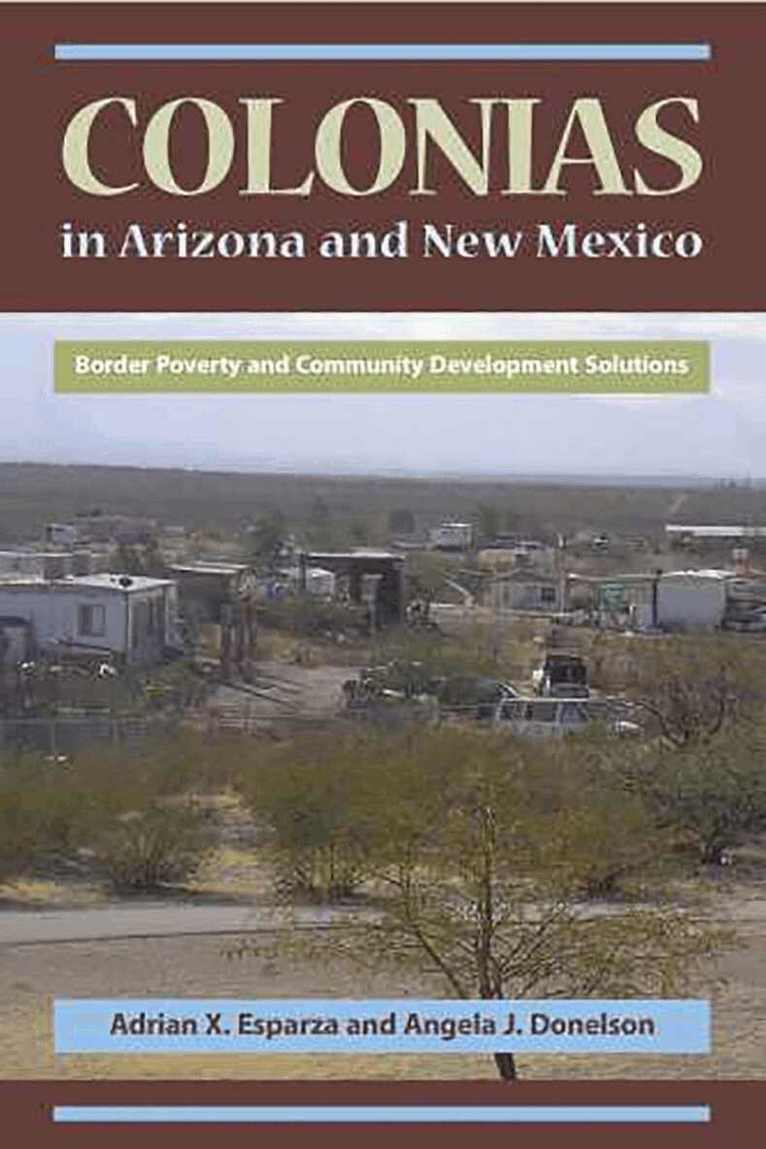
Colonias in Arizona and New Mexico
Border Poverty and Community Development Solutions
Häftad, Engelska, 2008
270 kr
Skickas inom 7-10 vardagar
There are approximately half a million people living in 227 officially designated colonias in southern Arizona and New Mexico. These border communities are characterized by poor-quality housing, a lack of infrastructure (paved roads, water and sewer systems, and electricity), high levels of poverty and unemployment, and a disproportionate concentration of Hispanics. These colonias comprise one of the country's largest pockets of poverty. Even so, little is known about these towns or the people who live in them. This book provides the first comprehensive treatment of Arizona and New Mexico colonias, with the aim of increasing their visibility and promoting community development. Beginning with an examination of the origins of borderregion settlement and the emergence of colonias in southern Arizona and New Mexico in the late 1800s, the book then turns to an assessment of current social, economic, and housing conditions. The authors also examine how Mexico's recent economic crises and U.S. immigration and border security policies have shaped the quality of life in colonias, and they evaluate recent community development initiatives.By examining the challenges and successes of these recent efforts, the authors are able to provide a generalized plan for community development. Balancing analyses of these communities with a review of the positive steps taken to improve the quality of life of their inhabitants, Colonias in Arizona and New Mexico is an indispensable tool for anyone interested in public policy or immigration issues.
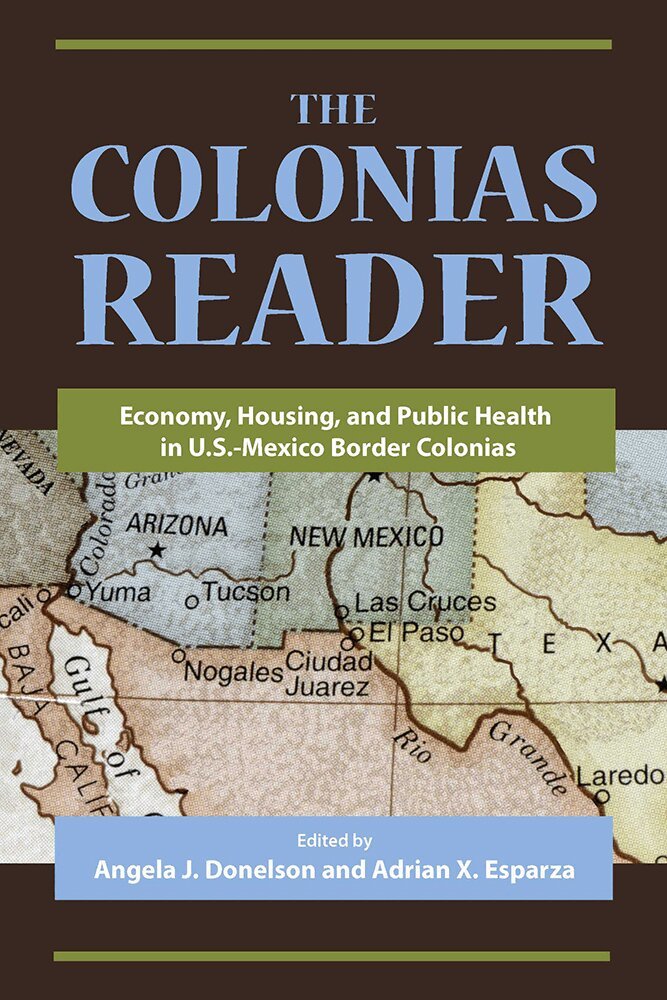
Colonias Reader
Economy, Housing, and Public Health in U.S.-Mexico Border Colonias
Häftad, Engelska, 2010
296 kr
Skickas inom 7-10 vardagar
The colonias of the U.S.-Mexico border form a loose network of more than 2,500 settlements, ranging in size from villages to cities, that are home to over a million people. While varying in size, all share common features: wrenching poverty, substandard housing, and public health issues approaching crisis levels. This book brings together scholars, professionals, and activists from a wide range of disciplines to examine the pressing issues of economic development, housing and community development, and public and environmental health in colonias of the four U.S.-Mexico border states The Colonias Reader is the first book to present such a broad overview of these communities, offering a glimpse into life in the colonias and the circumstances that allow them to continue to exist--and even grow--in persistent poverty. The contributors document the depth of existing problems in each state and describe how government agencies, nongovernmental organizations, and community activists have mobilized resources to overcome obstacles to progress. More than reporting problems and documenting programs, the book provides conceptual frameworks that tie poverty to institutional and class-based conflicts, and even challenges the very basis of colonia designations. Most of these contributions move beyond portraying border residents as hapless victims of discrimination and racism, showing instead their devotion to improving their own living conditions through grassroots organizing and community leadership. These contributions show that, despite varying degrees of success, all colonia residents aspire to a livable wage, safe and decent housing, and basic health care. The Colonias Reader showcases many situations in which these people have organized to fulfill these ambitions and provides new insight into life along the border.
Planner’s Guide to Natural Resource Conservation:
The Science of Land Development Beyond the Metropolitan Fringe
Häftad, Engelska, 2014
1 064 kr
Skickas inom 10-15 vardagar
Much of the country’s recent population growth is situated in exurban areas. By many accounts exurbanization has become the dominant pattern of land development in the country and there is no indication it will slow in the foreseeable future (Theobald 2005; Brown et al. 2005; Glennon and Kretser 2005). By definition, exurban development takes place beyond the metropolitan fringe, often in rural and remote areas. The development of new exurban communities is a growing trend, especially in the West. In this case, developers and homebuilders seek large tracts of land, up to thousands of acres, in rural areas (typically within 50 miles of a large city) where they plan entire communities consisting of commercial, retail and residential land uses. Recreational amenities such as golf courses and hiking/biking trails are often included in these master-planned developments. Our philosophy is reflected in the book’s two objectives. First, we seek to document the extent and impacts of exurban development across the country. At issue is demonstrating why planners and the public-at-large should be concerned about exurbanization. We will demonstrate that even though exurbanization favors amenity rich regions, it affects all areas of the country through the loss of agricultural and grazing lands, impacts to watersheds and land modification. A summary of environmental impacts is presented, including the loss of wildlands and agricultural productivity, land modification, soil erosion, impacts to terrestrial hydrologic systems, the loss of biodiversity, nonnative and endangered species and other topics. Our second aim is to provide readers from diverse (nonscientific) backgrounds with a working knowledge of how and why exurbanization impacts environmental systems. This is accomplished by working closely to ensure contributors follow a specific outline for each chapter. First, contributors will spell out fundamental concepts, principles and processes that applyto their area of expertise (e.g., riparian areas). Contributors will move beyond a cursory understanding of ecological processes without overwhelming readers with the dense material found typically in specialized texts. For this reason, visuals and other support materials will be integral to each chapter. We have chosen contributors carefully based on their record as research scientists and acumen as educators. Second, once the mechanics have been laid out, authors will explain how and why land development in nearby areas influences ecosystems. Issues of interdependency, modification and adaptation, spatial scale and varying time horizons will be featured. Third, contributors will weigh in on the pros and cons of various land-development schemes. Fourth, authors will share their thinking on the merits of conservation devices such as wildlife corridors, open-space requirements and watershed management districts. Finally, each chapter will conclude by identifying pitfalls to avoid and highlighting "best practices" that will mitigate environmental problems or avoid them altogether. In sum, after completing each chapter, readers should have a firm grasp of relevant concepts and processes, an understanding of current research and know how to apply science to land-use decisions.