Adriana Allen - Böcker
Visar alla böcker från författaren Adriana Allen. Handla med fri frakt och snabb leverans.
9 produkter
9 produkter
617 kr
Skickas inom 10-15 vardagar
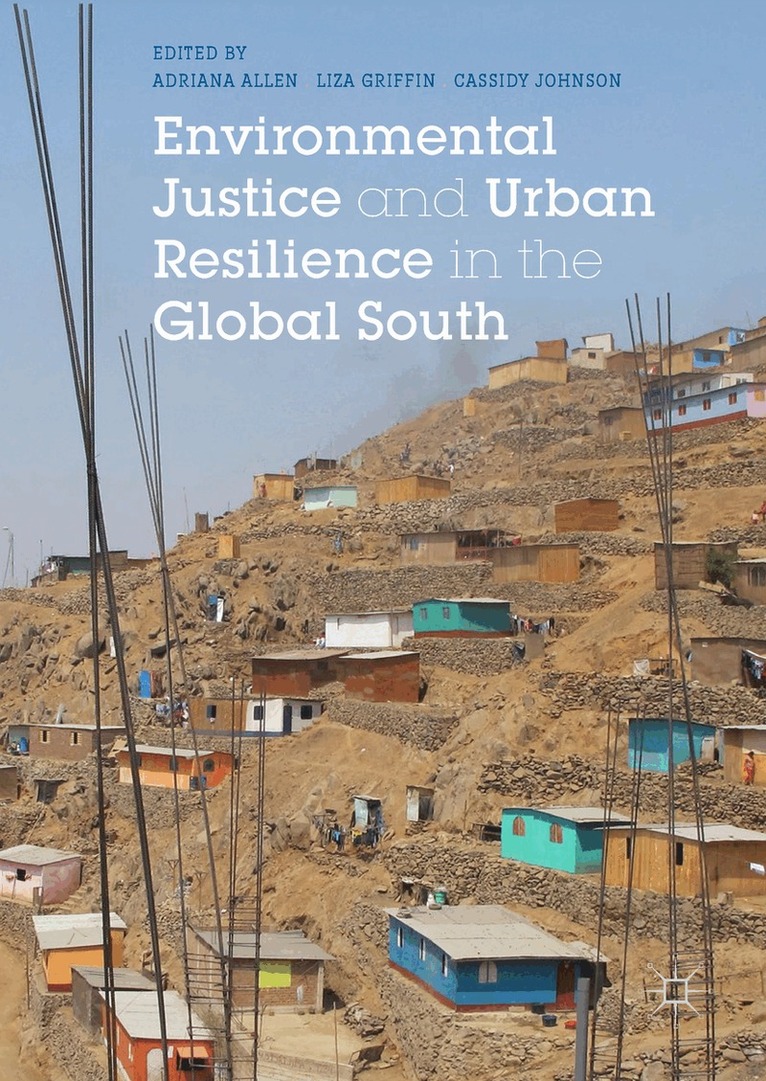
An electronic version of this book is available Open Access at www.tandfebooks.com. It has been made available under a Creative Commons Attribution-Non Commercial-No Derivatives 3.0 license.One of the major challenges of urban development has been reconciling the way cities develop with the mounting evidence of resource depletion and the negative environmental impacts of predominantly urban-based modes of production and consumption. This book aims to re-politicise the relationship between urban development, sustainability and justice, and to explore the tensions emerging under real circumstances, as well as their potential for transformative change.For some, cities are the root of all that is unsustainable, while for others cities provide unique opportunities for sustainability-oriented innovations that address equity and ecological challenges. This book is rooted in the latter category, but recognises that if cities continue to evolve along current trajectories they will be where the large bulk of the most unsustainable and inequitable human activities are concentrated. By drawing on a range of case studies from both the global South and global North, this book is unique in its aim to develop an integrated social-ecological perspective on the challenge of sustainable urban development. Through the interdisciplinary and original research of a new generation of urban researchers across the global South and North, this book addresses old debates in new ways and raises new questions about sustainable urban development. .
663 kr
Skickas inom 10-15 vardagar
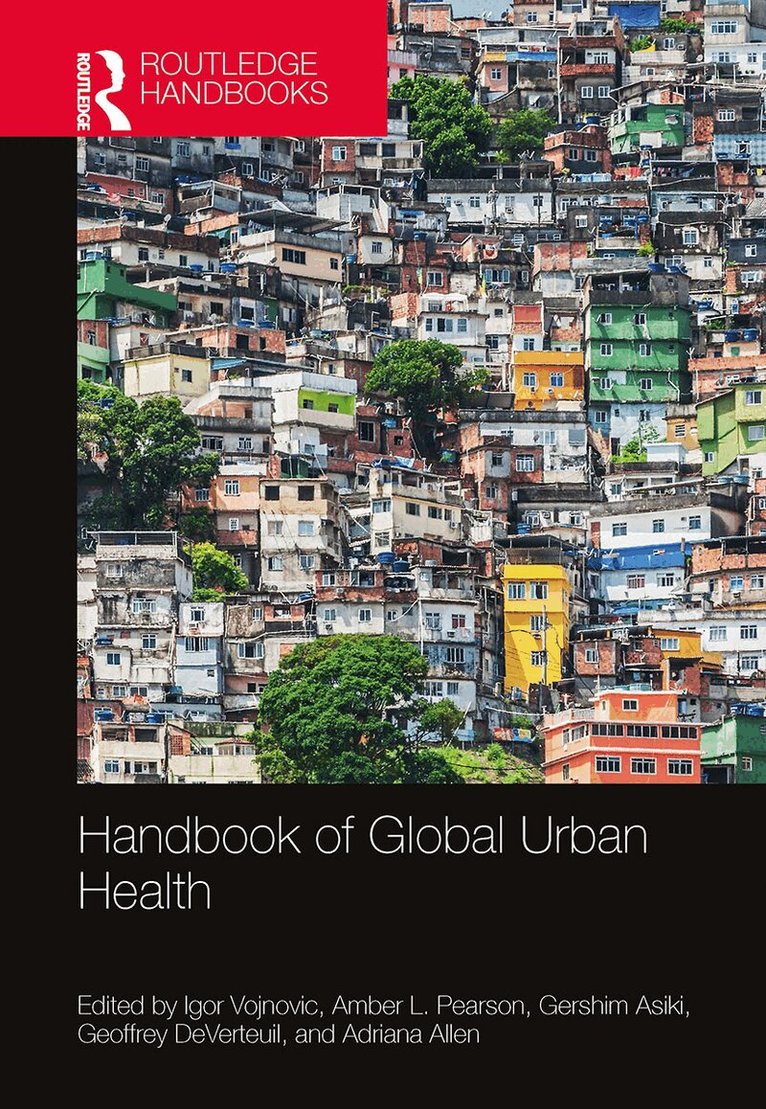
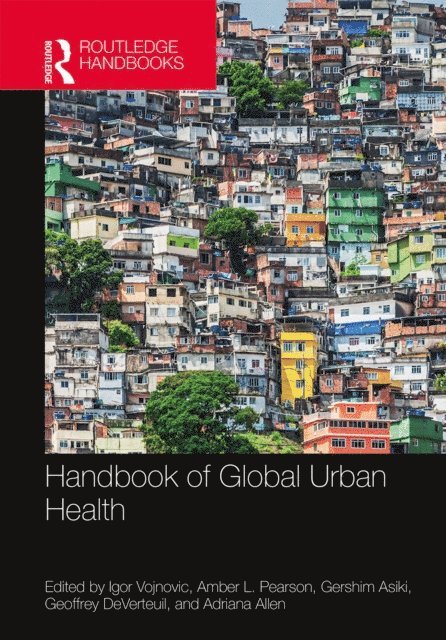
Through interdisciplinary and multidisciplinary perspectives, and with an emphasis on exploring patterns as well as distinct and unique conditions across the globe, this collection examines advanced and cutting-edge theoretical and methodological approaches to the study of the health of urban populations. Despite the growing interest in global urban health, there are limited resources available that provide an extensive and advanced exploration into the health of urban populations in a transnational context. This volume offers a high-quality and comprehensive examination of global urban health issues by leading urban health scholars from around the world. The book brings together a multi-disciplinary perspective on urban health, with chapter contributions emphasizing disciplines in the social sciences, construction sciences and medical sciences. The co-editors of the collection come from a number of different disciplinary backgrounds that have been at the forefront of urban health research, including public health, epidemiology, geography, city planning and urban design. The book is intended to be a reference in global urban health for research libraries and faculty collections. It will also be appropriate as a text for university class adoption in upper-division under-graduate courses and above. The proposed volume is extensive and offers enough breadth and depth to enable it to be used for courses emphasizing a U.S., or wider Western perspective, as well as courses on urban health emphasizing a global context.
698 kr
Skickas inom 10-15 vardagar
This volume provides a comprehensive discussion and overview of urban resilience, including socio-ecological and economic hazard and disaster resilience. It provides a summary of state of the art thinking on resilience, the different approaches, tools and methodologies for understanding the subject in urban contexts, and brings together related reflections and initiatives.Throughout the different chapters, the handbook critically examines and reviews the resilience concept from various disciplinary and professional perspectives. It also discusses major urban crises, past and recent, and the generic lessons they provide for resilience. In this context, the authors provide case studies from different places and times, including historical material and contemporary examples, and studies that offer concrete guidance on how to approach urban resilience. Other chapters focus on how current understanding of urban systems – such as shrinking cities, green infrastructure, disaster volunteerism, and urban energy systems – are affecting the capacity of urban citizens, settlements and nation-states to respond to different forms and levels of stressors and shocks. The handbook concludes with a synthesis of the state of the art knowledge on resilience and points the way forward in refining the conceptualization and application of urban resilience. The book is intended for scholars and graduate students in urban studies, environmental and sustainability studies, geography, planning, architecture, urban design, political science and sociology, for whom it will provide an invaluable and up-to-date guide to current approaches across these disciplines that converge in the study of urban resilience. The book also provides important direction to practitioners and civic leaders who are engaged in supporting cities and regions to position themselves for resilience in the face of climate change, unpredictable socioenvironmental shocks and incremental risk accumulation.
1 786 kr
Skickas inom 10-15 vardagar
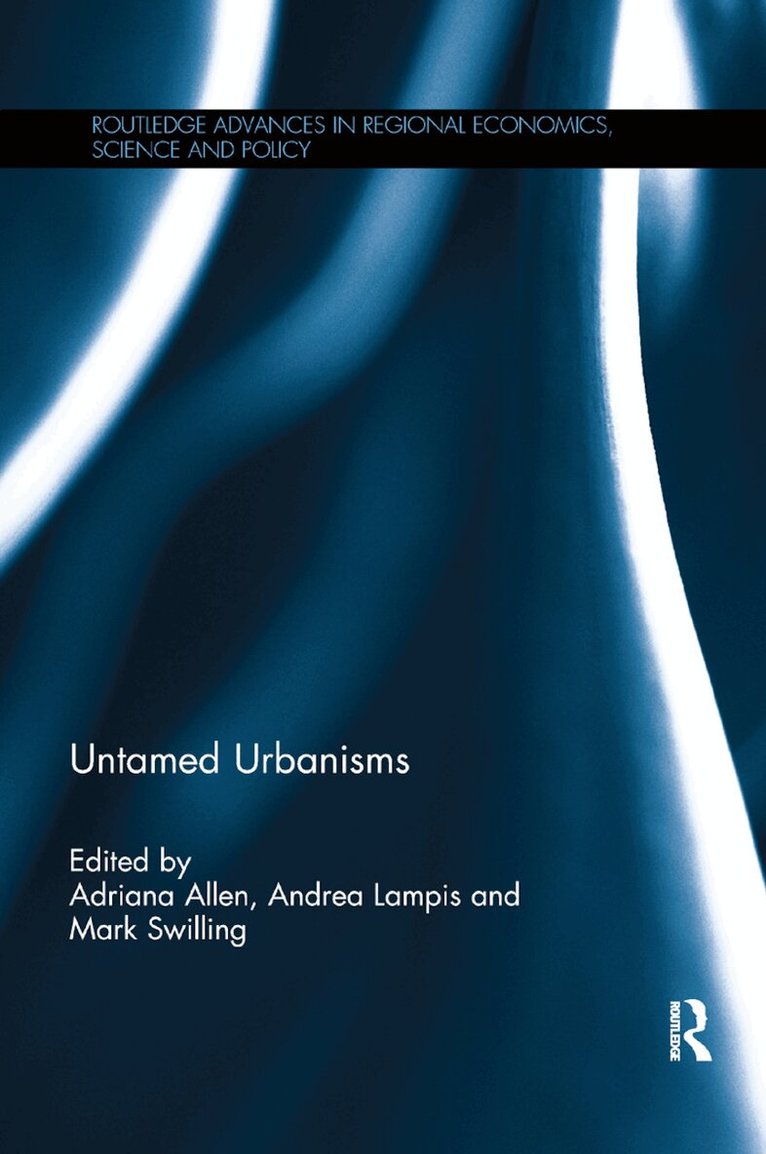
This book brings together an interdisciplinary and intergeneration group of scholars to examine the contradictions and tensions that develop as they play out in cities of the Global South through a series of empirically grounded case studies spanning cities of Asia, Latin America, Africa and Eastern Europe.
3 257 kr
Skickas inom 10-15 vardagar
Through interdisciplinary and multidisciplinary perspectives, and with an emphasis on exploring patterns as well as distinct and unique conditions across the globe, this collection examines advanced and cutting-edge theoretical and methodological approaches to the study of the health of urban populations. Despite the growing interest in global urban health, there are limited resources available that provide an extensive and advanced exploration into the health of urban populations in a transnational context.This volume offers a high-quality and comprehensive examination of global urban health issues by leading urban health scholars from around the world. The book brings together a multi-disciplinary perspective on urban health, with chapter contributions emphasizing disciplines in the social sciences, construction sciences and medical sciences. The co-editors of the collection come from a number of different disciplinary backgrounds that have been at the forefront of urban health research, including public health, epidemiology, geography, city planning and urban design. The book is intended to be a reference in global urban health for research libraries and faculty collections. It will also be appropriate as a text for university class adoption in upper-division under-graduate courses and above. The proposed volume is extensive and offers enough breadth and depth to enable it to be used for courses emphasizing a U.S., or wider Western perspective, as well as courses on urban health emphasizing a global context.
3 163 kr
Skickas inom 10-15 vardagar
This volume provides a comprehensive discussion and overview of urban resilience, including socio-ecological and economic hazard and disaster resilience. It provides a summary of state of the art thinking on resilience, the different approaches, tools and methodologies for understanding the subject in urban contexts, and brings together related reflections and initiatives.Throughout the different chapters, the handbook critically examines and reviews the resilience concept from various disciplinary and professional perspectives. It also discusses major urban crises, past and recent, and the generic lessons they provide for resilience. In this context, the authors provide case studies from different places and times, including historical material and contemporary examples, and studies that offer concrete guidance on how to approach urban resilience. Other chapters focus on how current understanding of urban systems – such as shrinking cities, green infrastructure, disaster volunteerism, and urban energy systems – are affecting the capacity of urban citizens, settlements and nation-states to respond to different forms and levels of stressors and shocks. The handbook concludes with a synthesis of the state of the art knowledge on resilience and points the way forward in refining the conceptualization and application of urban resilience. The book is intended for scholars and graduate students in urban studies, environmental and sustainability studies, geography, planning, architecture, urban design, political science and sociology, for whom it will provide an invaluable and up-to-date guide to current approaches across these disciplines that converge in the study of urban resilience. The book also provides important direction to practitioners and civic leaders who are engaged in supporting cities and regions to position themselves for resilience in the face of climate change, unpredictable socioenvironmental shocks and incremental risk accumulation.
2 155 kr
Skickas inom 10-15 vardagar
An electronic version of this book is available Open Access at www.tandfebooks.com. It has been made available under a Creative Commons Attribution-Non Commercial-No Derivatives 3.0 license.One of the major challenges of urban development has been reconciling the way cities develop with the mounting evidence of resource depletion and the negative environmental impacts of predominantly urban-based modes of production and consumption. This book aims to re-politicise the relationship between urban development, sustainability and justice, and to explore the tensions emerging under real circumstances, as well as their potential for transformative change.For some, cities are the root of all that is unsustainable, while for others cities provide unique opportunities for sustainability-oriented innovations that address equity and ecological challenges. This book is rooted in the latter category, but recognises that if cities continue to evolve along current trajectories they will be where the large bulk of the most unsustainable and inequitable human activities are concentrated. By drawing on a range of case studies from both the global South and global North, this book is unique in its aim to develop an integrated social-ecological perspective on the challenge of sustainable urban development. Through the interdisciplinary and original research of a new generation of urban researchers across the global South and North, this book addresses old debates in new ways and raises new questions about sustainable urban development. .
1 064 kr
Skickas inom 10-15 vardagar
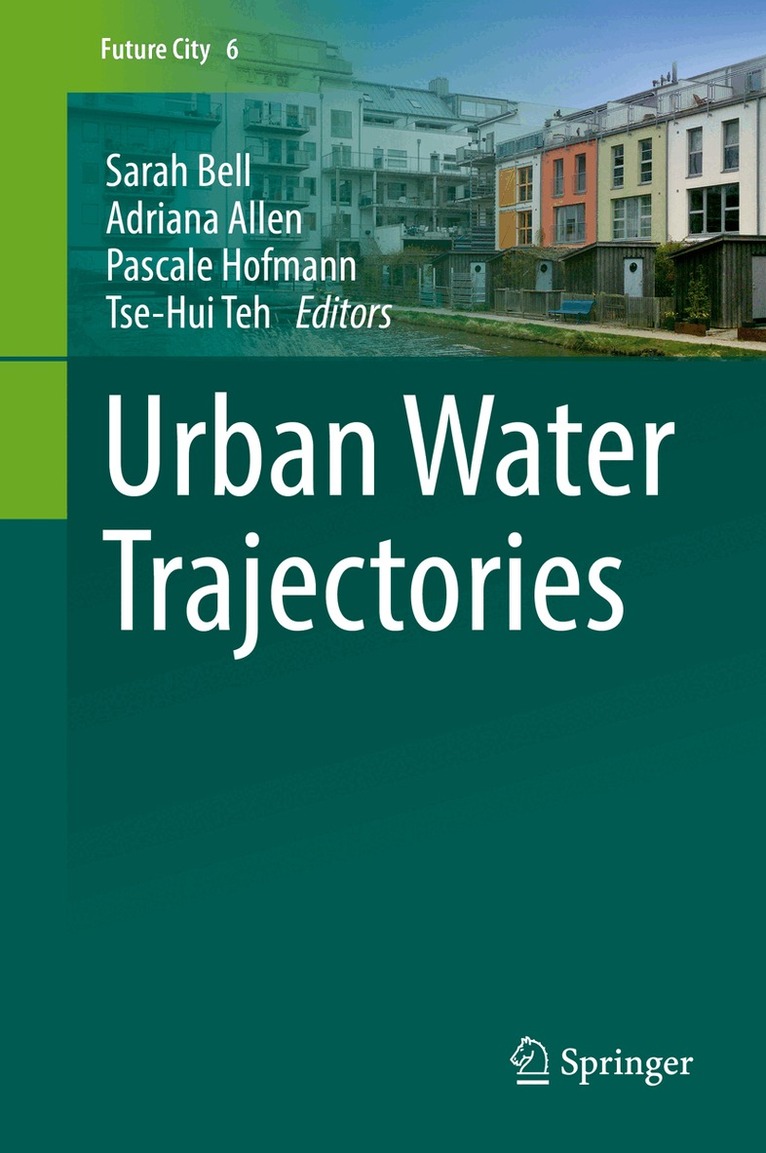
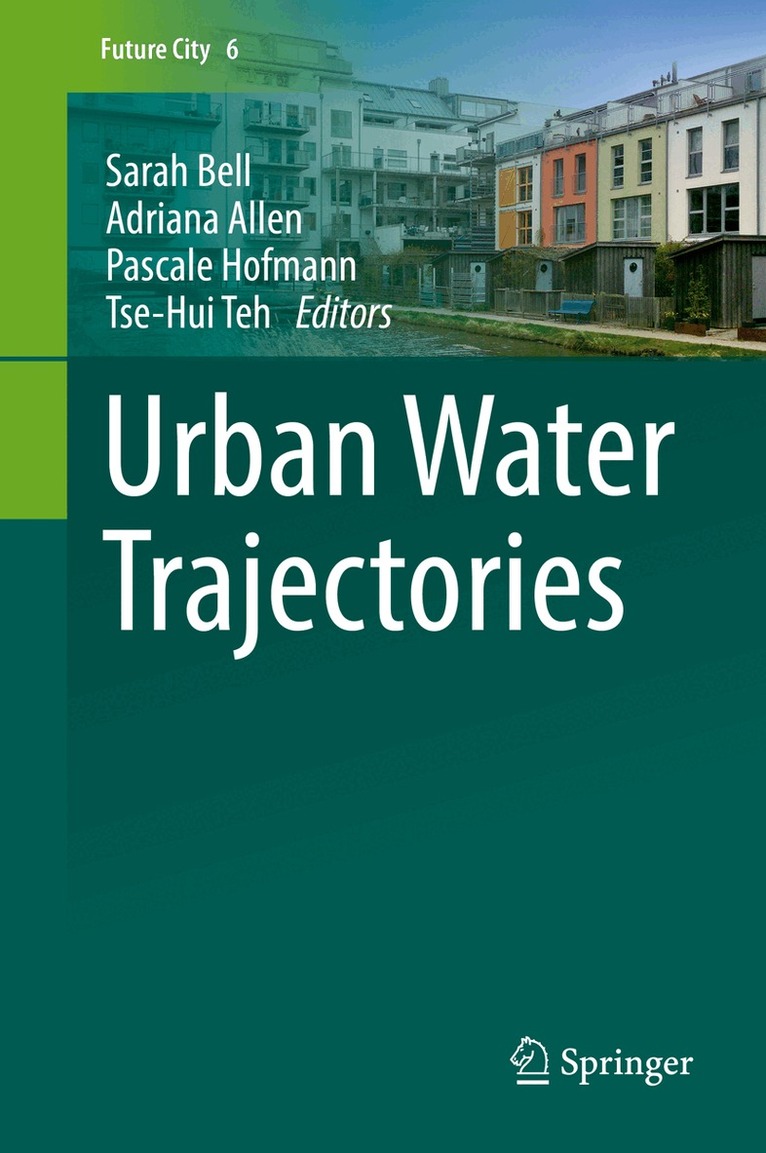
Water is an essential element in the future of cities. It shapes cities’ locations, form, ecology, prosperity and health. The changing nature of urbanisation, climate change, water scarcity, environmental values, globalisation and social justice mean that the models of provision of water services and infrastructure that have dominated for the past two centuries are increasingly infeasible. Conventional arrangements for understanding and managing water in cities are being subverted by a range of natural, technological, political, economic and social changes. The prognosis for water in cities remains unclear, and multiple visions and discourses are emerging to fill the space left by the certainty of nineteenth century urban water planning and engineering.This book documents a sample of those different trajectories, in terms of water transformations, option, services and politics. Water is a key element shaping urban form, economies and lifestyles, part of the ongoing transformation of cities. Cities are faced with a range of technical and policy options for future water systems. Water is an essential urban service, but models of provision remain highly contested with different visions for ownership of infrastructure, the scale of provision, and the level of service demanded by users. Water is a contentious political issue in the future of cities, serving different urban interests as power and water seem to flow in the same direction.Cities in Africa, Asia, Australia, Europe and South America provide case studies and emerging water challenges and responses. Comparison across different contexts demonstrates how the particular and the universal intersect in complex ways to generate new trajectories for urban water.
1 064 kr
Skickas inom 10-15 vardagar
Water is an essential element in the future of cities. It shapes cities’ locations, form, ecology, prosperity and health. The changing nature of urbanisation, climate change, water scarcity, environmental values, globalisation and social justice mean that the models of provision of water services and infrastructure that have dominated for the past two centuries are increasingly infeasible. Conventional arrangements for understanding and managing water in cities are being subverted by a range of natural, technological, political, economic and social changes. The prognosis for water in cities remains unclear, and multiple visions and discourses are emerging to fill the space left by the certainty of nineteenth century urban water planning and engineering.This book documents a sample of those different trajectories, in terms of water transformations, option, services and politics. Water is a key element shaping urban form, economies and lifestyles, part of the ongoing transformation of cities. Cities are faced with a range of technical and policy options for future water systems. Water is an essential urban service, but models of provision remain highly contested with different visions for ownership of infrastructure, the scale of provision, and the level of service demanded by users. Water is a contentious political issue in the future of cities, serving different urban interests as power and water seem to flow in the same direction.Cities in Africa, Asia, Australia, Europe and South America provide case studies and emerging water challenges and responses. Comparison across different contexts demonstrates how the particular and the universal intersect in complex ways to generate new trajectories for urban water.