Adriana E. Foster - Böcker
Visar alla böcker från författaren Adriana E. Foster. Handla med fri frakt och snabb leverans.
3 produkter
3 produkter
437 kr
Skickas inom 5-8 vardagar
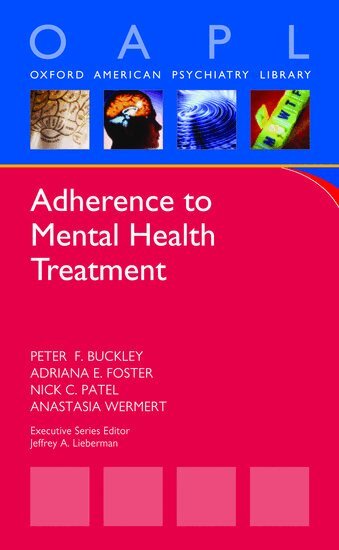
Patients' failure to complete a simple prescription course presents a tremendous public health problem and a considerable challenge for practicing clinicians. For those with chronic mental illnesses, non-adherence is an even greater problem than in other patient populations and substantially lowers the possibility of improvement or recovery. Additionally, adherence to treatment is further undermined by impairments in insight that often accompany mental illness. Much has been written about non-adherence across medical specialties. Yet, the topic of non-adherence in psychiatric patients is so common and complex that it merits review in its own right. Using the most up-to-date research available, this book summarizes the current knowledge concerning non-adherence in mental illness, presenting concise, practical information on such topics as the reasons behind medication non-adherence, detection of non-adherence, and the pharmacological and non-pharmacological options available to clinicians to manage non-adherence. The authors review the effectiveness of psycho-education, brief counseling, compliance therapy, cognitive adaptive strategies, reminder electronic monitoring strategies, family therapy, peer support and recovery, and assertive community treatment (ACT), as well as assess the legal issues around patient adherence, including outpatient commitment and Kendra's law. Importantly, the text also addresses the ever evolving role of psychiatrists in managing adherence, focusing on the rapid advances in pharmacology, in light of the new and broadening recovery concept for mental illness. The data is presented in a "ready-to-use" manner, utilizing algorithms, diagrams, tables, and figures to convey helpful information to clinicians in order to improve all aspects of psychiatric patient adherence.
1 858 kr
Skickas inom 10-15 vardagar
Empathy is essential to effectively engaging patients as partners in care. Clinicians’ empathy is increasingly understood as a professional competency, a mode and process of relating that can be learned and taught. Communication and empathy training are penetrating healthcare professions curricula as knowledge about the most effective modalities to train, maintain, and deepen empathy grows. This book draws on a wide range of contributors across many disciplines, and takes an evidence-based and longitudinal approach to clinical empathy education. It takes the reader on an engaging journey from understanding what empathy is (and how it can be measured), to approaches to empathy education informed by those understandings. It elaborates the benefits of embedding empathy training in graduate and post-graduate curricula and the importance of teaching empathy in accord with the clinician’s stage of professional development. Finally, it examines systemic perspectives on empathyand empathy education in the clinical setting, addressing issues such as equity, stigma, and law. Each section is full of the latest evidence-based research, including, notably, the advances that have been made over recent decades in the neurobiology of empathy.Perspectives among the interdisciplinary chapters include: Neurobiology of empathy Measuring empathy in healthcare Teaching clinicians about affect Teaching cultural humility: Understanding the core of others by reflecting on ours Empathy and implicit bias: Can empathy training improve equity? Teaching Empathy in Healthcare: Building a New Core Competency takes an innovative and comprehensive approach towards a developed understanding of empathy in the clinical context. This evidence-based book is set to become a classic text on the topic ofempathy in healthcare settings, and will appeal to a broad readership of clinicians, educators, and researchers in clinical medicine, neuroscience, behavioral health, and the social sciences, leaders in educational and professional organizations, and anyone interested in the healthcare services they utilize.
1 314 kr
Skickas inom 10-15 vardagar
Empathy is essential to effectively engaging patients as partners in care. Clinicians’ empathy is increasingly understood as a professional competency, a mode and process of relating that can be learned and taught. Communication and empathy training are penetrating healthcare professions curricula as knowledge about the most effective modalities to train, maintain, and deepen empathy grows. This book draws on a wide range of contributors across many disciplines, and takes an evidence-based and longitudinal approach to clinical empathy education. It takes the reader on an engaging journey from understanding what empathy is (and how it can be measured), to approaches to empathy education informed by those understandings. It elaborates the benefits of embedding empathy training in graduate and post-graduate curricula and the importance of teaching empathy in accord with the clinician’s stage of professional development. Finally, it examines systemic perspectives on empathyand empathy education in the clinical setting, addressing issues such as equity, stigma, and law. Each section is full of the latest evidence-based research, including, notably, the advances that have been made over recent decades in the neurobiology of empathy.Perspectives among the interdisciplinary chapters include: Neurobiology of empathy Measuring empathy in healthcare Teaching clinicians about affect Teaching cultural humility: Understanding the core of others by reflecting on ours Empathy and implicit bias: Can empathy training improve equity? Teaching Empathy in Healthcare: Building a New Core Competency takes an innovative and comprehensive approach towards a developed understanding of empathy in the clinical context. This evidence-based book is set to become a classic text on the topic ofempathy in healthcare settings, and will appeal to a broad readership of clinicians, educators, and researchers in clinical medicine, neuroscience, behavioral health, and the social sciences, leaders in educational and professional organizations, and anyone interested in the healthcare services they utilize.