Adrienne Germain - Böcker
Visar alla böcker från författaren Adrienne Germain. Handla med fri frakt och snabb leverans.
3 produkter
3 produkter
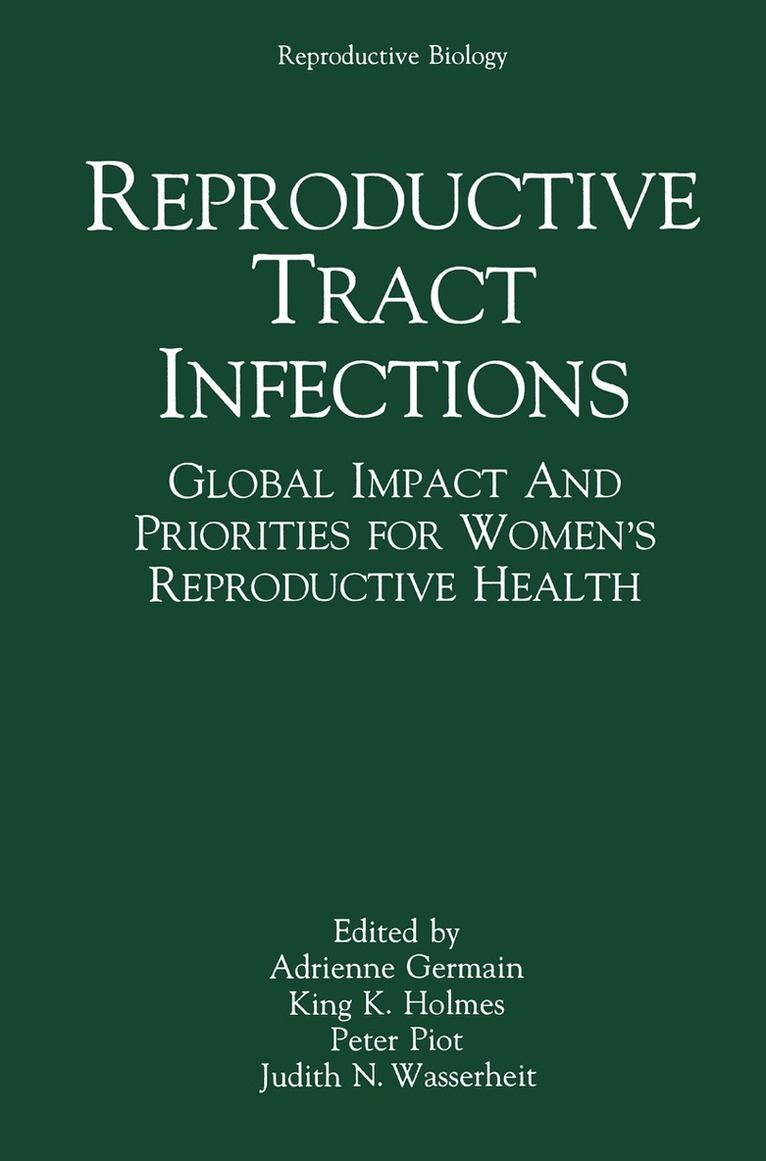
Reproductive Tract Infections
Global Impact and Priorities for Women’s Reproductive Health
Inbunden, Engelska, 1992
2 163 kr
Skickas inom 10-15 vardagar
Reproductive tract infections (RTis) have become a silent epidemic that is devastating women's lives. Each year, thousands of women die needlessly from the consequences of these infections, including cervical cancer, ectopic pregnancy, acute and chronic infections of the uterus and the fallopian tubes, and puerperal infections. For many women, this happens because they receive medical attention too late, if at all. The terrible irony of this tragedy is that early diagnosis of and treatment for many RTis do not require high-technology health care. For the hundreds of millions of women with chronic RTis acquired from their sexual partners, life can become a living hell. Infection is a major cause of infertility, and it leads to scorn and rejection in many countries. These women may experience constant pain, have festering lesions of the genital tract, be at enhanced risk of second ary diseases, and endure social ostracism. The problems associated with RT!s have grown even greater in the past decade with the emergence of human immunodeficiency virus (HIV) and AIDS. Preexisting sexually transmitted disease, particularly when associated with genital tract ulcers, raises women's vulnerability to the transmission of HIV 3-5 fold.
Del 3 - Harvard Series on Population and International Health
Population Policies Reconsidered
Health, Empowerment, and Rights
Häftad, Engelska, 1994
140 kr
Skickas inom 7-10 vardagar
Population Policies Reconsidered brings together a rare combination of scholars, feminists, social activists, and policy-makers across many disciplines to critically reexamine the scientific foundation of contemporary population policies. This book explores population policy dilemmas based on the perspective of ethics, women’s empowerment and health, and human rights. The seventeen chapters are centered around the premise that the single-minded pursuit of demographic goals may not be the most effective means of achieving policy objectives—for such may lead to the abuse or violation of choice and human rights, especially of women. Rather, the book explores the alternative idea that population policies should focus on those ultimate aims of development that are linked to human reproduction—health, social empowerment, and human rights. If respectful of individuals, especially women, such policies are likely to promote better individual welfare and may well also result in desirable demographic outcomes.
Reproductive Tract Infections
Global Impact and Priorities for Women’s Reproductive Health
Häftad, Engelska, 2013
2 163 kr
Skickas inom 10-15 vardagar
Reproductive tract infections (RTis) have become a silent epidemic that is devastating women's lives. Each year, thousands of women die needlessly from the consequences of these infections, including cervical cancer, ectopic pregnancy, acute and chronic infections of the uterus and the fallopian tubes, and puerperal infections. For many women, this happens because they receive medical attention too late, if at all. The terrible irony of this tragedy is that early diagnosis of and treatment for many RTis do not require high-technology health care. For the hundreds of millions of women with chronic RTis acquired from their sexual partners, life can become a living hell. Infection is a major cause of infertility, and it leads to scorn and rejection in many countries. These women may experience constant pain, have festering lesions of the genital tract, be at enhanced risk of second ary diseases, and endure social ostracism. The problems associated with RT!s have grown even greater in the past decade with the emergence of human immunodeficiency virus (HIV) and AIDS. Preexisting sexually transmitted disease, particularly when associated with genital tract ulcers, raises women's vulnerability to the transmission of HIV 3-5 fold.