Agnar Sandmo - Böcker
Visar alla böcker från författaren Agnar Sandmo. Handla med fri frakt och snabb leverans.
2 produkter
2 produkter
1 600 kr
Skickas inom 5-8 vardagar
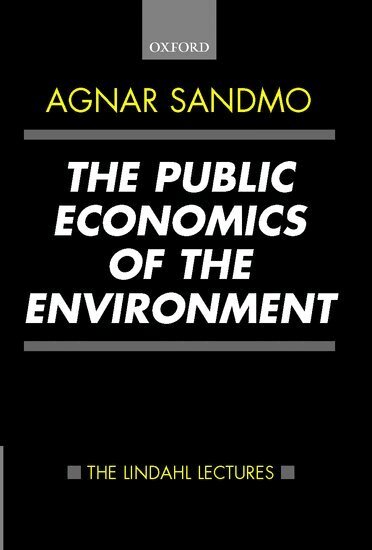
Environmental policy is high on the political agenda in many countries. Considering the various dimensions of environmental quality as public goods, Sandmo identifies the failures of the market mechanism in the face of environmental problems and shows how economic policy should be designed to overcome them. Specific topics covered include the assessment of environmental benefits and costs, the choice between taxes and quotas as policy tools, the principles of environmental taxation in a second-best world, the various notions of the double dividend from environmental tax reform, and international aspects of environmental policy as well as its political economy ramifications. The treatment is mainly theoretical, but the emphasis throughout is on showing how theory can be relevant to the rational design of economic policy.
335 kr
Skickas inom 7-10 vardagar
In clear, nontechnical language, this introductory textbook describes the history of economic thought, focusing on the development of economic theory from Adam Smith's Wealth of Nations to the late twentieth century. The text concentrates on the most important figures in the history of economics, from Smith, Thomas Robert Malthus, David Ricardo, John Stuart Mill, and Karl Marx in the classical period to John Maynard Keynes and the leading economists of the postwar era, such as John Hicks, Milton Friedman, and Paul Samuelson. It describes the development of theories concerning prices and markets, money and the price level, population and capital accumulation, and the choice between socialism and the market economy. The book examines how important economists have reflected on the sometimes conflicting goals of efficient resource use and socially acceptable income distribution. It also provides sketches of the lives and times of the major economists. Economics Evolving repeatedly shows how apparently simple ideas that are now taken for granted were at one time at the cutting edge of economics research.For example, the demand curve that today's students probably get to know during their first economics lecture was originally drawn by one of the most innovative theorists in the history of the subject. The book demonstrates not only how the study of economics has progressed over the course of its history, but also that it is still a developing science.