Agnes Kriza – författare
Visar alla böcker från författaren Agnes Kriza. Handla med fri frakt och snabb leverans.
5 produkter
5 produkter
E-bok
PDF, Engelska, 20221 486 kr
Läs direkt efter köp
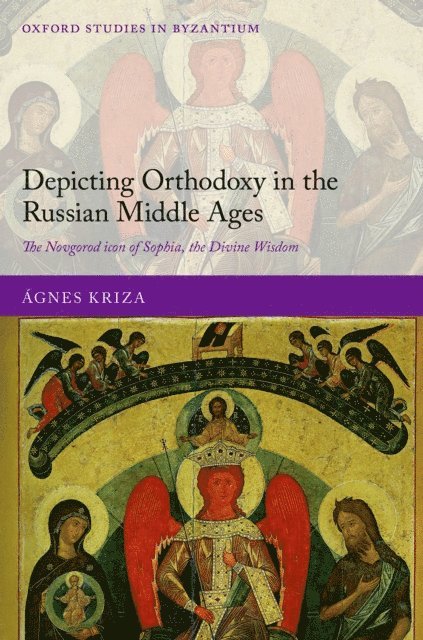
The image of Divine Wisdom, traditionally associated with the Sophia Cathedral in Novgorod, is an innovation of the fifteenth century. The icon represents the winged, royal, red-faced Sophia flanked by the Mother of God and John the Baptist. Although the image has a contemporaneous commentary, and although it exercised a profound influence on Russian cultural history, its meaning, together with the dating and localisation of the first appearance of the iconography, has remained an art-historical conundrum. By exploring the message, roots, function, and historical context of the creation of the first, most emblematic and enigmatic Russian allegorical iconography, Depicting Orthodoxy in the Russian Middle Ages deciphers the meaning of this icon. In contrast to previous interpretations, Kriza argues that the winged Sophia is the personification of the Orthodox Church. The Novgorod Wisdom icon represents the Church of Hagia Sophia, that is, Orthodoxy, as it was perceived in fifteenth-century Rus. Depicting Orthodoxy asserts that the icon, together with its commentary, was a visual-textual response to the Union of Florence between the Catholic and Orthodox Churches, signed in 1439 but rejected by the Russians in 1441. This interpretation is based on detailed interdisciplinary research, drawing on philology, art history, theology, and history. Kriza''s study challenges some key assumptions concerning the relevance of Church Schism of 1054, the polemics between the Greeks and the Latins about the bread of Eucharist, and the role of the Union of Florence in the history of Russian art. In particular, by studying both well- and lesser-known works of art alongside overlooked textual evidence, this volume investigates how the Christian Church and its true faith were defined and visualized in Rus and Byzantium throughout the centuries.
E-bok
Engelska, 20221 486 kr
Läs direkt efter köp
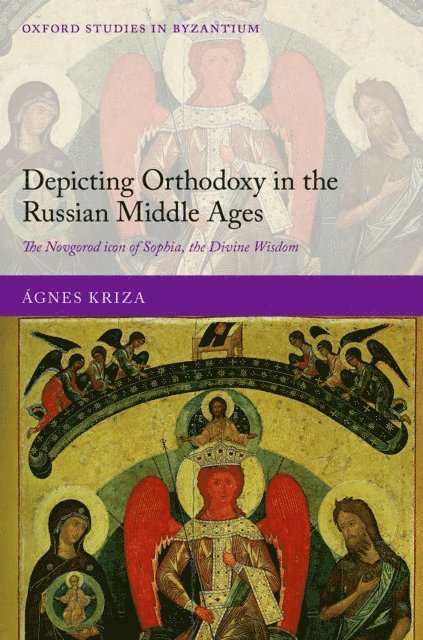
The image of Divine Wisdom, traditionally associated with the Sophia Cathedral in Novgorod, is an innovation of the fifteenth century. The icon represents the winged, royal, red-faced Sophia flanked by the Mother of God and John the Baptist. Although the image has a contemporaneous commentary, and although it exercised a profound influence on Russian cultural history, its meaning, together with the dating and localisation of the first appearance of the iconography, has remained an art-historical conundrum. By exploring the message, roots, function, and historical context of the creation of the first, most emblematic and enigmatic Russian allegorical iconography, Depicting Orthodoxy in the Russian Middle Ages deciphers the meaning of this icon. In contrast to previous interpretations, Kriza argues that the winged Sophia is the personification of the Orthodox Church. The Novgorod Wisdom icon represents the Church of Hagia Sophia, that is, Orthodoxy, as it was perceived in fifteenth-century Rus. Depicting Orthodoxy asserts that the icon, together with its commentary, was a visual-textual response to the Union of Florence between the Catholic and Orthodox Churches, signed in 1439 but rejected by the Russians in 1441. This interpretation is based on detailed interdisciplinary research, drawing on philology, art history, theology, and history. Kriza''s study challenges some key assumptions concerning the relevance of Church Schism of 1054, the polemics between the Greeks and the Latins about the bread of Eucharist, and the role of the Union of Florence in the history of Russian art. In particular, by studying both well- and lesser-known works of art alongside overlooked textual evidence, this volume investigates how the Christian Church and its true faith were defined and visualized in Rus and Byzantium throughout the centuries.
Inbunden, Engelska, 2022
1 761 kr
Skickas inom 7-10 vardagar
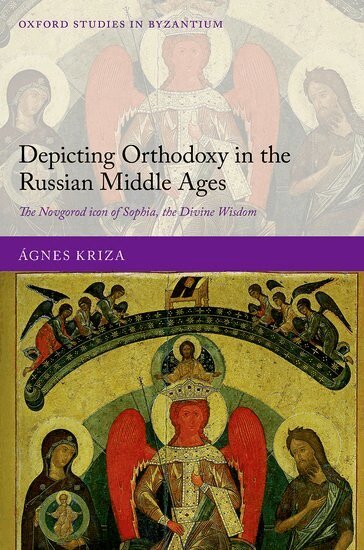
The image of Divine Wisdom, traditionally associated with the Sophia Cathedral in Novgorod, is an innovation of the fifteenth century. The icon represents the winged, royal, red-faced Sophia flanked by the Mother of God and John the Baptist. Although the image has a contemporaneous commentary, and although it exercised a profound influence on Russian cultural history, its meaning, together with the dating and localisation of the first appearance of the iconography, has remained an art-historical conundrum. By exploring the message, roots, function, and historical context of the creation of the first, most emblematic and enigmatic Russian allegorical iconography, Depicting Orthodoxy in the Russian Middle Ages deciphers the meaning of this icon. In contrast to previous interpretations, Kriza argues that the winged Sophia is the personification of the Orthodox Church. The Novgorod Wisdom icon represents the Church of Hagia Sophia, that is, Orthodoxy, as it was perceived in fifteenth-century Rus. Depicting Orthodoxy asserts that the icon, together with its commentary, was a visual-textual response to the Union of Florence between the Catholic and Orthodox Churches, signed in 1439 but rejected by the Russians in 1441. This interpretation is based on detailed interdisciplinary research, drawing on philology, art history, theology, and history. Kriza's study challenges some key assumptions concerning the relevance of Church Schism of 1054, the polemics between the Greeks and the Latins about the bread of Eucharist, and the role of the Union of Florence in the history of Russian art. In particular, by studying both well- and lesser-known works of art alongside overlooked textual evidence, this volume investigates how the Christian Church and its true faith were defined and visualized in Rus and Byzantium throughout the centuries.
E-bok
PDF, Engelska, 20241 190 kr
Läs direkt efter köp
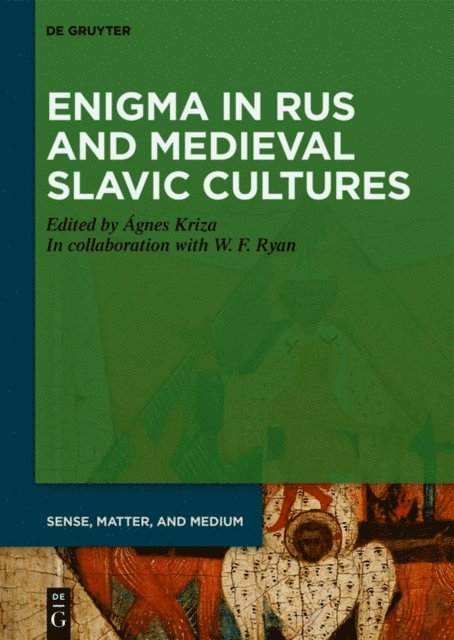
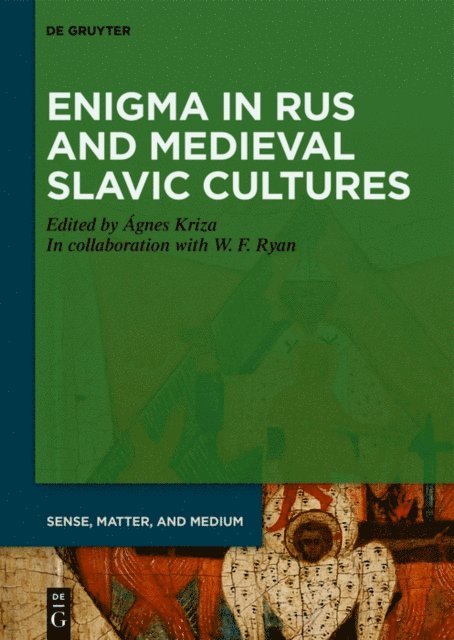
Enigma in Rus and Medieval Slavic Cultures is a thematic essay volume to investigate the history and function of enigma in Orthodox Slavic cultures with a special focus on the cultural history of Rus and Muscovy. Its seventeen case studies across disciplinary boundaries analyze Slavic biblical and patristic translations, liturgical commentaries, occult divinatory texts, and dream interpretations. Slavic riddles inscribed on walls and compilations of riddles in question-and-answer format are all subjects of this volume. Not only written, but also pictorial enigmas are examined, together with their relationships to texts suggesting novel methodologies for their deciphering. This kaleidoscopic survey of Enigma in Rus and Medieval Slavic Cultures by an international group of scholars demonstrates the historiographical challenges that medieval enigmatic thought poses for researchers and offers new approaches to the interpretation of medieval sources, both verbal and visual.
E-bok
Engelska, 20241 201 kr
Läs direkt efter köp
Enigma in Rus and Medieval Slavic Cultures is a thematic essay volume to investigate the history and function of enigma in Orthodox Slavic cultures with a special focus on the cultural history of Rus and Muscovy. Its seventeen case studies across disciplinary boundaries analyze Slavic biblical and patristic translations, liturgical commentaries, occult divinatory texts, and dream interpretations. Slavic riddles inscribed on walls and compilations of riddles in question-and-answer format are all subjects of this volume. Not only written, but also pictorial enigmas are examined, together with their relationships to texts suggesting novel methodologies for their deciphering. This kaleidoscopic survey of Enigma in Rus and Medieval Slavic Cultures by an international group of scholars demonstrates the historiographical challenges that medieval enigmatic thought poses for researchers and offers new approaches to the interpretation of medieval sources, both verbal and visual.