Agnieszka Paczyńska - Böcker
Visar alla böcker från författaren Agnieszka Paczyńska. Handla med fri frakt och snabb leverans.
5 produkter
5 produkter
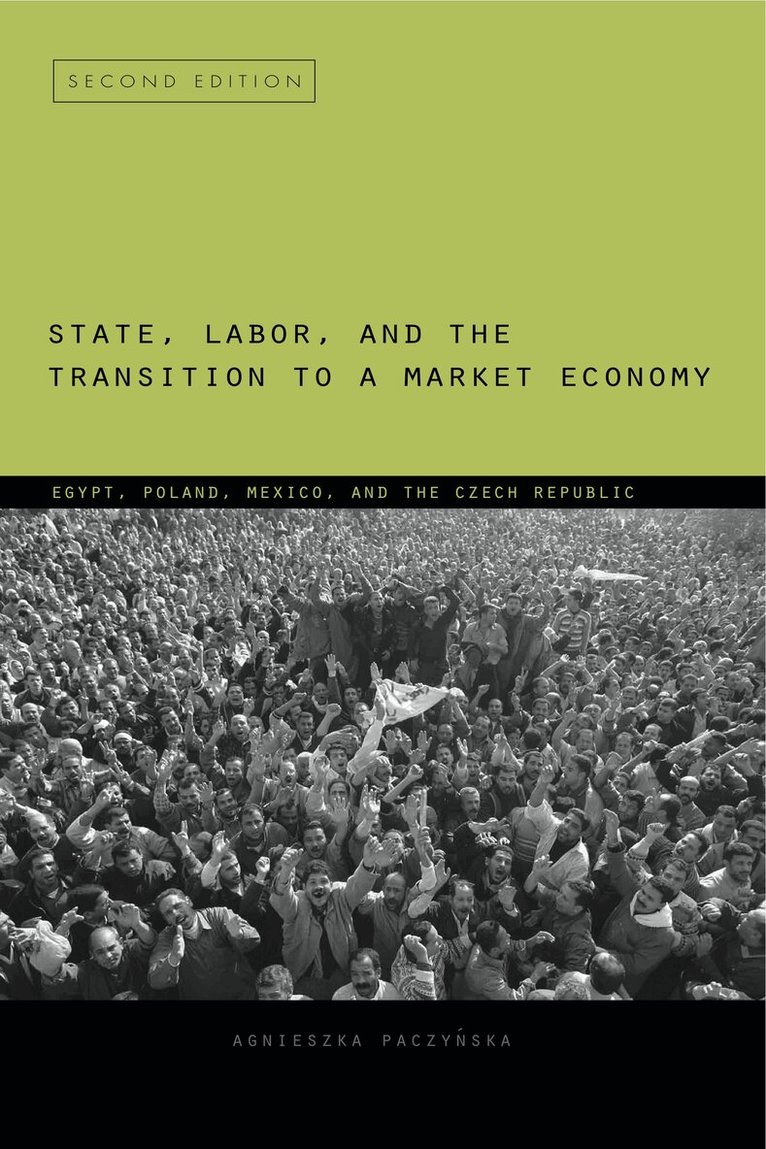
State, Labor, and the Transition to a Market Economy
Egypt, Poland, Mexico, and the Czech Republic
Häftad, Engelska, 2012
572 kr
Skickas inom 5-8 vardagar
In response to mounting debt crises and macroeconomic instability in the 1980s, many countries in the developing world adopted neoliberal policies promoting the unfettered play of market forces and deregulation of the economy and attempted large-scale structural adjustment, including the privatization of public-sector industries. How much influence did various societal groups have on this transition to a market economy, and what explains the variances in interest-group influence across countries? In this book, Agnieszka Paczyńska explores these questions by studying the role of organized labor in the transition process in four countries in different regions—the Czech Republic and Poland in eastern Europe, Egypt in the Middle East, and Mexico in Latin America. In Egypt and Poland, she shows, labor had substantial influence on the process, whereas in the Czech Republic and Mexico it did not. Her explanation highlights the complex relationship between institutional structures and the “critical junctures” provided by economic crises, revealing that the ability of groups like organized labor to wield influence on reform efforts depends to a great extent on not only their current resources (such as financial autonomy and legal prerogatives) but also the historical legacies of their past ties to the state.This new edition features an epilogue that analyzes the role of organized labor uprisings in 2011, the protests in Egypt, the overthrow of Mubarak, and the post-Mubarak regime.
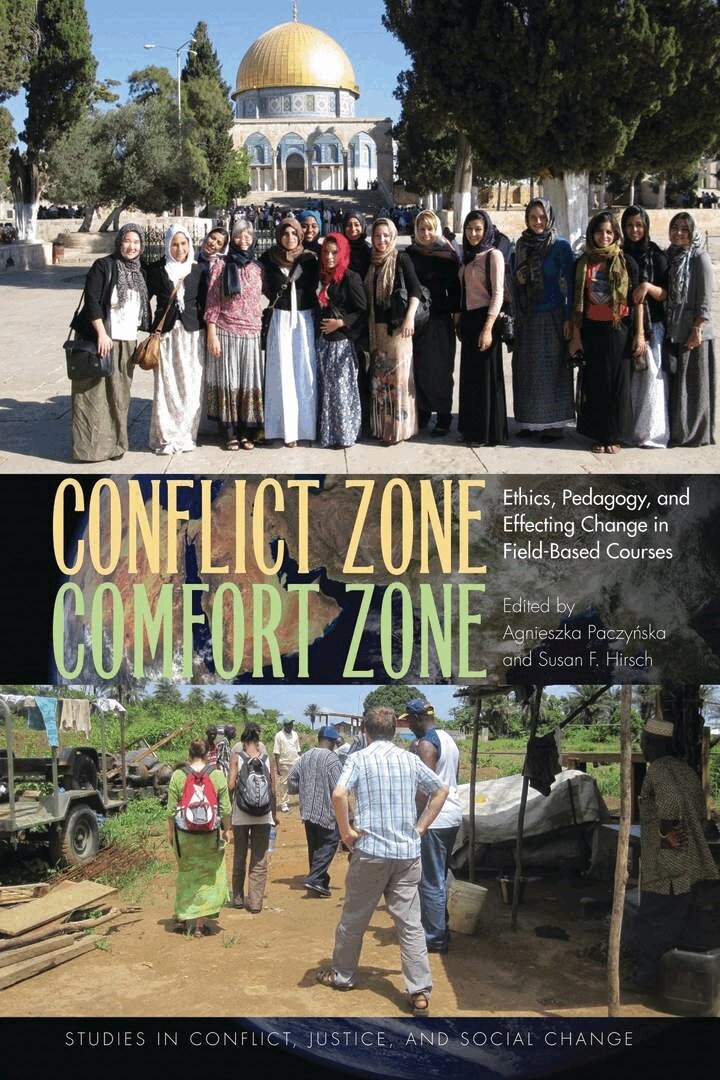
Conflict Zone, Comfort Zone
Ethics, Pedagogy, and Effecting Change in Field-Based Courses
Inbunden, Engelska, 2019
729 kr
Skickas inom 10-15 vardagar
By taking students out of their comfort zone, field-based courses—which are increasingly popular in secondary and postsecondary education—have the potential to be deep, transformative learning experiences. But what happens when the field in question is a site of active or recent conflict? In Conflict Zone, Comfort Zone, editors Agnieszka Paczyńska and Susan F. Hirsch highlight new approaches to field-based learning in conflict zones worldwide. As the contributors demonstrate, instructors must leave the comfort zone of traditional pedagogy to meet the challenges of field-based education.Drawing on case studies in the United States and abroad, the contributors address the ethical considerations of learning in conflict zones, evaluate the effectiveness of various approaches to teaching these courses, and provide guidelines for effecting change. They also explore how the challenges of field-based classes are magnified in conflict and postconflict settings, and outline the dilemmas faced by those seeking to resolve those challenges. Finally, filling a crucial gap in existing literature, the contributors identify best practices that will assist aspiring instructors in developing successful field-based courses in conflict zones.Contributors: Daniel R. Brunstetter, Alison Castel, Gina M. Cerasani, Alexander Cromwell, Maryam Z. Deloffre, Sandi DiMola, Leslie Dwyer, Eric Hartman, Pushpa Iyer, Allyson M. Lowe, Patricia A. Maulden, rj nickels, Anthony C. Ogden, Jennifer M. Ramos, Lisa E. Shaw, Daniel Wehrenfennig
Conflict Zone, Comfort Zone
Ethics, Pedagogy, and Effecting Change in Field-Based Courses
Häftad, Engelska, 2019
368 kr
Skickas inom 10-15 vardagar
By taking students out of their comfort zone, field-based courses—which are increasingly popular in secondary and postsecondary education—have the potential to be deep, transformative learning experiences. But what happens when the field in question is a site of active or recent conflict? In Conflict Zone, Comfort Zone, editors Agnieszka Paczyńska and Susan F. Hirsch highlight new approaches to field-based learning in conflict zones worldwide. As the contributors demonstrate, instructors must leave the comfort zone of traditional pedagogy to meet the challenges of field-based education.Drawing on case studies in the United States and abroad, the contributors address the ethical considerations of learning in conflict zones, evaluate the effectiveness of various approaches to teaching these courses, and provide guidelines for effecting change. They also explore how the challenges of field-based classes are magnified in conflict and postconflict settings, and outline the dilemmas faced by those seeking to resolve those challenges. Finally, filling a crucial gap in existing literature, the contributors identify best practices that will assist aspiring instructors in developing successful field-based courses in conflict zones.Contributors: Daniel R. Brunstetter, Alison Castel, Gina M. Cerasani, Alexander Cromwell, Maryam Z. Deloffre, Sandi DiMola, Leslie Dwyer, Eric Hartman, Pushpa Iyer, Allyson M. Lowe, Patricia A. Maulden, rj nickels, Anthony C. Ogden, Jennifer M. Ramos, Lisa E. Shaw, Daniel Wehrenfennig
444 kr
Skickas inom 7-10 vardagar
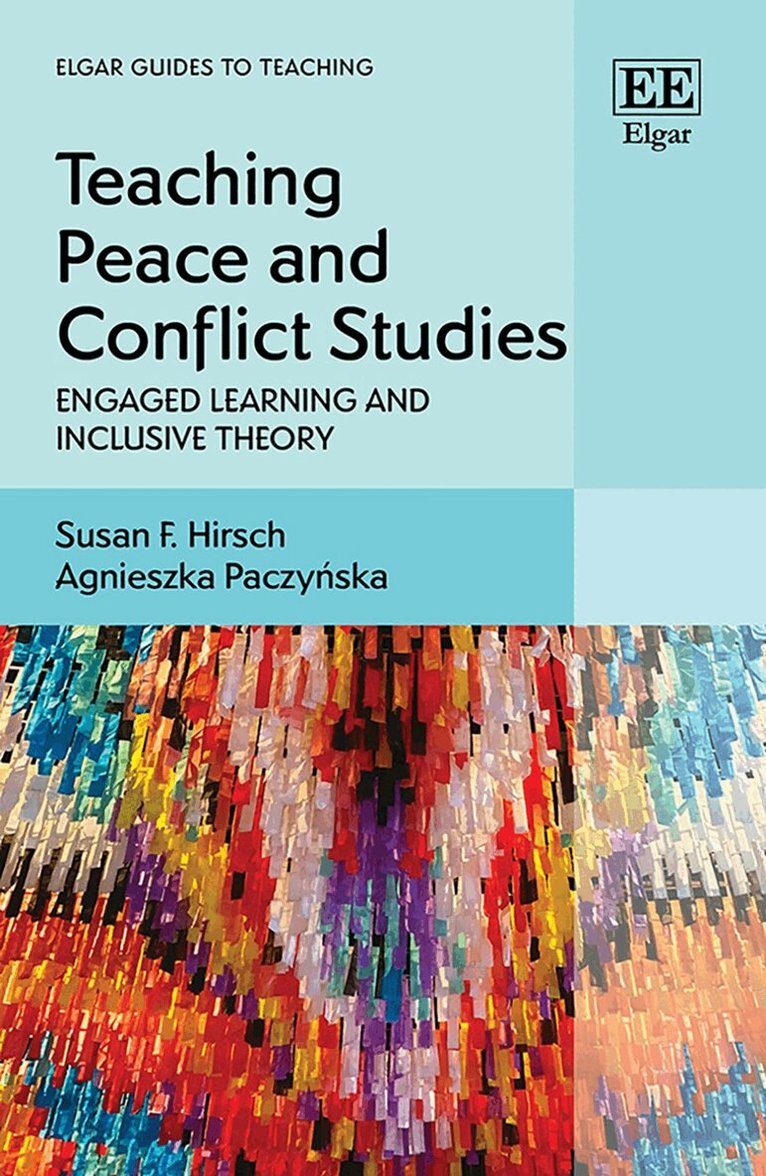
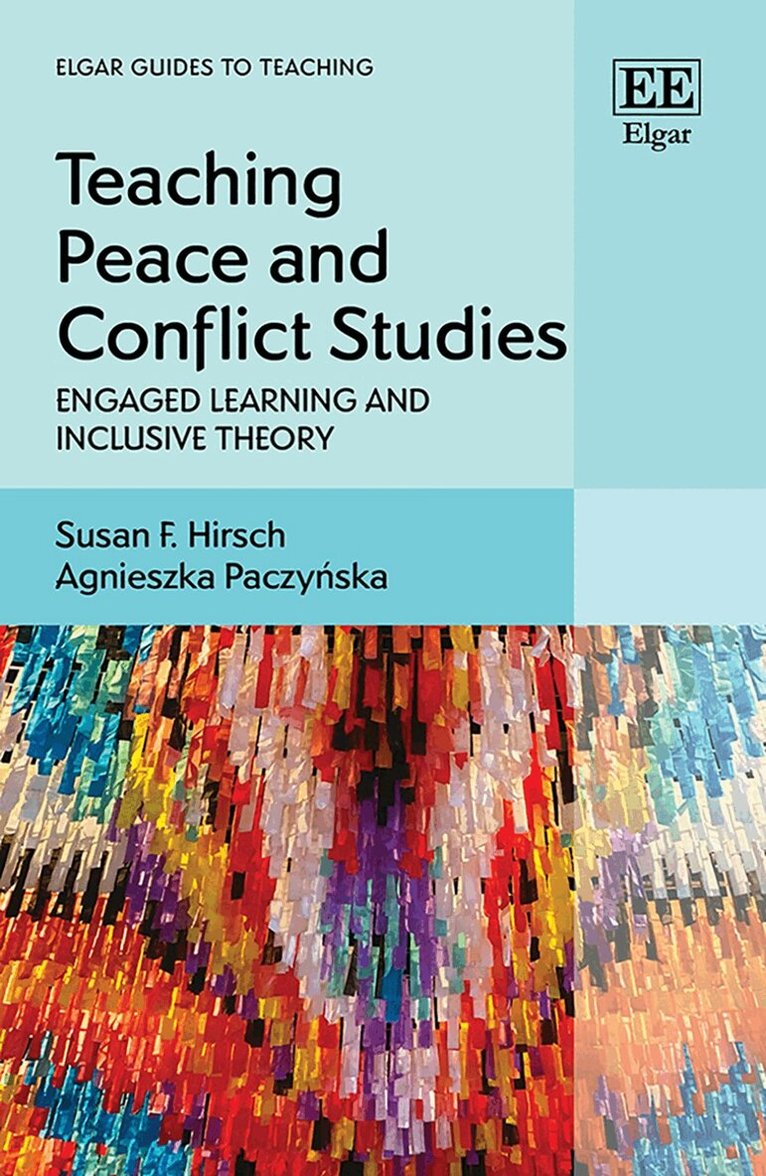
This insightful book guides instructors on how to introduce students to the interdisciplinary work of Peace and Conflict Studies (PACS). Mindful that many students come to PACS with a desire to create positive social change, Susan F. Hirsch and Agnieszka Paczyńska highlight engaged learning as a key method for PACS pedagogy and emphasise the need to teach theory with an inclusive and decolonialist approach. The book offers both new and experienced instructors of undergraduate and postgraduate students concrete advice regarding structuring assignments, designing classroom-based engaged learning activities and highlighting reflective practice and ethics. Key Features:Focuses on delivering an engaged, inclusive and decolonialist PACS programme.Provides practical advice on how to design introductory and elective PACS courses for undergraduate and postgraduate students.Includes detailed instructions for developing and implementing in-class experiential learning exercises alongside tools for effectively assessing student learning.Building instructors’ capacity to teach effectively and inclusively with the aim of practical post-course application, Teaching Peace and Conflict Studies will be an invaluable resource across peace and conflict studies, anthropology, sociology, history, political science, international relations, women’s studies, African American studies and global studies. It will also be essential reading for graduate students looking to move into teaching positions, as well as faculty, staff and students in graduate education schools.
1 605 kr
Skickas inom 7-10 vardagar
This insightful book guides instructors on how to introduce students to the interdisciplinary work of Peace and Conflict Studies (PACS). Mindful that many students come to PACS with a desire to create positive social change, Susan F. Hirsch and Agnieszka Paczyńska highlight engaged learning as a key method for PACS pedagogy and emphasise the need to teach theory with an inclusive and decolonialist approach. The book offers both new and experienced instructors of undergraduate and postgraduate students concrete advice regarding structuring assignments, designing classroom-based engaged learning activities and highlighting reflective practice and ethics. Key Features:Focuses on delivering an engaged, inclusive and decolonialist PACS programme.Provides practical advice on how to design introductory and elective PACS courses for undergraduate and postgraduate students.Includes detailed instructions for developing and implementing in-class experiential learning exercises alongside tools for effectively assessing student learning.Building instructors’ capacity to teach effectively and inclusively with the aim of practical post-course application, Teaching Peace and Conflict Studies will be an invaluable resource across peace and conflict studies, anthropology, sociology, history, political science, international relations, women’s studies, African American studies and global studies. It will also be essential reading for graduate students looking to move into teaching positions, as well as faculty, staff and students in graduate education schools.