Agnieszka Saeid – författare
1 101 kr
Skickas inom 10-15 vardagar
Smart Agrochemicals for Sustainable Agriculture proposes products that fulfill the need for chemicals that provide a sustainable delivery system for nutrients necessary to maximize the production of agricultural animals and plants while producing the smallest possible environmental footprint. This book addresses all aspects related to the production process, including chemical formulas, stability of formulations, and the application of the effect of its utilization. Over the past decade, biobased chemicals have received significant attention as candidate resource materials in fertilizers and agrochemicals production due to their renewability.
Substitution of conventional raw materials with biobased requires a new approach towards the development of technology. On the other hand, the use of biobased chemicals, such as biostimulants, bioregulators and biofertilizers offers a new palette of products that are natural, thus their application does not pose an impact on the environment (residues) or cultivated plants.
Presents ideas for new products that provide appropriate nutrition while limiting environmental footprints Includes a full range of the production process, from chemical formulas to establishing the stability of formulations, applications and effects Offers a host of new products that are natural and whose applications do not negatively impact the environment nor cultivated plants1 563 kr
Läs direkt efter köp
2 304 kr
Skickas inom 11-20 vardagar
2 702 kr
Läs direkt efter köp
Comprehensive and multidisciplinary presentation of the current trends in trace elements for human, animals, plants, and the environment
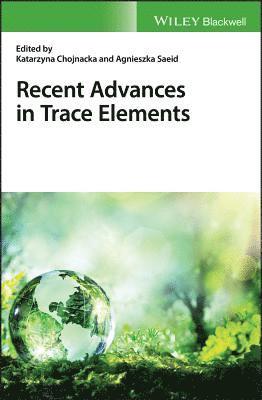
This reference provides the latest research into the presence, characterization, and applications of trace elements and their role in humans, animals, and plants as well as their use in developing novel, functional feeds, foods, and fertilizers. It takes an interdisciplinary approach to the subject, describing the biological and industrial applications of trace elements. It covers various topics, such as the occurrence, role, and monitoring of trace elements and their characterization, as well as applications from the preliminary research to laboratory trials.
Recent Advances in Trace Elements focuses on the introduction and prospects of trace elements; tackles environmental aspects such as sources of emission, methods of monitoring, and treatment/remediation processes; goes over the biological role of trace elements in plants, animals, and human organisms; and discusses the relevance of biomedical applications and commercialization.
A compendium of recent knowledge in interdisciplinary trace element research Uniquely covers production and characterization of trace elements, as well as the industrial and biomedical aspects of their use Paves the way for the development of innovative products in diverse fields, including pharmaceuticals, food, environment, and materials science Edited by well-known experts in the field of trace elements with contributions from international specialists from a wide range of areasUnique in presenting comprehensive and multidisciplinary information of the key aspects of trace elements research in a digestible form, this book is essential reading for the novice and expert in the fields of environmental science, analytical chemistry, biochemistry, materials science, pharmaceutical science, nutraceutical, and pharmaceutical sciences. It is also valuable for companies that implement new products incorporating trace elements to the market.
2 702 kr
Läs direkt efter köp
Comprehensive and multidisciplinary presentation of the current trends in trace elements for human, animals, plants, and the environment
This reference provides the latest research into the presence, characterization, and applications of trace elements and their role in humans, animals, and plants as well as their use in developing novel, functional feeds, foods, and fertilizers. It takes an interdisciplinary approach to the subject, describing the biological and industrial applications of trace elements. It covers various topics, such as the occurrence, role, and monitoring of trace elements and their characterization, as well as applications from the preliminary research to laboratory trials.
Recent Advances in Trace Elements focuses on the introduction and prospects of trace elements; tackles environmental aspects such as sources of emission, methods of monitoring, and treatment/remediation processes; goes over the biological role of trace elements in plants, animals, and human organisms; and discusses the relevance of biomedical applications and commercialization.
A compendium of recent knowledge in interdisciplinary trace element research Uniquely covers production and characterization of trace elements, as well as the industrial and biomedical aspects of their use Paves the way for the development of innovative products in diverse fields, including pharmaceuticals, food, environment, and materials science Edited by well-known experts in the field of trace elements with contributions from international specialists from a wide range of areasUnique in presenting comprehensive and multidisciplinary information of the key aspects of trace elements research in a digestible form, this book is essential reading for the novice and expert in the fields of environmental science, analytical chemistry, biochemistry, materials science, pharmaceutical science, nutraceutical, and pharmaceutical sciences. It is also valuable for companies that implement new products incorporating trace elements to the market.
3 174 kr
Läs direkt efter köp
Biofortification, which can be defined as the process of increasing the content/density of essential nutrients and/or its bioavailability of food with valuable compounds, is a promising means of increasing nutrient intakes. Traditional fortification practices in which exogenous nutrients are added to food can increase the content of nutrients but the use of biofortified foods with nutrients also may deliver the compounds in a more available form, as well as boost the overall relative effectiveness of these foods in raising nutrients status. Food Biofortification Technologies presents the state of the art in the field of novel methods of fortification and agricultural treatments as a way to improve the quality of obtained food products or compounds enriched with valuable nutrients. The book deals with fortification methods and agricultural treatments, which can improve the quality of food products or other agricultural compounds, providing them with a higher density of valuable nutrients. The utilization of novel products, such as feed additives and fertilizers, can avert nutrients depletion in food products. The book describes new and conventional methods of introducing valuable compounds into food components and presents the application of biosorption, bioaccumulation, and utilization of fertilizers in obtaining designer food. Attention is paid to the use of biomass as the carrier of nutrients such as microelements into the food components. The chapters are dedicated to specific food products and their nutrient components. The first chapter discusses the agronomic biofortification with micronutrients where the fertilization strategies are pointed out as a key to plant/cereals fortification. Other chapters present the fortification of animal foodstuffs such as meat, fish, milk, and eggs as well as the fortification of plant foodstuffs such as vegetables, fruits, and cereals. The book also explores advances in food fortification with vitamins and co-vitamins, essential minerals, essential fatty and amino acids, phytonutrients, and enzymes.
2 714 kr
Skickas inom 10-15 vardagar
3 202 kr
Läs direkt efter köp
Biofortification, which can be defined as the process of increasing the content/density of essential nutrients and/or its bioavailability of food with valuable compounds, is a promising means of increasing nutrient intakes. Traditional fortification practices in which exogenous nutrients are added to food can increase the content of nutrients but the use of biofortified foods with nutrients also may deliver the compounds in a more available form, as well as boost the overall relative effectiveness of these foods in raising nutrients status. Food Biofortification Technologies presents the state of the art in the field of novel methods of fortification and agricultural treatments as a way to improve the quality of obtained food products or compounds enriched with valuable nutrients. The book deals with fortification methods and agricultural treatments, which can improve the quality of food products or other agricultural compounds, providing them with a higher density of valuable nutrients. The utilization of novel products, such as feed additives and fertilizers, can avert nutrients depletion in food products. The book describes new and conventional methods of introducing valuable compounds into food components and presents the application of biosorption, bioaccumulation, and utilization of fertilizers in obtaining designer food. Attention is paid to the use of biomass as the carrier of nutrients such as microelements into the food components. The chapters are dedicated to specific food products and their nutrient components. The first chapter discusses the agronomic biofortification with micronutrients where the fertilization strategies are pointed out as a key to plant/cereals fortification. Other chapters present the fortification of animal foodstuffs such as meat, fish, milk, and eggs as well as the fortification of plant foodstuffs such as vegetables, fruits, and cereals. The book also explores advances in food fortification with vitamins and co-vitamins, essential minerals, essential fatty and amino acids, phytonutrients, and enzymes.
1 604 kr
Skickas inom 5-8 vardagar