Agota Szende – författare
Visar alla böcker från författaren Agota Szende. Handla med fri frakt och snabb leverans.
5 produkter
5 produkter
Del 2 - EuroQol Group Monographs
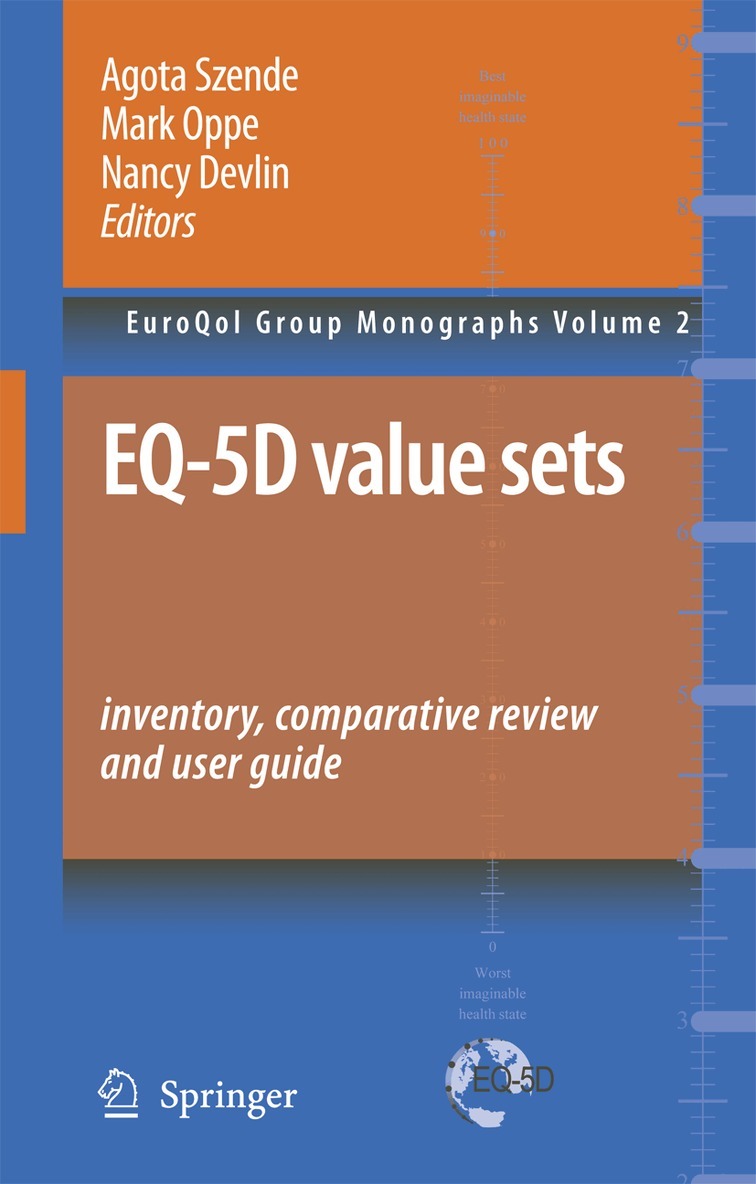
EQ-5D Value Sets: Inventory, Comparative Review and User Guide
Inbunden, Engelska, 2006
1 119 kr
Skickas inom 10-15 vardagar
Rosalind Rabin, Frank de Charro, Agota Szende 1.1 Purpose of this booklet Governments and healthcare funders worldwide are making increasing use of economic evaluation to inform priority setting in health care. For various reasons, cost benefit analysis is usually rejected in favour of cost-effectiveness or cost-utility analyses, often involving the estimation of the incremental cost per Quality Adjusted Life Year (QALY) gained (Drummond et al, 2005). The estimation of QALYs gained requires valuations for all relevant health states on a scale anchored at 1 = Full health and 0 = Dead. The EQ-5D is widely used in this context and a number of value sets are available for all the health states generated by the EQ-5D descriptive system. These can be readily applied to health outcomes measured as EQ-5D profiles. EQ-5D has become one of the valuation approaches recommended by several reimbursement authorities and academic bodies in European countries (e.g. The Netherlands, Norway, Italy, Hungary, Poland, Portugal, UK), North America (e.g. Canada), and elsewhere (e.g. New Zealand). The EuroQol Group frequently receives requests for advice regarding EQ-5D valuation data. Those seeking to apply EQ-5D valuations in economic evaluation want to know about the availability of EQ-5D value sets and how they can obtain them. They also seek specific guidance about which of the available value sets they should use for their purposes.
E-bok
PDF, Engelska, 20071 459 kr
Läs direkt efter köp
Rosalind Rabin, Frank de Charro, Agota Szende 1.1 Purpose of this booklet Governments and healthcare funders worldwide are making increasing use of economic evaluation to inform priority setting in health care. For various reasons, cost benefit analysis is usually rejected in favour of cost-effectiveness or cost-utility analyses, often involving the estimation of the incremental cost per Quality Adjusted Life Year (QALY) gained (Drummond et al, 2005). The estimation of QALYs gained requires valuations for all relevant health states on a scale anchored at 1 = Full health and 0 = Dead. The EQ-5D is widely used in this context and a number of value sets are available for all the health states generated by the EQ-5D descriptive system. These can be readily applied to health outcomes measured as EQ-5D profiles. EQ-5D has become one of the valuation approaches recommended by several reimbursement authorities and academic bodies in European countries (e.g. The Netherlands, Norway, Italy, Hungary, Poland, Portugal, UK), North America (e.g. Canada), and elsewhere (e.g. New Zealand). The EuroQol Group frequently receives requests for advice regarding EQ-5D valuation data. Those seeking to apply EQ-5D valuations in economic evaluation want to know about the availability of EQ-5D value sets and how they can obtain them. They also seek specific guidance about which of the available value sets they should use for their purposes.
Del 2 - EuroQol Group Monographs
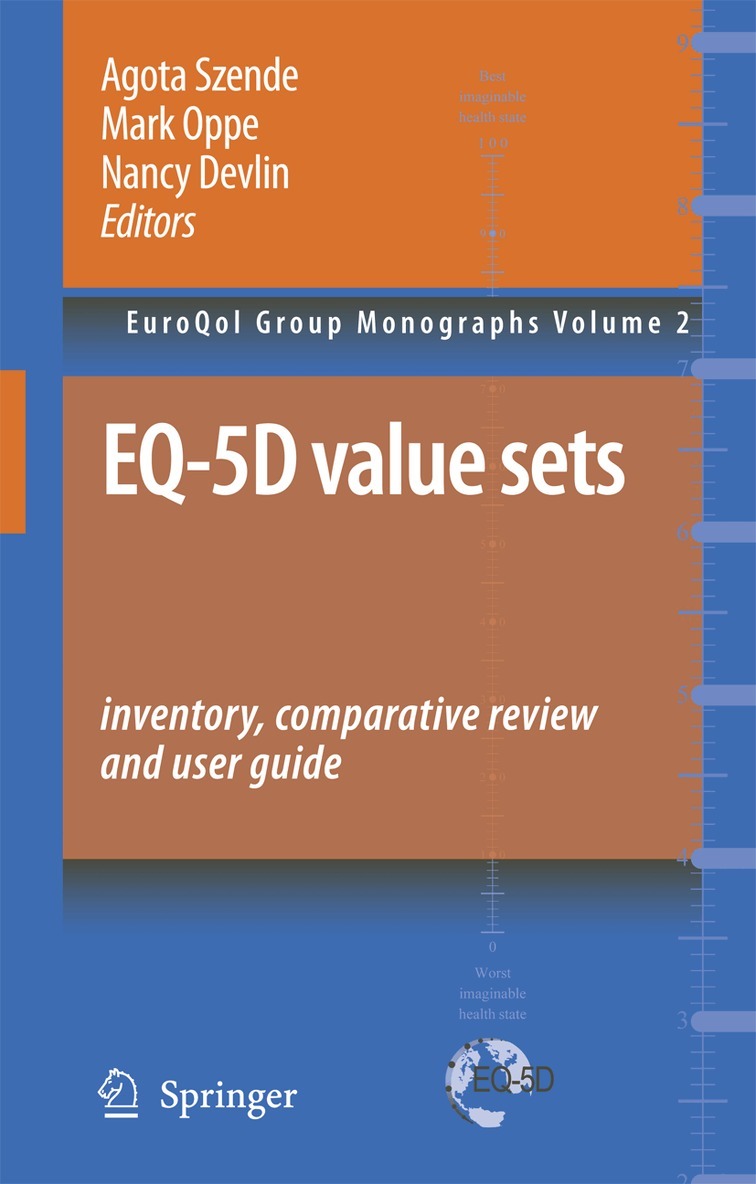
EQ-5D Value Sets: Inventory, Comparative Review and User Guide
Häftad, Engelska, 2010
1 123 kr
Skickas inom 10-15 vardagar
Rosalind Rabin, Frank de Charro, Agota Szende 1.1 Purpose of this booklet Governments and healthcare funders worldwide are making increasing use of economic evaluation to inform priority setting in health care. For various reasons, cost benefit analysis is usually rejected in favour of cost-effectiveness or cost-utility analyses, often involving the estimation of the incremental cost per Quality Adjusted Life Year (QALY) gained (Drummond et al, 2005). The estimation of QALYs gained requires valuations for all relevant health states on a scale anchored at 1 = Full health and 0 = Dead. The EQ-5D is widely used in this context and a number of value sets are available for all the health states generated by the EQ-5D descriptive system. These can be readily applied to health outcomes measured as EQ-5D profiles. EQ-5D has become one of the valuation approaches recommended by several reimbursement authorities and academic bodies in European countries (e.g. The Netherlands, Norway, Italy, Hungary, Poland, Portugal, UK), North America (e.g. Canada), and elsewhere (e.g. New Zealand). The EuroQol Group frequently receives requests for advice regarding EQ-5D valuation data. Those seeking to apply EQ-5D valuations in economic evaluation want to know about the availability of EQ-5D value sets and how they can obtain them. They also seek specific guidance about which of the available value sets they should use for their purposes.
Inbunden, Engelska, 2013
565 kr
Skickas inom 10-15 vardagar
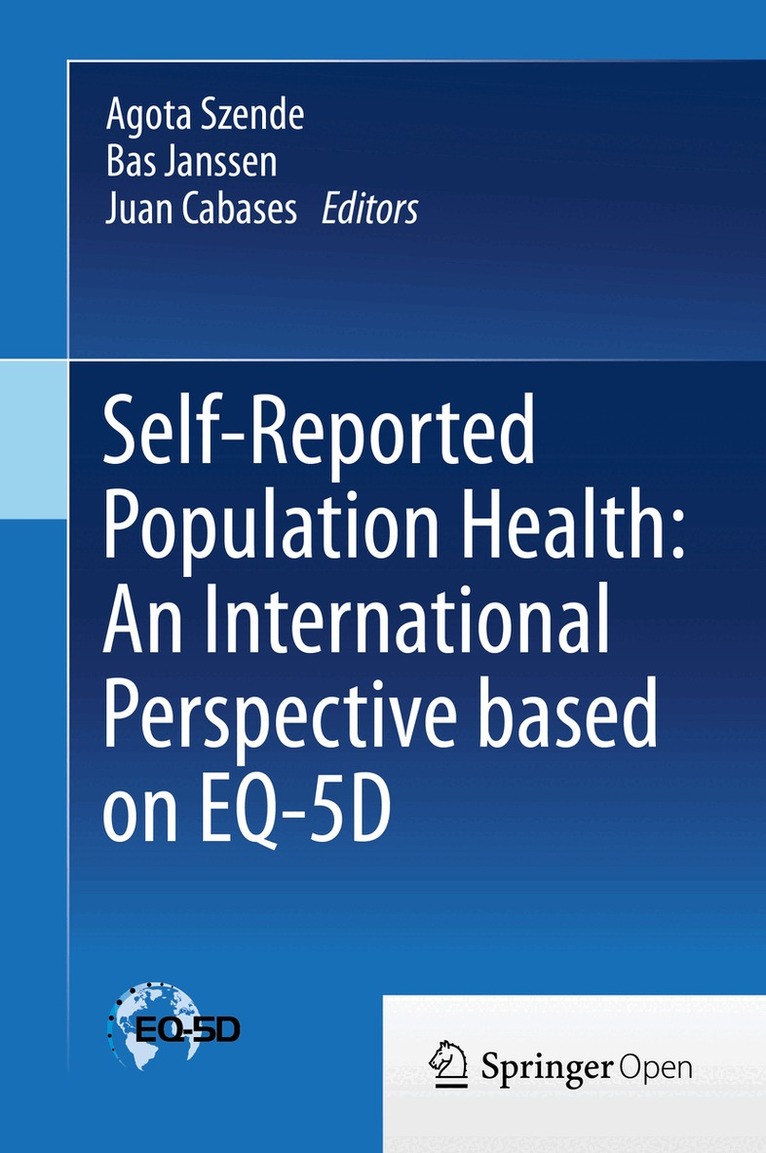
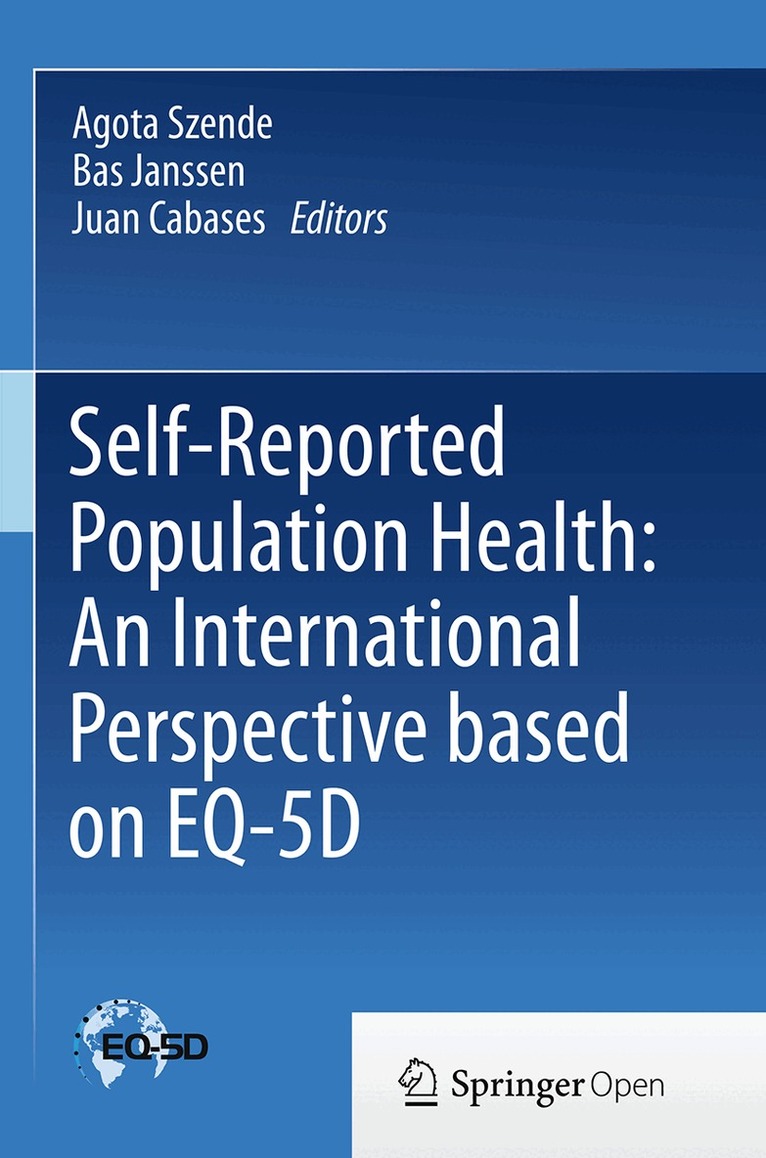
The EQ-5D instrument, as a standardized, cross-culturally validated measure of self-assessed health has a hugely important role in understanding population health within and across countries. Over the past two decades a wealth of international population health survey data have been accumulated by the EuroQol Group from research conducted in many countries across four continents. One of the success factors of the EQ-5D instruments has been the easy availability of national or international sets of EQ-5D data, as well as clear explanations and guidance for users. There is an unmet need to produce a comprehensive book that captures up-to-date and expanded information of EQ-5D self-reported health and index values. EQ-5D population norms and cross-country analyses are provided from representative national surveys of 20 countries and additional regional surveys. This book will be a must for those who believe that how people report and value health is very important.
Häftad, Engelska, 2016
565 kr
Skickas inom 10-15 vardagar
The EQ-5D instrument, as a standardized, cross-culturally validated measure of self-assessed health has a hugely important role in understanding population health within and across countries. Over the past two decades a wealth of international population health survey data have been accumulated by the EuroQol Group from research conducted in many countries across four continents. One of the success factors of the EQ-5D instruments has been the easy availability of national or international sets of EQ-5D data, as well as clear explanations and guidance for users. There is an unmet need to produce a comprehensive book that captures up-to-date and expanded information of EQ-5D self-reported health and index values. EQ-5D population norms and cross-country analyses are provided from representative national surveys of 20 countries and additional regional surveys. This book will be a must for those who believe that how people report and value health is very important.