
Agustín G. Martinelli – författare
Visar alla böcker från författaren Agustín G. Martinelli. Handla med fri frakt och snabb leverans.
2 produkter
2 produkter
Inbunden, Engelska, 2021
1 631 kr
Skickas inom 10-15 vardagar
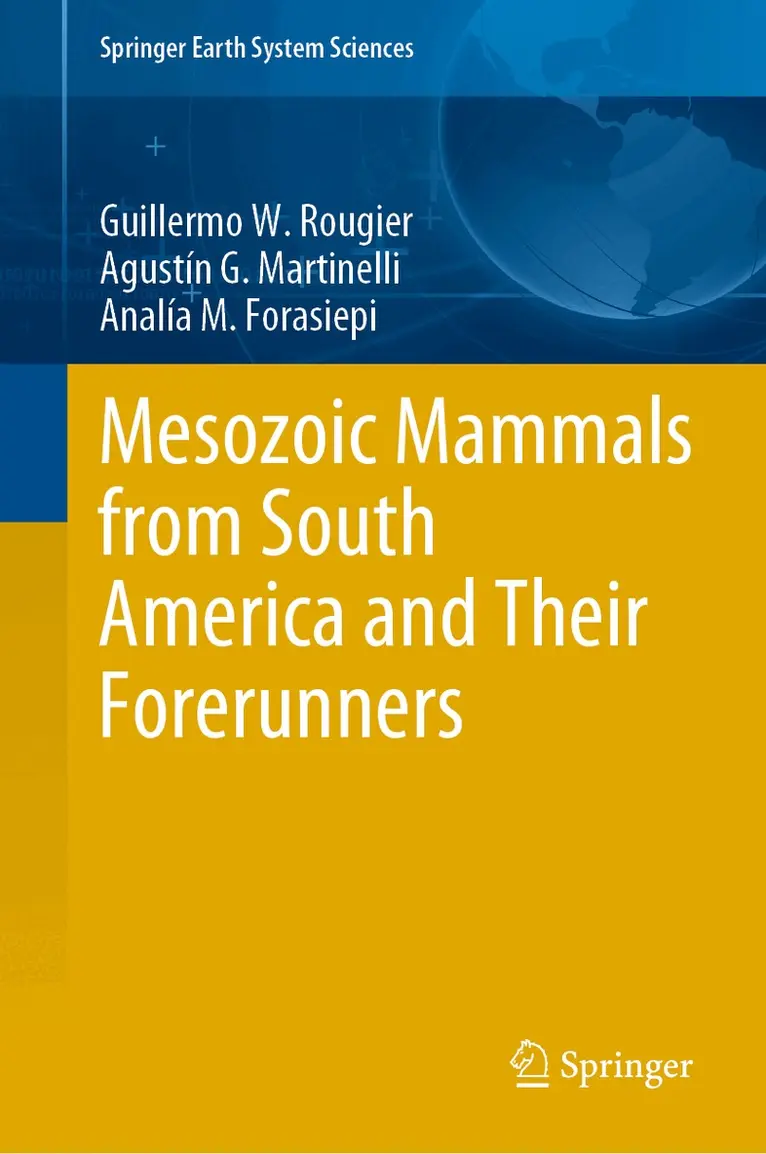
This book summarizes the most relevant published paleontological information, supplemented by our own original work, on the record of Mesozoic mammals’ evolution, their close ancestors and their immediate descendants. Mammals evolved in a systematically diverse world, amidst a dynamic geography that is at the root of the 6,500 species living today. Fossils of Mesozoic mammals, while rare and often incomplete, are key to understanding how mammals have evolved over more than 200 million years. Mesozoic mammals and their close relatives occur in a few dozen localities from Argentina, Brazil, Chile, Bolivia, and Peru spanning from the Mid- Triassic to the Late Cretaceous, with some lineages surviving the cataclysmic end of the Cretaceous period, into the Cenozoic of Argentina. There are roughly 25 recognized mammalian species distributed in several distinctive lineages, including australosphenidans, multituberculates, gondwanatherians, eutriconodonts, amphilestids and dryolestoids, among others. With its focus on diversity, systematics, phylogeny, and their impact on the evolution of mammals, there is no similar book currently available.
E-bok
Engelska, 20211 977 kr
Läs direkt efter köp
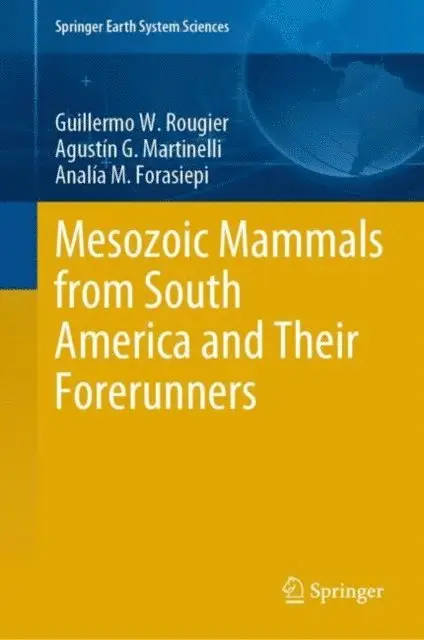
This book summarizes the most relevant published paleontological information, supplemented by our own original work, on the record of Mesozoic mammals’ evolution, their close ancestors and their immediate descendants. Mammals evolved in a systematically diverse world, amidst a dynamic geography that is at the root of the 6,500 species living today. Fossils of Mesozoic mammals, while rare and often incomplete, are key to understanding how mammals have evolved over more than 200 million years. Mesozoic mammals and their close relatives occur in a few dozen localities from Argentina, Brazil, Chile, Bolivia, and Peru spanning from the Mid- Triassic to the Late Cretaceous, with some lineages surviving the cataclysmic end of the Cretaceous period, into the Cenozoic of Argentina. There are roughly 25 recognized mammalian species distributed in several distinctive lineages, including australosphenidans, multituberculates, gondwanatherians, eutriconodonts, amphilestids and dryolestoids, among others. With its focus on diversity, systematics, phylogeny, and their impact on the evolution of mammals, there is no similar book currently available.