Aiping Li – författare
Visar alla böcker från författaren Aiping Li. Handla med fri frakt och snabb leverans.
4 produkter
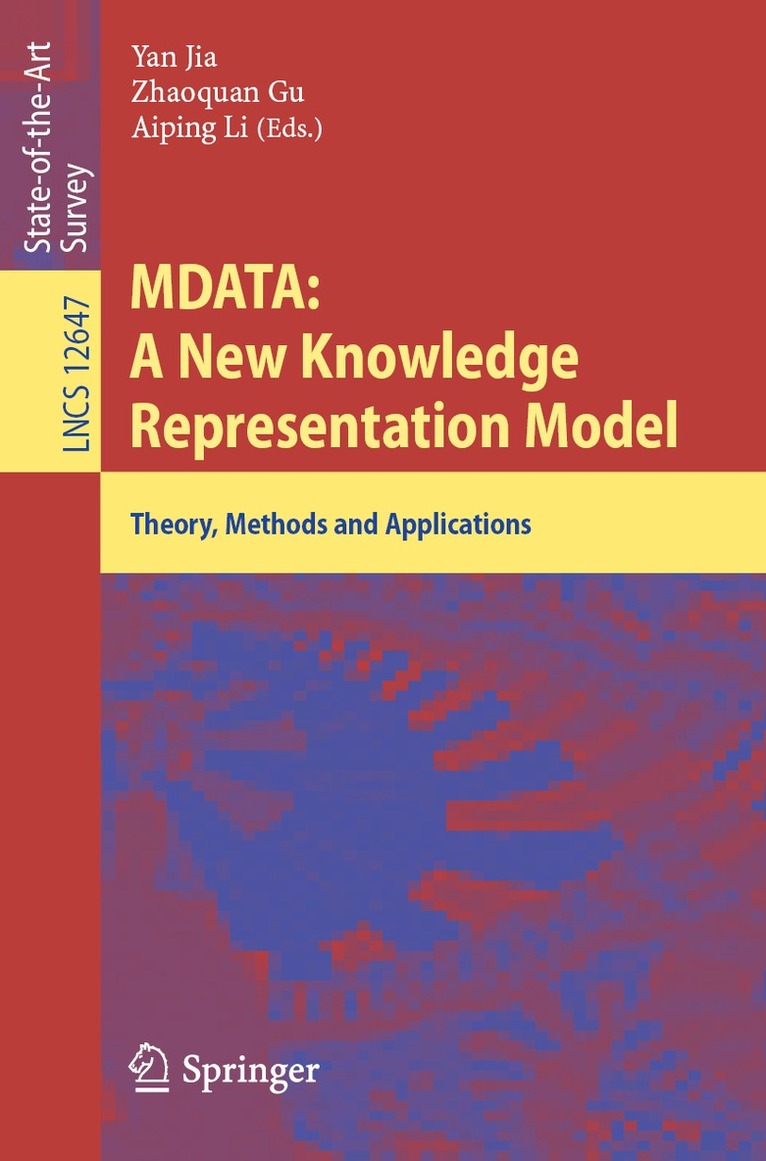
MDATA: A New Knowledge Representation Model
Theory, Methods and Applications
Av Yan Jia, Zhaoquan Gu m. fl.
Häftad, 2021
823 kr
Lägg i varukorg
Knowledge representation is an important task in understanding how humans think and learn. Although many representation models or cognitive models have been proposed, such as expert systems or knowledge graphs, they cannot represent procedural knowledge, i.e., dynamic knowledge, in an efficient …
MDATA: A New Knowledge Representation Model
Theory, Methods and Applications
Av Aiping Li, Zhaoquan Gu m. fl.
E-bok, 2021
1056 kr
Lägg i varukorg
Knowledge representation is an important task in understanding how humans think and learn. Although many representation models or cognitive models have been proposed, such as expert systems or knowledge graphs, they cannot represent procedural knowledge, i.e., dynamic knowledge, in an efficient …
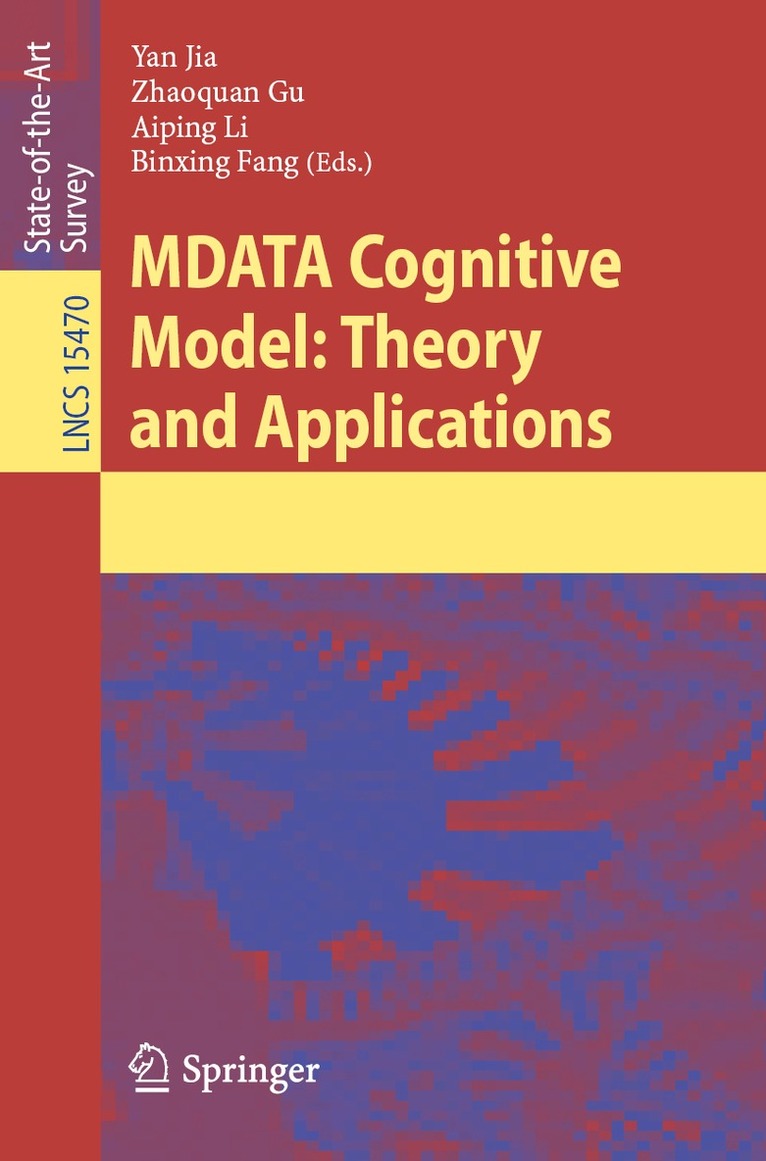
MDATA Cognitive Model: Theory and Applications
Av Yan Jia, Zhaoquan Gu m. fl.
Häftad, 2025
823 kr
Lägg i varukorg
This book presents the theoretical foundations of the MDATA cognitive model and its applications in the field of cybersecurity. The MDATA model is an innovative analytical tool designed to simulate and improve cognitive processes. It bridges cognitive science and cybersecurity, making it essential …
MDATA Cognitive Model: Theory and Applications
Av Binxing Fang, Aiping Li m. fl.
E-bok, 2025
1091 kr
Lägg i varukorg
This book presents the theoretical foundations of the MDATA cognitive model and its applications in the field of cybersecurity. The MDATA model is an innovative analytical tool designed to simulate and improve cognitive processes. It bridges cognitive science and cybersecurity, making it essential …