A.J. Liebling – författare
Visar alla böcker från författaren . Handla med fri frakt och snabb leverans.
3 produkter
3 produkter
E-bok
Engelska, 2008211 kr
Läs direkt efter köp
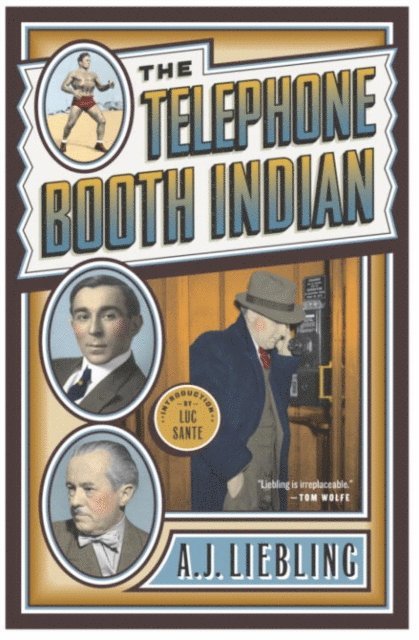
A classic work on Broadway sharpers, grifters, and con men by the late, great New Yorker journalist A. J. Liebling.Often referred to as “Liebling lowlife pieces,” the essays in The Telephone Booth Indian boisterously celebrate raffishness. A. J. Liebling appreciated a good scam and knew how to cultivate the scammers. Telephone Booth Indians (entrepreneurs so impecunious that they conduct business from telephone booths in the lobbies of New York City office buildings) and a host of other petty nomads of Broadway—with names like Marty the Clutch and Count de Pennies—are the protagonists in this incomparable Liebling work. In The Telephone Booth Indian, Liebling proves just why he was the go-to man on New York lowlife and con culture; this is the master at the top of his form, uncovering scam after scam and writing about them with the wit and charisma that established him as one of the greatest journalists of his generation and one of New York’s finest cultural chroniclers.
Del 2 - Library of America A. J. Liebling Edition
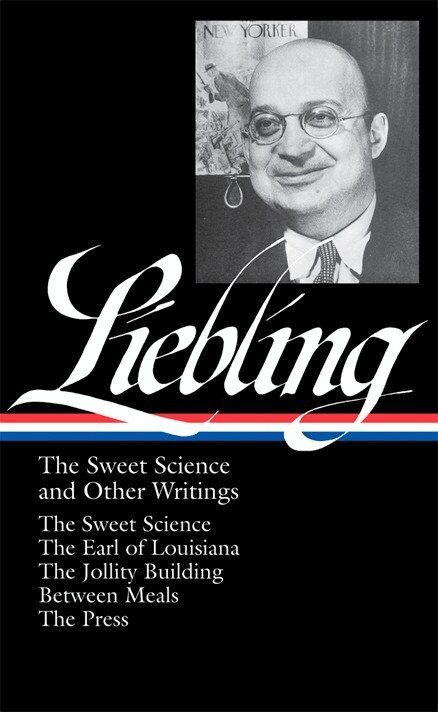
A. J. Liebling: The Sweet Science and Other Writings (LOA #191)
The Sweet Science / The Earl of Louisiana / The Jollity Building / Between Meals/ The Press
Inbunden, Engelska, 2008
607 kr
Skickas inom 11-20 vardagar
One of the most gifted American journalists of the twentieth century, A. J. Liebling learned his craft as a newspaper reporter before joining The New Yorker in 1935. This volume collects five books that demonstrate his extraordinary vitality and versatility as a writer.Named the best sports book of all time by Sports Illustrated in 2002, The Sweet Science (1956) offers a lively and idiosyncratic portrait of boxing in the early 1950s that encompasses boastful managers, veteran trainers, wily cornermen, and the fighters themselves: Joe Louis, Rocky Marciano, Sugar Ray Robinson, and Archie Moore, “a virtuoso of anachronistic perfection.” No one has captured the fierce artistry of the ring like Liebling. “A boxer,” he observed, “like a writer, must stand alone.” A classic of reporting, The Earl of Louisiana (1961) is a vivid account of Governor Earl Long’s bid for reelection after his release from a mental asylum in 1959—and an insightful look at Southern politics during the civil rights era.The Jollity Building (1962) collects hilarious stories about Manhattan cigar-store owners, night-club promoters, and the scheming “Telephone Booth Indians” of Broadway, as well as a profile of “The Honest Rainmaker,” the racing columnist and confidence man extraordinaire Colonel John R. Stingo. An unabashed celebration of the pleasures of unrestrained eating, Between Meals: An Appetite for Paris (1962) is a richly evocative memoir of Liebling’s lifelong love for Paris and French food and wine. The Press (1964) brings together the best of Liebling’s influential “Wayward Press” pieces, in which he perceptively examined the flaws of American journalism and presciently warned of the dangers of consolidated media ownership. “Freedom of the press,” he wrote, “is guaranteed only to those who own one.”LIBRARY OF AMERICA is an independent nonprofit cultural organization founded in 1979 to preserve our nation’s literary heritage by publishing, and keeping permanently in print, America’s best and most significant writing. The Library of America series includes more than 300 volumes to date, authoritative editions that average 1,000 pages in length, feature cloth covers, sewn bindings, and ribbon markers, and are printed on premium acid-free paper that will last for centuries.
E-bok
Spanska, 2019118 kr
Läs direkt efter köp
Nombrado MEJOR LIBRO DE DEPORTES DE TODOS LOS TIEMPOS por la revista Sports Illustrateden 2002, La Dulce Ciencia recopila en un único e inolvidable volumen las clásicas piezas del periodista del New Yorker A.J. Liebling sobre boxeo, esa "Dulce Ciencia de los Moratones".A través de sus páginas, Liebling nos ofrece un retrato animado e idiosincrásico del universo pugilístico de principios de la década de 1950 —la época dorada del boxeo estadounidense—, un mundillo que incluye a personajes de todo tipo: desde representantes jactanciosos hasta entrenadores veteranos y segundos astutos y, cómo no, a los luchadores mismos: figuras de la talla de Joe Louis, Rocky Marciano, Sugar Ray Robinson o Archie Moore, al que definió como "un virtuoso de anacrónica perfección".Sin embargo, sus geniales escritos van mucho más allá de la mera crónica deportiva. Con su inconfundible estilo, Liebling siempre busca la historia humana detrás de la pelea y evoca la tensión y la atmósfera en el estadio tan nítidamente como lo que sucede en el ring, capturando así este feroz arte como nadie lo había hecho antes. Considerado el autor que mejor supo retratar el ambiente pugilístico, en una ocasión afirmó: "El boxeador, como el escritor, debe estar solo".