Ajit Kumar Roy – författare
Visar alla böcker från författaren Ajit Kumar Roy. Handla med fri frakt och snabb leverans.
10 produkter
10 produkter
1 048 kr
Skickas inom 7-10 vardagar
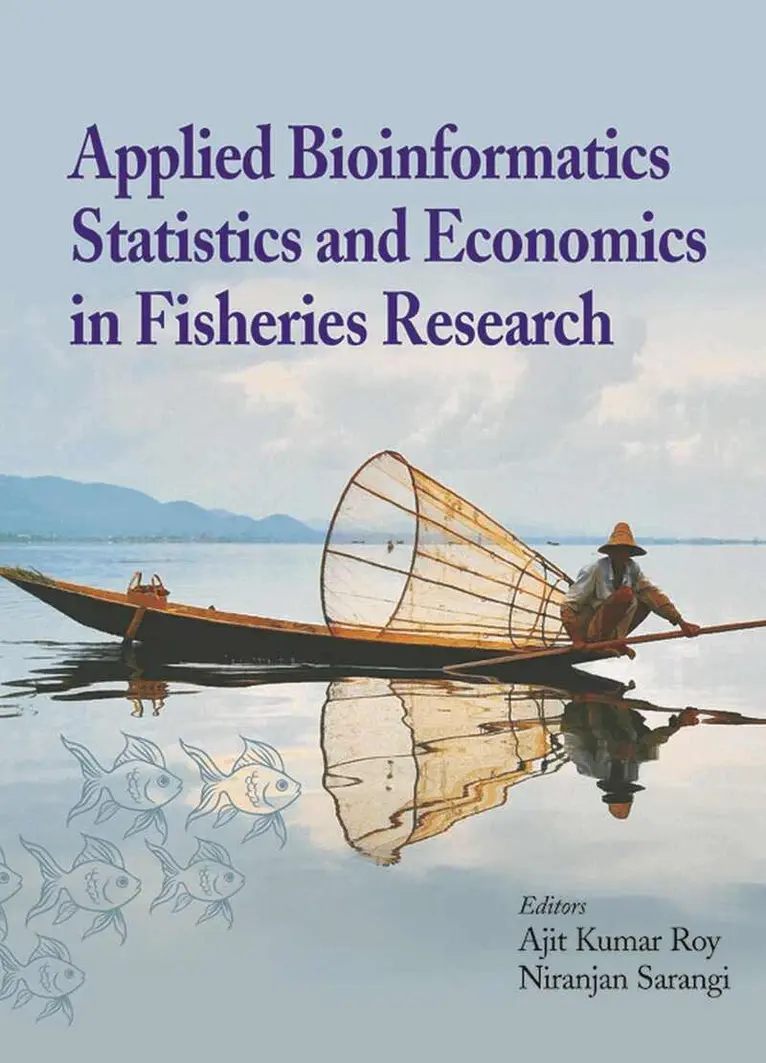
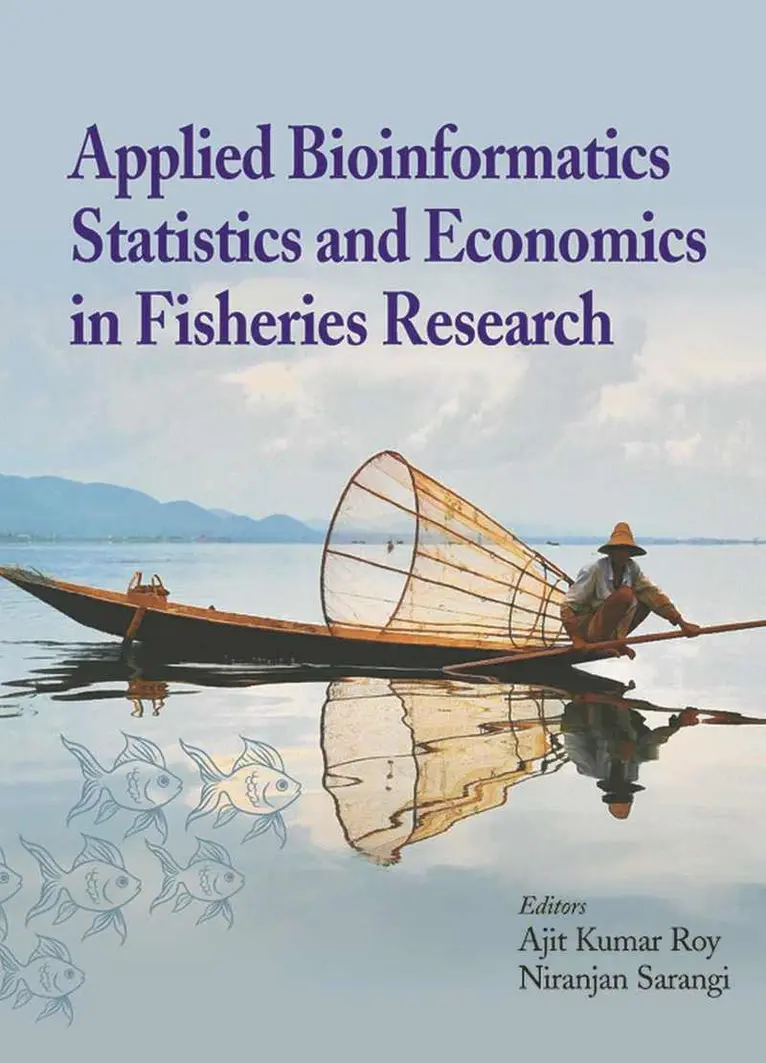
This book is a pioneering work in the market and spans 42 chapters across three broad sections: aqua-informatics, statistics, and economics. It covers advanced tools and techniques in bioinformatics and statistics for exploratory analysis of genomic and microarray data of fishes. The book also includes chapters on the latest developments in biotechnological approaches for fish disease diagnosis, infection, and immunity in brood carps, cryoconservation of fishes, probiotics, and nanotechnology in aquaculture. Additionally, there is information on prawn aquaculture, ornamental fish farming, and trade. The main attraction of the book is its detailed information on various software and their applications for exploratory data analysis and data mining, leading to knowledge discovery and visualization.The book is unique in that it provides appropriate and illustrated examples exclusively with fisheries data. The statistics section includes biometrical and qualitative techniques in genetics and selective breeding of fish, as well as fundamental statistical tests, design of experiments and sampling methods for planning experiments and surveys in fisheries and aquaculture research. The book also includes an econometric approach for technical efficiency estimation and input-output analysis, project evaluation, and impact assessment, linear programming, market intelligence, fisheries legislation, policy, and IPR issues. These topics are new to the field of fisheries and aquaculture and will be beneficial to students and researchers alike. Overall, the book serves as a comprehensive guide for researchers and planners, offering valuable insights for policy decision-making in the field of fisheries and aquaculture.
1 470 kr
Skickas inom 7-10 vardagar
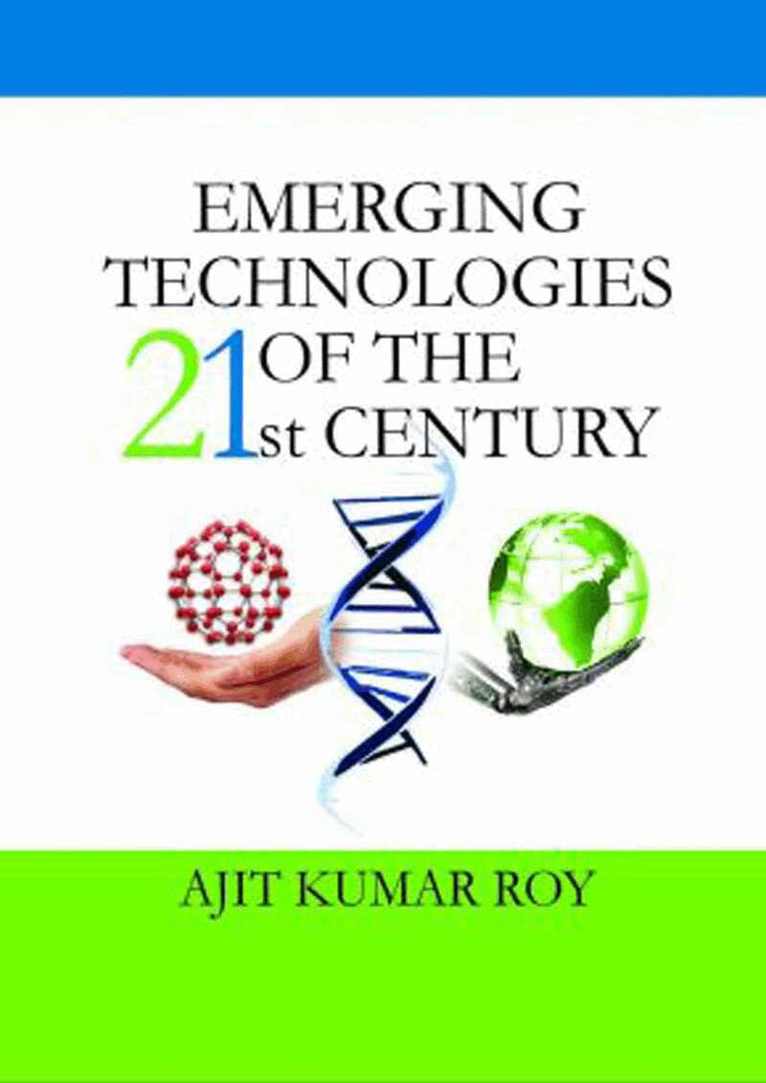
The 42 book chapters encompass a variety of areas, including Biotechnology, Bioinformatics, Nanotechnology, Expert System Neural Network, Applied Technologies, Database, Modeling, Analytics, and Business Intelligence Software, as well as IPR & Social Issues. In addition to these focus areas, the book also covers Emerging digital technologies, Information and Communication Technology Tools, skills and technologies for 21st century Education, Big Data, Business Intelligence Software, GIS, and IPR and Knowledge/Patenting/Indigenous and Traditional Knowledge Management (KM) challenges. The book has been divided into five broad sections that encompass the entire spectrum of emerging technologies in these fields. No information can be added or removed from the text without altering the meaning, and all references must remain in their original form.
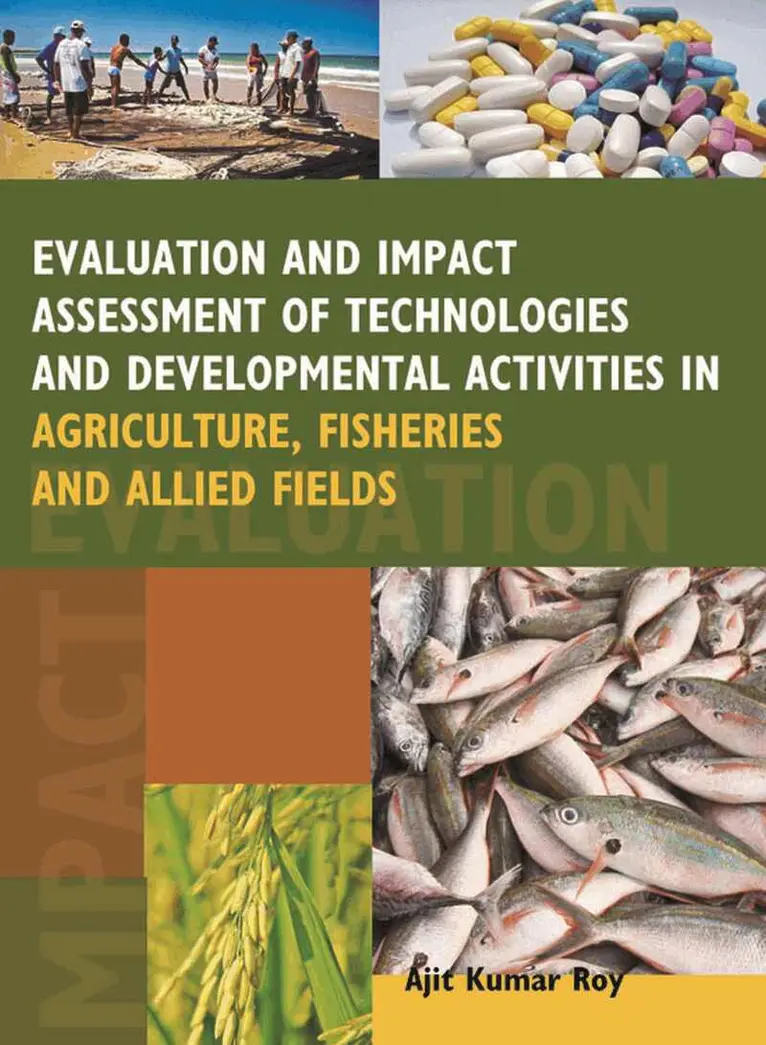
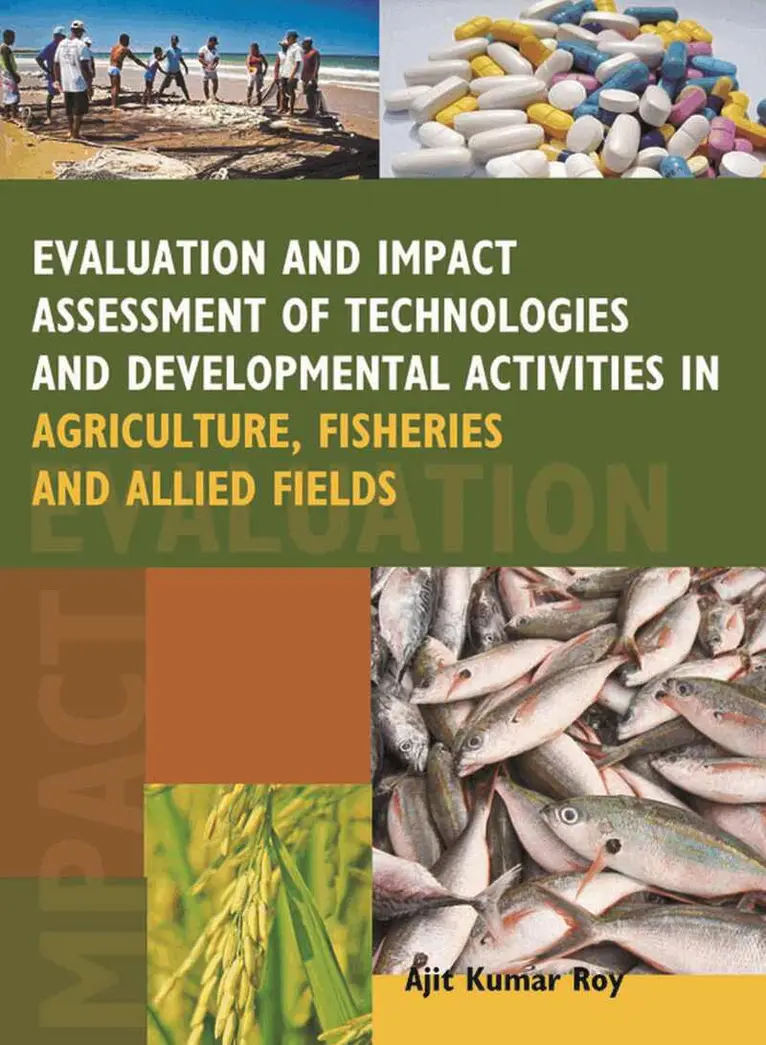
Evaluation and Impact Assessment of Technologies and Developmental Activities in Agriculture, Fisheries and Allied Fields
Häftad, Engelska, 2011
930 kr
Skickas inom 7-10 vardagar
The aim of this book is to fulfill the increasing demand for Impact Evaluation (IE) studies, as the primary objective of Impact Assessment (IA) is to gauge the magnitude and distribution of changes in outcome and impact indicators among the target population and to assess the extent to which these changes can be attributed to the interventions being evaluated. This book, which is probably the first of its kind in the country, consists of twenty chapters, each contributed by subject matter specialists and practitioners working in various fields. The chapters cover both the methodology and analytical issues of IA. The book emphasizes impact assessment methodologies such as PRA techniques, the logical framework approach for project monitoring, evaluation, and impact analysis, using the latest available economic, financial, social, environmental, and MDG indicators. Case studies on technological impacts on agro-ecosystems, pulse production, crop diversification, and the integrated rehabilitation of Tsunami-affected people in the Andaman and Nicobar Islands are also included. Most importantly, the book features case studies on the socio-economic impact of cashew production, shrimp farming, aquaculture production, and the conservation of ecology in the coastal zone, with a focus on Mangroves and water hyacinth. The contributions of renewed experts are significant in this regard. Additionally, the book includes case studies on the assessment of ICT, remote sensing, fluxomics, and agricultural insurance on future crop production in India. The programme evaluation of the Swarnjayanti Gram Swarozgar Yogana (SGSY) is of particular importance for those involved in such projects. The book contains a comprehensive glossary of IA, a list of IA studies conducted in India by the Programme Evaluation Organization of the Planning Commission, and sector-wide priority indicators for agriculture and rural development, serving as ready references.
1 035 kr
Skickas inom 7-10 vardagar
This book provides a detailed overview to the topic of international fisheries governance and the drivers of IUU fishing. Technologies that directly address these challenges reduce costs and improve and expand farm operations both offshore and especially on land are reported in this communication. The book provides information on the following areas to scientists, resource managers and researchers working with big data to advance more sustainable fisheries practices.Modeling in the areas of Feed Conversion Ratio (FCR), Specific Feeding Ratio (SFR), Key Performance Indicators (KPI) that are needed for efficient management of resources for sustainable production from fisheries sector. Neural Network forecasts that exceeded other traditional forecasting methods such as linear or logistic regression systems. Application of Big Data Analytics in aquaculture that facilitated to bring the techniques of aquaculture to a new level of in depth understanding and unlocking the economic potential of improved management decisions particularly can spot business trends, prevent disease, combat crime, and even revolutionize the health of fisheries.Application of ANN to forecast water quality and temperature that benefits aquaculture process control. Sensor Technology that offers real-time environmental monitoring system for aquaculture in a wide range of areas and visual signal processing system to continuously control the feeding process of fish in aquaculture tanks. Artificial Intelligence Systems that in turn helps in increased process efficiency; reduced energy and water losses; reduced labor costs; reduced stress and disease; better understanding of the process and efficient accounting are also.Data Mining for better control on the food loss and food quality in the aqua farming industry. Analysis of Value Chain of Processed Fish Products Partial Budget Analysis for better understanding of the farm's financial status and more efficient use of the resources available particularly for aquaculture practices. Tips for right type of statistical test to equip the social science researchers capable of performing of Statistical tests for various rating scales mostly used for social sciences research.A holistic, global-scale focus on challenges of IUU and technology initiatives to face the challenge This unique book explores a wide range of analytical issues centered on the aquaculture process management. It is expected that this book will be most useful who aims in achieving FAO's Sustainable Development Goal 14, which calls on the international community to effectively regulate fish harvesting end overfishing, illegal fishing, and destructive fishing practices, and to implement science-based management.
1 075 kr
Skickas inom 7-10 vardagar
The objective of Knowledge Management (KM) is to enhance workforce performance by identifying, creating, managing, and delivering information within an organization. As a discipline, KM promotes an integrated approach to identifying, capturing, evaluating, retrieving, and sharing all of an enterprises information assets, which may include databases, documents, policies, procedures, and expertise and experience of individual workers. The book Knowledge Management: Fundamentals, Tools, and Techniques covers these issues in thirty-three chapters, broadly divided into five sections: Fundamentals of Knowledge Management, Latest Tools and Techniques for Knowledge Management, Databases, Data Mining, Knowledge Discovery in Biotechnology and Bioinformatics, Data Mining and Knowledge Discovery in Agriculture and Allied Fields, and Indigenous Knowledge Protection and IPR Issues. The book contains original research and case studies by academic and research contributors on strategies, tools, techniques, and technologies for Knowledge Management. The focus of this book is on the identification of innovative KM strategies and the application of theoretical concepts to real-world situations. The first few chapters serve as a complete introduction to the concepts and principles of KM, starting with the basics of data, information, knowledge, and wisdom. The book also clarifies the differences among Explicit, Implicit, and Tacit Knowledge. In addition to covering traditional KM approaches, the book also addresses emerging topics such as cloud computing, the Semantic Web, Rough Computing, Fuzzy logic, Artificial intelligence, Machine learning, social networks, and Tools and Techniques for Geo Spatial Data Knowledge Discovery. The books focus is on how KM impacts organizations and individuals and the steps that should be taken to maximize benefits, including directions for how to select, develop, and evaluate KM systems.
2 604 kr
Skickas inom 7-10 vardagar
The book is a groundbreaking work that stands out in the market. It is comprehensive, spanning 42 chapters across three main sections - aqua-informatics, statistics, and economics - and covers advanced tools and techniques of bioinformatics and statistics for exploratory analysis of genomic and microarray data of fishes. The book chapters on the latest developments in biotechnological approaches for fish disease diagnosis, infection and immunity of brood carps, cryoconservation of fishes, probiotics and nanotechnology in aquaculture, as well as information on prawn aquaculture, ornamental fish farming and trade, are of great interest. Additionally, the book provides valuable information on various software and their application for exploratory data analysis and data mining, leading to knowledge discovery and visualization. One of the book key features is that it includes appropriate and illustrated examples exclusively with fisheries data. The statistics section covers biometrical and qualitative techniques in genetics and selective breeding of fish, as well as fundamental statistical tests, design of experiments, and sampling methods for planning experiments and surveys in fisheries and aquaculture research. The book also includes an econometric approach for technical efficiency estimation and input-output analysis, project evaluation, and impact assessment, linear programming, market intelligence, fisheries legislation, policy, and IPR issues, all of which are new in the field of fisheries and aquaculture. This book will not only benefit students but will also serve as a valuable guide for researchers and planners making policy decisions. It covers a wide range of subjects that are effectively applied to fisheries and aquaculture research, making it a useful resource for those in this field.
Evaluation and Impact Assessment of Technologies and Developmental Activities in Agriculture, Fisheries and Allied Fields
Inbunden, Engelska, 2011
1 839 kr
Skickas inom 7-10 vardagar
The primary objective of this book is to fulfill the increasing demand for Impact Evaluation (IE) studies, as the main purpose of Impact Assessment (IA) is to gauge the magnitude and distribution of changes in outcome and impact indicators among the target population, and to determine the extent to which these changes can be attributed to the interventions being evaluated. This book, which is likely the first of its kind in the country, features contributions from subject matter specialists and practitioners working in various fields, and covers both the methodology and analytical issues of IA. The book also highlights impact assessment methodologies such as PRA techniques, the logical framework approach for project monitoring, evaluation, and impact analysis, using the latest available economic, financial, social, environmental, and MDG indicators. In addition, case studies on topics such as technological impact on agro-ecosystems, pulse production, crop diversification and agricultural output, and integrated rehabilitation of Tsunami-affected people in the Andaman and Nicobar Islands are included. The book also features contributions from experts on the socio-economic impact of cashew production, shrimp farming, aquaculture production, and the conservation of the ecology of coastal zone vegetation, with a focus on Mangroves and water hyacinth. The book also includes case studies on the assessment of ICT, remote sensing fluxomics, and agricultural insurance on future crop production in India, as well as a program evaluation of the Swarnjayanti Gram Swarozgar Yogana (SGSY) for those involved in such projects. This book also includes a comprehensive glossary of IA terms, a list of IA studies conducted in India by the Programme Evaluation Organization of the Planning Commission, and sector-wide priority indicators for agriculture and rural development, which serve as valuable references.
2 129 kr
Skickas inom 7-10 vardagar
The process of Knowledge Management involves an organizations identification, creation, management, and delivery of information in order to enhance workforce performance. It is a discipline that promotes a holistic approach to identifying, capturing, evaluating, retrieving, and sharing all of an enterprises information assets. These assets may include databases, documents, policies, procedures, and the expertise and experience of individual workers. The book Knowledge Management: Fundamentals, Tools, and Techniques covers these issues in thirty-three chapters, which are broadly divided into five sections. These sections include Fundamentals of Knowledge Management, Latest Tools and Techniques for Knowledge Management, Databases, Data mining, Knowledge Discovery in Biotechnology and Bioinformatics, Data mining and Knowledge Discovery in Agriculture and Allied Fields, and Indigenous Knowledge Protection and IPR Issues. The book contains original research and case studies by academic and research contributors on strategies, tools, techniques, and technologies for Knowledge Management. The focus of this book is on the identification of innovative Knowledge Management strategies and the application of theoretical concepts to real-world situations. The book begins with an introduction to the concepts and principles of Knowledge Management, starting with the basics of data, information, knowledge, and wisdom. It also clarifies the differences between Explicit, Implicit, and Tacit Knowledge. The book covers traditional Knowledge Management approaches as well as emerging topics such as cloud computing, Semantic Web, Rough Computing, Fuzzy logic, Artificial intelligence, Machine learning, social networks, and Tools and Techniques for Geo Spatial Data Knowledge Discovery. The book focuses on how Knowledge Management impacts organizations and individuals and provides steps that should be taken to maximize benefits, including directions for how to select, develop, and evaluate Knowledge Management systems.
2 920 kr
Skickas inom 7-10 vardagar
The book comprises 42 chapters that address various focus areas, including Biotechnology, Bioinformatics, Nanotechnology, Expert System Neural Network, Applied Technologies, Database, Modeling, Analytics, and Business Intelligence Software, and IPR & Social Issues. Additionally, the book delves into Emerging digital technologies, Information and Communication Technology Tools, skills and technologies for 21st century Education, Big Data, Business Intelligence Software, GIS, IPR, and Knowledge/Patenting/Indigenous and Traditional Knowledge Management (KM) challenges. The book is divided into five broad sections, which cover the entire range of emerging technologies in respective fields.
2 050 kr
Skickas inom 7-10 vardagar
This book provides a detailed overview to the topic of international fisheries governance and the drivers of IUU fishing. Technologies that directly address these challenges reduce costs and improve and expand farm operations both offshore and especially on land are reported in this communication. The book provides information on the following areas to scientists, resource managers and researchers working with big data to advance more sustainable fisheries practices.Modeling in the areas of Feed Conversion Ratio (FCR), Specific Feeding Ratio (SFR), Key Performance Indicators (KPI) that are needed for efficient management of resources for sustainable production from fisheries sector. Neural Network forecasts that exceeded other traditional forecasting methods such as linear or logistic regression systems. Application of Big Data Analytics in aquaculture that facilitated to bring the techniques of aquaculture to a new level of in depth understanding and unlocking the economic potential of improved management decisions particularly can spot business trends, prevent disease, combat crime, and even revolutionize the health of fisheries.Application of ANN to forecast water quality and temperature that benefits aquaculture process control. Sensor Technology that offers real-time environmental monitoring system for aquaculture in a wide range of areas and visual signal processing system to continuously control the feeding process of fish in aquaculture tanks. Artificial Intelligence Systems that in turn helps in increased process efficiency; reduced energy and water losses; reduced labor costs; reduced stress and disease; better understanding of the process and efficient accounting are also.Data Mining for better control on the food loss and food quality in the aqua farming industry. Analysis of Value Chain of Processed Fish Products Partial Budget Analysis for better understanding of the farm's financial status and more efficient use of the resources available particularly for aquaculture practices. Tips for right type of statistical test to equip the social science researchers capable of performing of Statistical tests for various rating scales mostly used for social sciences research.A holistic, global-scale focus on challenges of IUU and technology initiatives to face the challenge This unique book explores a wide range of analytical issues centered on the aquaculture process management. It is expected that this book will be most useful who aims in achieving FAO's Sustainable Development Goal 14, which calls on the international community to effectively regulate fish harvesting end overfishing, illegal fishing, and destructive fishing practices, and to implement science-based management.