Ajuruchukwu Obi – författare
Visar alla böcker från författaren Ajuruchukwu Obi. Handla med fri frakt och snabb leverans.
2 produkter
2 produkter
1 559 kr
Skickas inom 5-8 vardagar
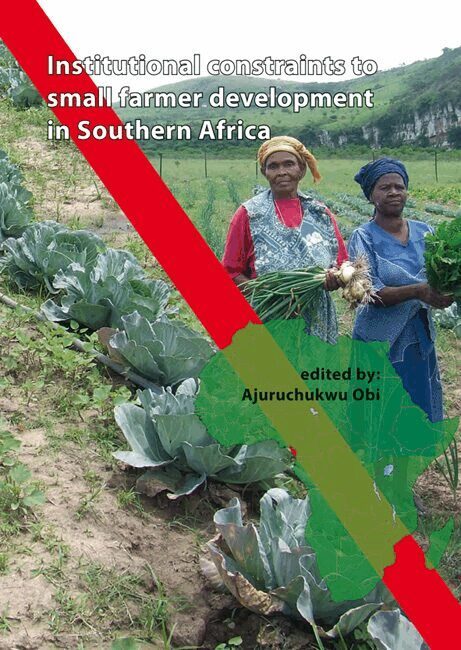
The Southern Africa region has experienced more than its fair share of problems in recent years. Just when it seemed that the hardships wrought by the devastating cycle of droughts and floods of 2000 to 2002 were a thing of the past, other problems emerged. At one level, there have been the weak and often erratic governance mechanisms and political crises in some countries of the region, leading to severe disruptions in agricultural production to the point that supplies and markets have virtually disappeared. At another level, socio-cultural rigidities have often militated against the adoption of efficient farming practices, resulting in sub-optimal choices that lock smallholders into a low equilibrium trap. In the face of the disappearing supplies and missing markets, these have engendered hyper-inflationary trends of a magnitude unknown anywhere else in the world. But in the midst of all this apparent dreariness, cases are emerging from which immense lessons can be drawn. This book assembles a collection of research papers based on studies completed in 2008 and 2009 in Southern Africa that examine various dimensions of the institutional constraints small farmers are facing in the region and how they are going about dealing with them. The papers draw from these diverse and polar experiences and present some theoretical and practical insights that should form the basis for more in-depth, country-level, sector-specific analyses, focusing mainly on citrus, horticultures, cotton and livestock. The thematic issues of income inequality, land reform, natural resource management and value chain governance and chain choice, are covered in this book and are expected to be of interest for a wide constituency, including researchers, development practitioners, rural animators, and policy makers.
Del 10 - Mansholt Publication series
Unlocking markets to smallholders
Lessons from South Africa
Häftad, Engelska, 2011
1 204 kr
Skickas inom 5-8 vardagar
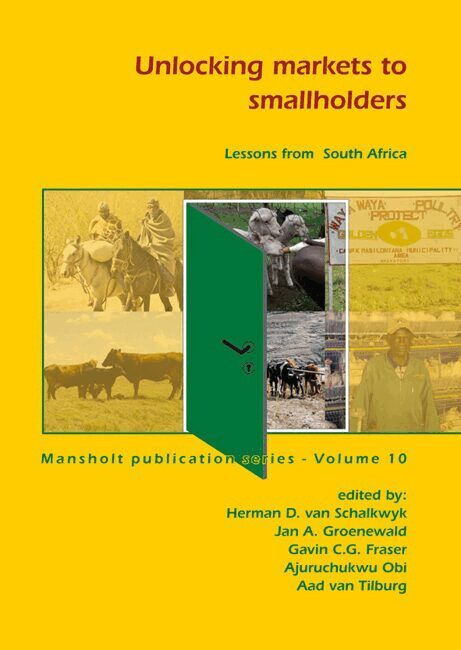
This book assesses the institutional, technical and market constraints as well as opportunities for smallholders, notably, emerging farmers in disadvantaged areas such as the former homelands of South Africa. Emerging farmers are previously disadvantaged black people who started or will start their business with the support of special government programs. Public support programs have been developed as part of the Black Economic Empowerment strategy of the South African government. These programs aim to improve the performance of emerging farmers. This requires, first and foremost, upgrading the emerging farmers skills by providing access to knowledge about agricultural and entrepreneurial practices. To become or to remain good farmers they also need access to suitable agricultural land and sufficient water for irrigation and for feeding their cattle. Finally, for emerging farmers to be engaged in viable farming operations, various factors need to be in place such as marketing and service institutions to give credit for agricultural inputs and investments; input markets for farm machinery, farm implements, fertilizers and quality seeds; and accessible output markets for their end products. This book develops a policy framework and potential institutional responses to unlock the relevant markets for smallholders.