Alain Berthod - Böcker
Visar alla böcker från författaren Alain Berthod. Handla med fri frakt och snabb leverans.
4 produkter
4 produkter
3 373 kr
Tillfälligt slut
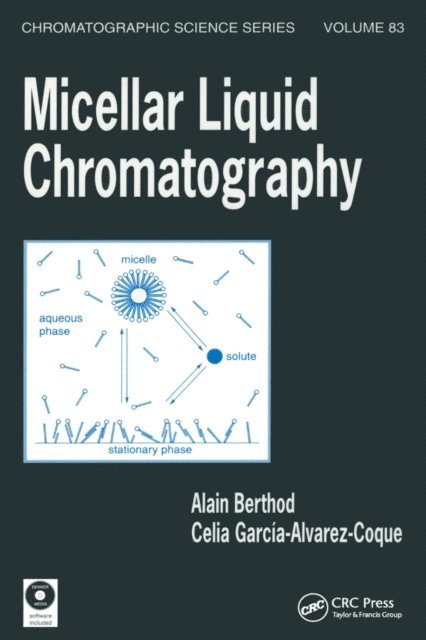
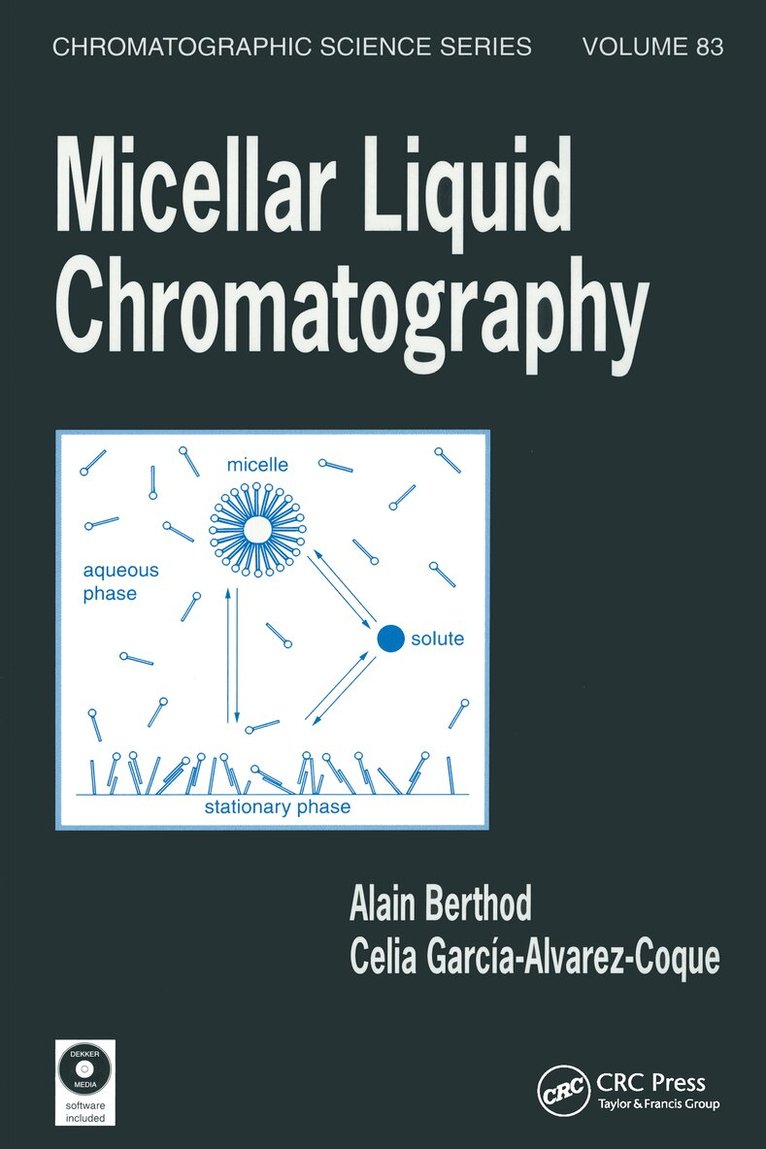
Micellar Liquid Chromatography reviews the use of surfactant solutions at or above the critical micelle concentration as mobile phases in liquid chromatography. It employs a computer-assisted optimization methodology and integrates micellar liquid chromatography (MLC) with other chromatographic and electrophoretic techniques using surfactants. It also includes the MICHROM software package on CD-ROM to facilitate the application of equations and optimize efficiency of MLC systems.
8 588 kr
Skickas inom 11-20 vardagar
Leading the way for analytical chemists developing new techniques.This new comprehensive 5 volume set on separation science provides a much needed research-level text for both academic users and researchers who are working with and developing the most current methods, as well as serving as a valuable resource for graduate and post-graduate students.Comprising of five topical volumes it provides a comprehensive overview of the subject, highlighting aspects that will drive research in this field in the years to come.Volume 1: Liquid ChromatographyVolume 2: Special Liquid Chromatography Modes and Capillary Electromigration TechniquesVolume 3: Gas, Supercritical and Chiral ChromatographyVolume 4: Chromatographic and Related TechniquesVolume 5: Sample Treatment, Method Validation, and ApplicationsKey Features:- Comprises over 2,100 pages in 5 volumes – available in print and online- Edited by an international editorial team which has both prominent and experienced senior researchers as well as young and dynamic rising stars- Individual chapters are labeled as either introductory or advanced, in order to guide readers in finding the content at the appropriate level- Fully indexed with cross referencing within and between all 5 volumes
2 180 kr
Skickas inom 10-15 vardagar
What drives a scientist to edit a book on a speci c scienti c subject such as chiral mechanisms in separation methods? Until December 2005, the journal Analytical Chemistry of the American Chemical Society (Washington, DC) had an A-page section that was dedicated to simple and clear presentations of the most recent te- niques or the state of the art in a particular eld or topic. The “A-page” section was prepared for a broad audience of chemists including industrial professionals, s- dents as well as academics looking for information outside their eld of expertise. 1 Daniel W. Armstrong, one of the editors of this journal and a twenty-year+ long friend, invited me to present my view on chiral recognition mechanisms in a simple and clear way in an “A-page” article. In 2006, the “A-page” section was maintained as the rst articles at the beginning of each rst bi-monthly issue but the pagination was no longer page distinguished from the regular research articles published by the journal. During the time between the invitation and the submission, the A-page section was integrated into the rest of the journal and the article appeared as (2006) Anal Chem (78):2093–2099.
2 180 kr
Skickas inom 10-15 vardagar
What drives a scientist to edit a book on a speci c scienti c subject such as chiral mechanisms in separation methods? Until December 2005, the journal Analytical Chemistry of the American Chemical Society (Washington, DC) had an A-page section that was dedicated to simple and clear presentations of the most recent te- niques or the state of the art in a particular eld or topic. The “A-page” section was prepared for a broad audience of chemists including industrial professionals, s- dents as well as academics looking for information outside their eld of expertise. 1 Daniel W. Armstrong, one of the editors of this journal and a twenty-year+ long friend, invited me to present my view on chiral recognition mechanisms in a simple and clear way in an “A-page” article. In 2006, the “A-page” section was maintained as the rst articles at the beginning of each rst bi-monthly issue but the pagination was no longer page distinguished from the regular research articles published by the journal. During the time between the invitation and the submission, the A-page section was integrated into the rest of the journal and the article appeared as (2006) Anal Chem (78):2093–2099.