Alain Touwaide - Böcker
Visar alla böcker från författaren Alain Touwaide. Handla med fri frakt och snabb leverans.
14 produkter
14 produkter
725 kr
Skickas inom 10-15 vardagar
Manuscripts containing Greek medical texts were inventoried by author and work at the beginning of the 20th century by a group of philologists under the direction of Hermann Diels. Useful as it was - and will continue to be – Diels’ catalogue omitted authors and works, misidentified manuscripts, and overlooked codices. Furthermore, since the publication of the catalogue, some libraries have adopted a new system of classification, manuscripts have been destroyed, items have changed location, and new ones have come to light. The present Census is a checklist of the Greek medical manuscripts currently known in collections worldwide. It is both an amended and updated index of Diels’ catalogue, and a list of the items missed or overlooked in Diels, or located since. Although it does not supersede Diels’ catalogue, it is the indispensable instrument for a New Diels, and will be the reference for years to come for any new critical edition and medico-historical research based on manuscripts, besides providing the basis for a broad range of other historical inquiries, from codicology to the history of medicine and science, including Byzantine intellectual history, Renaissance studies and humanism, history of the book and early printing, and the history of medical philology and learning.
2 219 kr
Skickas inom 10-15 vardagar
Images in medieval and early modern treatises on medicine, pharmacy, and natural history often confound our expectations about the functions of medical and scientific illustrations. They do not look very much like the things they purport to portray; and their actual usefulness in everyday medical practice or teaching is not obvious. By looking at works as diverse as herbals, jewellery, surgery manuals, lay health guides, cinquecento paintings, manuscripts of Pliny's Natural History, and Leonardo's notebooks, Visualizing Medieval Medicine and Natural History, 1200-1550 addresses fundamental questions about the interplay of art and science from the thirteenth to the mid-sixteenth century: What counts as a medical illustration in the Middle Ages? What are the purposes and audiences of the illustrations in medieval medical, pharmaceutical, and natural history texts? How are images used to clarify, expand, authenticate, and replace these texts? How do images of natural objects, observed phenomena, and theoretical concepts amplify texts and convey complex cultural attitudes? What features lead us to regard some of these images as typically 'medieval' while other exactly contemporary images strike us as 'Renaissance' or 'early modern' in character? Art historians, medical historians, historians of science, and specialists in manuscripts and early printed books will welcome this wide-ranging, interdisciplinary examination of the role of visualization in early scientific inquiry.
845 kr
Skickas inom 10-15 vardagar
Images in medieval and early modern treatises on medicine, pharmacy, and natural history often confound our expectations about the functions of medical and scientific illustrations. They do not look very much like the things they purport to portray; and their actual usefulness in everyday medical practice or teaching is not obvious. By looking at works as diverse as herbals, jewellery, surgery manuals, lay health guides, cinquecento paintings, manuscripts of Pliny's Natural History, and Leonardo's notebooks, Visualizing Medieval Medicine and Natural History, 1200-1550 addresses fundamental questions about the interplay of art and science from the thirteenth to the mid-sixteenth century: What counts as a medical illustration in the Middle Ages? What are the purposes and audiences of the illustrations in medieval medical, pharmaceutical, and natural history texts? How are images used to clarify, expand, authenticate, and replace these texts? How do images of natural objects, observed phenomena, and theoretical concepts amplify texts and convey complex cultural attitudes? What features lead us to regard some of these images as typically 'medieval' while other exactly contemporary images strike us as 'Renaissance' or 'early modern' in character? Art historians, medical historians, historians of science, and specialists in manuscripts and early printed books will welcome this wide-ranging, interdisciplinary examination of the role of visualization in early scientific inquiry.
359 kr
Skickas inom 7-10 vardagar
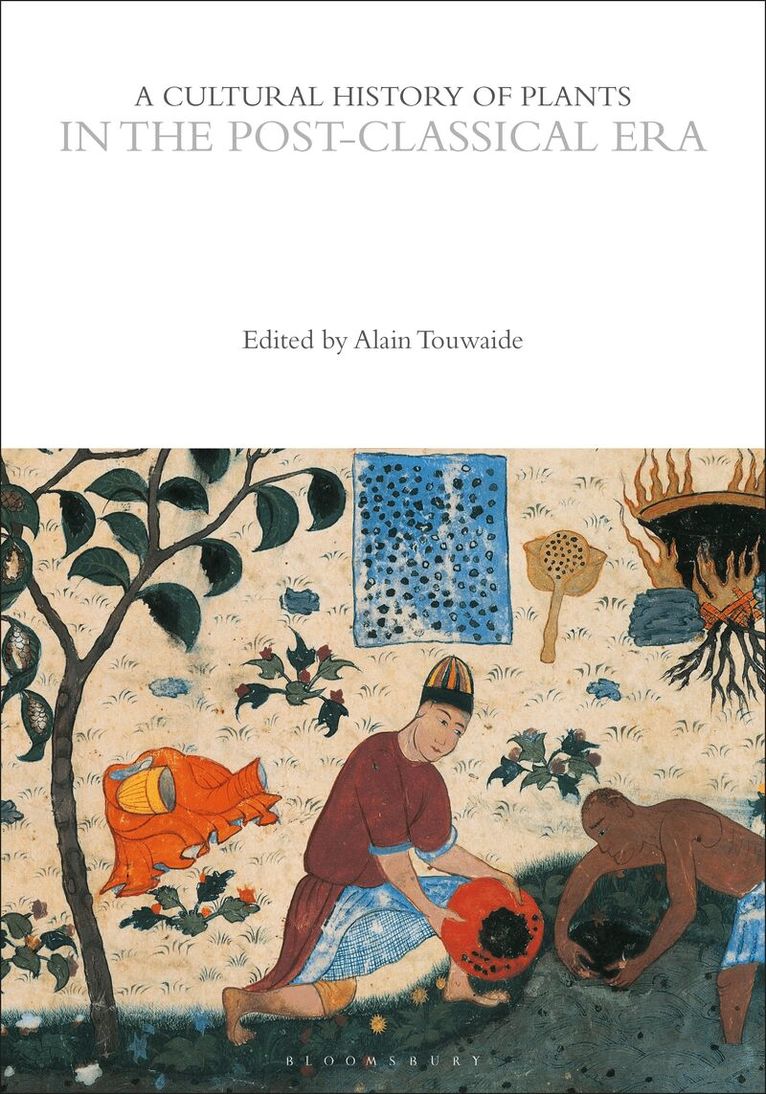
A Cultural History of Plants in the Post-Classical Era covers the period from 500 to 1400, ranging across northern and central Europe to the Mediterranean, and from the Byzantine and Arabic Empires to the Persian World, India, and China. This was an age of empires and fluctuating borders, presenting a changing mosaic of environments, populations, and cultural practices. Many of the ancient uses and meanings of plants were preserved, but these were overlaid with new developments in agriculture, landscapes, medicine, eating habits, and art.The six-volume set of the Cultural History of Plants presents the first comprehensive history of the uses and meanings of plants from prehistory to today. The themes covered in each volume are plants as staple foods; plants as luxury foods; trade and exploration; plant technology and science; plants and medicine; plants in culture; plants as natural ornaments; the representation of plants.Alain Touwaide is Scientific Director at the Institute for the Preservation of Medical Traditions, Washington, D.C., USA.A Cultural History of Plants in the Post-Classical Era is the second volume in the six-volume set, A Cultural History of Plants, also available online as part of Bloomsbury Cultural History, a fully-searchable digital library (see www.bloomsburyculturalhistory.com).General Editors: Annette Giesecke, Victoria University of Wellington, New Zealand, and David Mabberley, University of Oxford, UK.
2 357 kr
Skickas inom 10-15 vardagar
Manuscripts containing Greek medical texts were inventoried by author and work at the beginning of the 20th century by a group of philologists under the direction of Hermann Diels. Useful as it was - and will continue to be – Diels’ catalogue omitted authors and works, misidentified manuscripts, and overlooked codices. Furthermore, since the publication of the catalogue, some libraries have adopted a new system of classification, manuscripts have been destroyed, items have changed location, and new ones have come to light. The present Census is a checklist of the Greek medical manuscripts currently known in collections worldwide. It is both an amended and updated index of Diels’ catalogue, and a list of the items missed or overlooked in Diels, or located since. Although it does not supersede Diels’ catalogue, it is the indispensable instrument for a New Diels, and will be the reference for years to come for any new critical edition and medico-historical research based on manuscripts, besides providing the basis for a broad range of other historical inquiries, from codicology to the history of medicine and science, including Byzantine intellectual history, Renaissance studies and humanism, history of the book and early printing, and the history of medical philology and learning.
1 108 kr
Skickas inom 10-15 vardagar
A Cultural History of Plants in the Post-Classical Era covers the period from 500 to 1400, ranging across northern and central Europe to the Mediterranean, and from the Byzantine and Arabic Empires to the Persian World, India, and China. This was an age of empires and fluctuating borders, presenting a changing mosaic of environments, populations, and cultural practices. Many of the ancient uses and meanings of plants were preserved, but these were overlaid with new developments in agriculture, landscapes, medicine, eating habits, and art.The six-volume set of the Cultural History of Plants presents the first comprehensive history of the uses and meanings of plants from prehistory to today. The themes covered in each volume are plants as staple foods; plants as luxury foods; trade and exploration; plant technology and science; plants and medicine; plants in culture; plants as natural ornaments; the representation of plants.Alain Touwaide is Scientific Director at the Institute for the Preservation of Medical Traditions, Washington, D.C., USA. A Cultural History of Plants in the Post-Classical Era is the second volume in the six-volume set, A Cultural History of Plants, also available online as part of Bloomsbury Cultural History, a fully-searchable digital library (see www.bloomsburyculturalhistory.com).General Editors: Annette Giesecke, Victoria University of Wellington, New Zealand, and David Mabberley, University of Oxford, UK.
345 kr
Skickas inom 7-10 vardagar
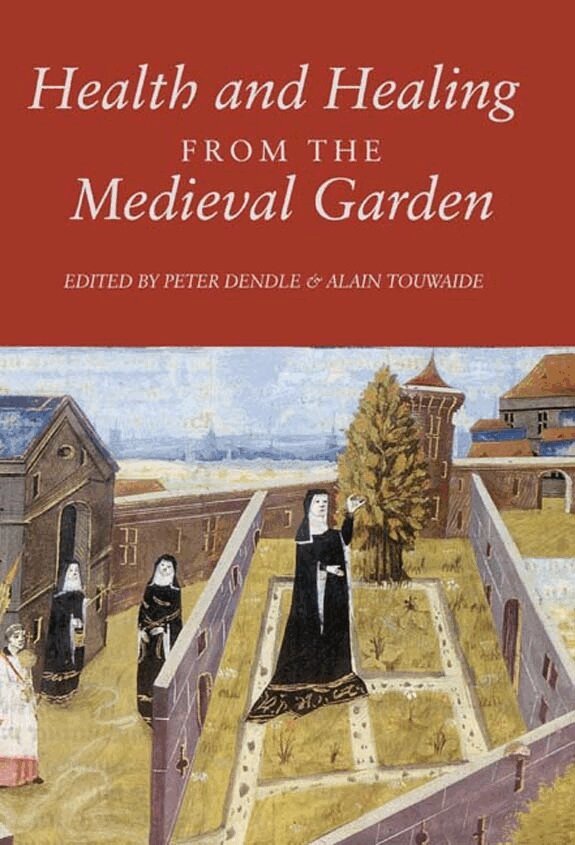
Fresh examinations of the role of medicinal plants in medieval thought and practice and how they contributed to broader ideas concerning the body, religion and identity.The important and ever-shifting role of medicinal plants in medieval science, art, culture, and thought, both in the Latin Western medical tradition and in Byzantine and medieval Arabic medicine, is the focus of this new collection. Following a general introduction and a background chapter on Late Antique and medieval theories of wellness and therapy, in-depth essays treat such wide-ranging topics as medicine and astrology, charms and magical remedies, herbal glossaries, illuminated medical manuscripts, women's reproductive medicine, dietary cooking, gardens in social and political context, and recreated medieval gardens. They make a significant contribution to our understanding ofthe place of medicinal plants in medieval thought and practice, and thus lead to a greater appreciation of how medieval theories and therapies from diverse places developed in continuously evolving and cross-pollinating strands,and, in turn, how they contributed to broader ideas concerning the body, religion, identity, and the human relationship with the natural world.Contributors: MARIA AMALIA D'ARONCO, PETER DENDLE, EXPIRACION GARCIA SANCHEZ, PETER MURRAY JONES, GEORGE R. KEISER, DEIRDRE LARKIN, MARIJANE OSBORN, PHILIP G. RUSCHE, TERENCE SCULLY, ALAIN TOUWAIDE, LINDA EHRSAM VOIGTS
1 442 kr
Kommande
Medical traditions encapsulate the knowledge of life, health, nutrition, diseases and their treatment patiently assembled by populations over a long period of time in the past, carefully handed down through generations, and subsequently recorded in writing and preserved in books now scattered in libraries across the world. Rarely the object of a specific study, they are approached here as a field in its own right. The present essay explores such key topics as the impact of tradition approach on medical historiography, the relation between written documents and practice, and the transmission of knowledge across time and cultures with its possible modifications and their processes and causes. Though based on a decade-long close scrutiny of the Greek medical tradition, it establishes parallels with other traditions, and invites not only to do comparative study, but also to apply to other traditions the approach proposed here. By laying down the foundations for a fresh analysis of ancient medical knowledge as a discipline, Medical Traditions - Exploring the Field will be a reference for any scholar interested in the medical record of the past, be it for the sake of history or for renewed applications in present day.
2 120 kr
Skickas inom 5-8 vardagar
The medical literature of ancient Greece has been much studied during the 20th century, particularly from the 1970s on. In spite of this intense activity, the search for manuscripts still relies on the catalogue compiled in the early 1900s by a group of philologists led by the German historian of Greek philosophy and medicine Hermann Diels. However useful the so-called Diels has been and still is, it is now in need of a thorough revision. The present five-tome set is a first step in that direction. Tome 1 offers a reproduction of Diels’ catalogue with an index of the manuscripts. The following three tomes provide a reconstruction of the texts contained in the manuscripts listed in Diels on the basis of Diels’ catalogue. Proceeding as Diels did, these three tomes distinguish the manuscripts containing texts by (or attributed to) Hippocrates (tome 2), Galen (tome 3), and the other authors considered by Diels (tome 4). Tome 5 will list all the texts listed in Diels for each manuscript in the catalogue. The present work will be a reference for all scholars interested in Greek medical literature and manuscripts, in addition to historians of medicine, medical book, medical tradition, and medical culture.
1 424 kr
Skickas inom 5-8 vardagar
The medical literature of ancient Greece has been much studied during the 20th century, particularly from the 1970s on. In spite of this intense activity, the search for manuscripts still relies on the catalogue compiled in the early 1900s by a group of philologists led by the German historian of Greek philosophy and medicine Hermann Diels. However useful the so-called Diels has been and still is, it is now in need of a thorough revision. The present five-tome set is a first step in that direction. Tome 1 offers a reproduction of Diels’ catalogue with an index of the manuscripts. The following three tomes provide a reconstruction of the texts contained in the manuscripts listed in Diels on the basis of Diels’ catalogue. Proceeding as Diels did, these three tomes distinguish the manuscripts containing texts by (or attributed to) Hippocrates (tome 2), Galen (tome 3), and the other authors considered by Diels (tome 4). Tome 5 will list all the texts listed in Diels for each manuscript in the catalogue. The present work will be a reference for all scholars interested in Greek medical literature and manuscripts, in addition to historians of medicine, medical book, medical tradition, and medical culture.
1 424 kr
Skickas inom 5-8 vardagar
The medical literature of ancient Greece has been much studied during the 20th century, particularly from the 1970s on. In spite of this intense activity, the search for manuscripts still relies on the catalogue compiled in the early 1900s by a group of philologists led by the German historian of Greek philosophy and medicine Hermann Diels. However useful the so-called Diels has been and still is, it is now in need of a thorough revision. The present five-tome set is a first step in that direction. Tome 1 offers a reproduction of Diels’ catalogue with an index of the manuscripts. The following three tomes provide a reconstruction of the texts contained in the manuscripts listed in Diels on the basis of Diels’ catalogue. Proceeding as Diels did, these three tomes distinguish the manuscripts containing texts by (or attributed to) Hippocrates (tome 2), Galen (tome 3), and the other authors considered by Diels (tome 4). Tome 5 will list all the texts listed in Diels for each manuscript in the catalogue. The present work will be a reference for all scholars interested in Greek medical literature and manuscripts, in addition to historians of medicine, medical book, medical tradition, and medical culture.
1 424 kr
Skickas inom 5-8 vardagar
The medical literature of ancient Greece has been much studied during the 20th century, particularly from the 1970s on. In spite of this intense activity, the search for manuscripts still relies on the catalogue compiled in the early 1900s by a group of philologists led by the German historian of Greek philosophy and medicine Hermann Diels. However useful the so-called Diels has been and still is, it is now in need of a thorough revision. The present five-tome set is a first step in that direction. Tome 1 offers a reproduction of Diels’ catalogue with an index of the manuscripts. The following three tomes provide a reconstruction of the texts contained in the manuscripts listed in Diels on the basis of Diels’ catalogue. Proceeding as Diels did, these three tomes distinguish the manuscripts containing texts by (or attributed to) Hippocrates (tome 2), Galen (tome 3), and the other authors considered by Diels (tome 4). Tome 5 will list all the texts listed in Diels for each manuscript in the catalogue. The present work will be a reference for all scholars interested in Greek medical literature and manuscripts, in addition to historians of medicine, medical book, medical tradition, and medical culture.
2 654 kr
Skickas inom 5-8 vardagar
Greek medical manuscripts have been catalogued differently over the centuries. Based on the inventory of their texts in Diels' lists, this tome offers the first standardized catalogue. When appropriate, manuscript location or shelfmark according to Diels have been corrected and updated to reflect the current state of collections worldwide. This tome is the first step toward a full catalogue that will renew understanding of the Greek medical tradition and ultimately lead to the much-awaited New Diels.
1 761 kr
Kommande
The medical literature of ancient Greece has been much studied during the 20th century, with a particular activity from the 1970s on. In spite of this intense activity, the search for Greek medical manuscripts still relies on the catalogues compiled in the early 20th century by a group of philologists led by the German historian of Greek philosophy and medicine Hermann Diels. However useful the so-called Diels has been and still is, it is now in need of a thorough revision. The present six-tome set is a first step in that direction. In tome 1 it offers a fac-simile reproduction of Diels’ catalogues with an index of all the manuscripts cited throughout the work. In the following three tomes, it provides a reconstruction of the text contained in the manuscripts listed in Diels on the basis of Diels’ catalogue. Proceeding as Diels did, these three tomes distinguish the manuscripts containing Hippocratic texts (2), Galenic texts (3) and all the other texts considered in Diels (4). Tome 5 sums up all the information about all texts in each manuscript and tome 6 offers a concordance of all citations of manuscripts in the 5 tomes, in addition to the index of the non-Greek manuscripts and addenda. The present work will be a reference for all scholars interested in Greek medical literature and manuscripts, as well as for any historian of medicine, medical book, medical tradition and medical culture.