Alan Agresti – författare
1 005 kr
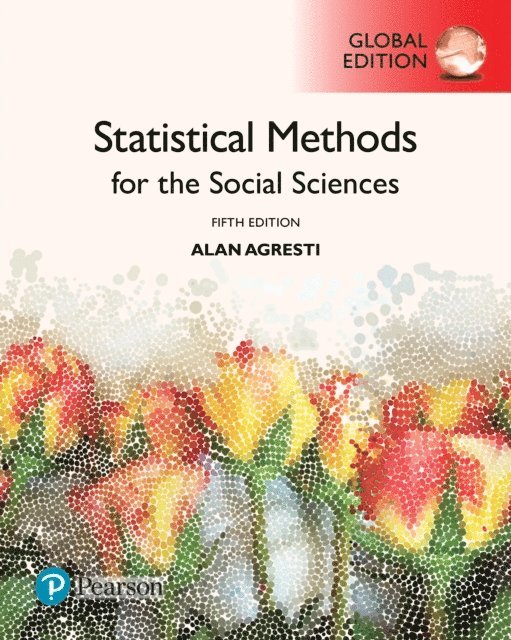
Gain the statistics skills you need for the social sciences with this accessible introductory guide
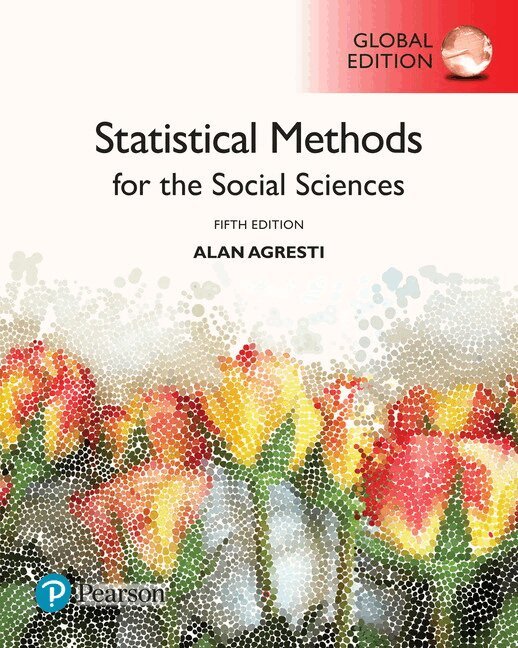
Statistical Methods for the Social Sciences, 5th Edition, Global Edition, by Alan Agresti, introduces you to statistical methods used in social science disciplines with no previous knowledge of statistics necessary. With an emphasis on concepts and applications, the book requires only a minimal mathematical background, maintaining a low technical level throughout to make it accessible to beginners.
The 5th edition has a strong focus on real examples to help you learn the fundamental concepts of sampling distributions, confidence intervals, and significance tests. This approach also helps you understand how to apply your learning to the real world. This edition also emphasises the interpretation of software output rather than the formulas for performing analysis, reflecting advances in statistical software - which are more frequently used by social scientists to analyse data today.
Other updates include:
Numerous homework exercises included in each chapter. Updated data in most exercises. New sections, such as that on maximum likelihood estimation in chapter 5 New examples ask students to use applets to help them learn the fundamental concepts of sampling distributions, confidence intervals, and significance tests. The text also relies more on applets for finding tail probabilities from distributions such as the Normal, t, and chi-squared.With a wide array of learning features and the latest available information, this text will equip you with the knowledge you need to succeed in your course - an ideal companion for students majoring in social science disciplines.
892 kr
Skickas inom 10-15 vardagar
4 169 kr
Skickas inom 3-6 vardagar
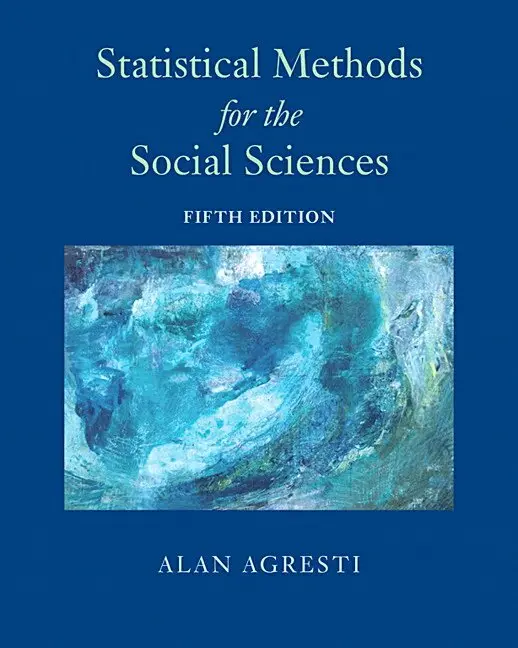
For courses in Statistical Methods for the Social Sciences .
Statistical methods applied to social sciences, made accessible to all through an emphasis on concepts Statistical Methods for the Social Sciences introduces statistical methods to students majoring in social science disciplines. With an emphasis on concepts and applications, this book assumes you have no previous knowledge of statistics and only a minimal mathematical background. It contains sufficient material for a two-semester course. The 5th Edition gives you examples and exercises with a variety of “real data.” It includes more illustrations of statistical software for computations and takes advantage of the outstanding applets to explain key concepts, such as sampling distributions and conducting basic data analyses. It continues to downplay mathematics–often a stumbling block for students–while avoiding reliance on an overly simplistic recipe-based approach to statistics.
1 381 kr
Skickas inom 10-15 vardagar
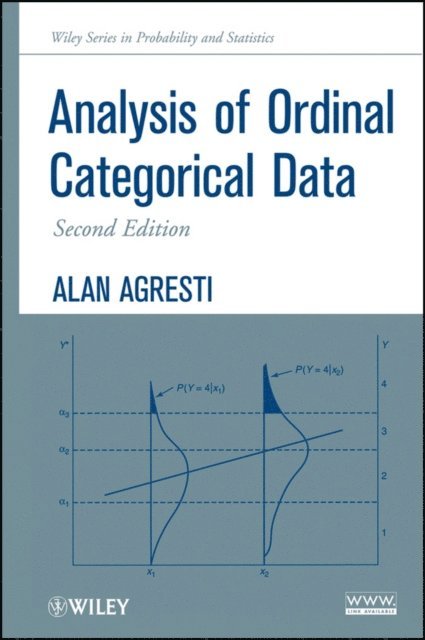
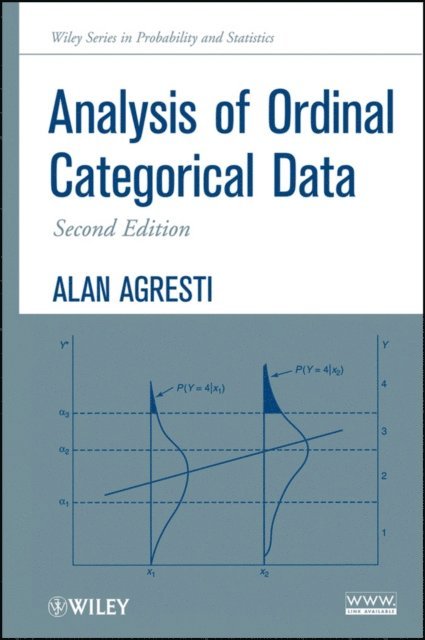
Analysis of Ordinal Categorical Data
1 696 kr
Skickas inom 5-8 vardagar
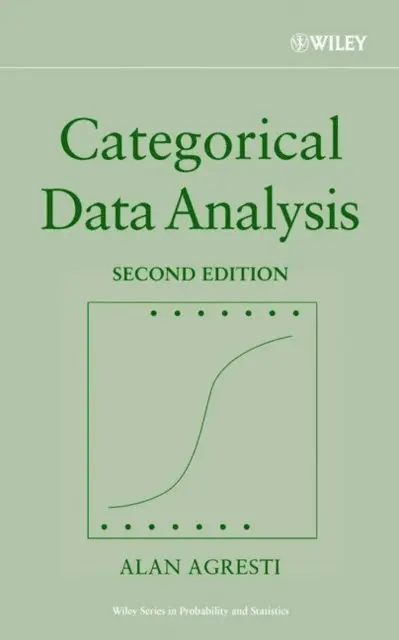
Categorical Data Analysis
1 705 kr
Skickas inom 5-8 vardagar
1 993 kr
Läs direkt efter köp
1 987 kr
Läs direkt efter köp
A valuable new edition of a standard reference
"A ''must-have'' book for anyone expecting to do research and/or applications in categorical data analysis." –Statistics in Medicine on Categorical Data Analysis, First Edition
The use of statistical methods for categorical data has increased dramatically, particularly for applications in the biomedical and social sciences. Responding to new developments in the field as well as to the needs of a new generation of professionals and students, this new edition of the classic Categorical Data Analysis offers a comprehensive introduction to the most important methods for categorical data analysis.
Designed for statisticians and biostatisticians as well as scientists and graduate students practicing statistics, Categorical Data Analysis, Second Edition summarizes the latest methods for univariate and correlated multivariate categorical responses. Readers will find a unified generalized linear models approach that connects logistic regression and Poisson and negative binomial regression for discrete data with normal regression for continuous data. Adding to the value in the new edition is coverage of:
Three new chapters on methods for repeated measurement and other forms of clustered categorical data, including marginal models and associated generalized estimating equations (GEE) methods, and mixed models with random effects Stronger emphasis on logistic regression modeling of binary and multicategory data An appendix showing the use of SAS for conducting nearly all analyses in the book Prescriptions for how ordinal variables should be treated differently than nominal variables Discussion of exact small-sample procedures More than 100 analyses of real data sets to illustrate application of the methods, and more than 600 exercises An Instructor''s Manual presenting detailed solutions to all the problems in the book is available from the Wiley editorial department.1 541 kr
Läs direkt efter köp
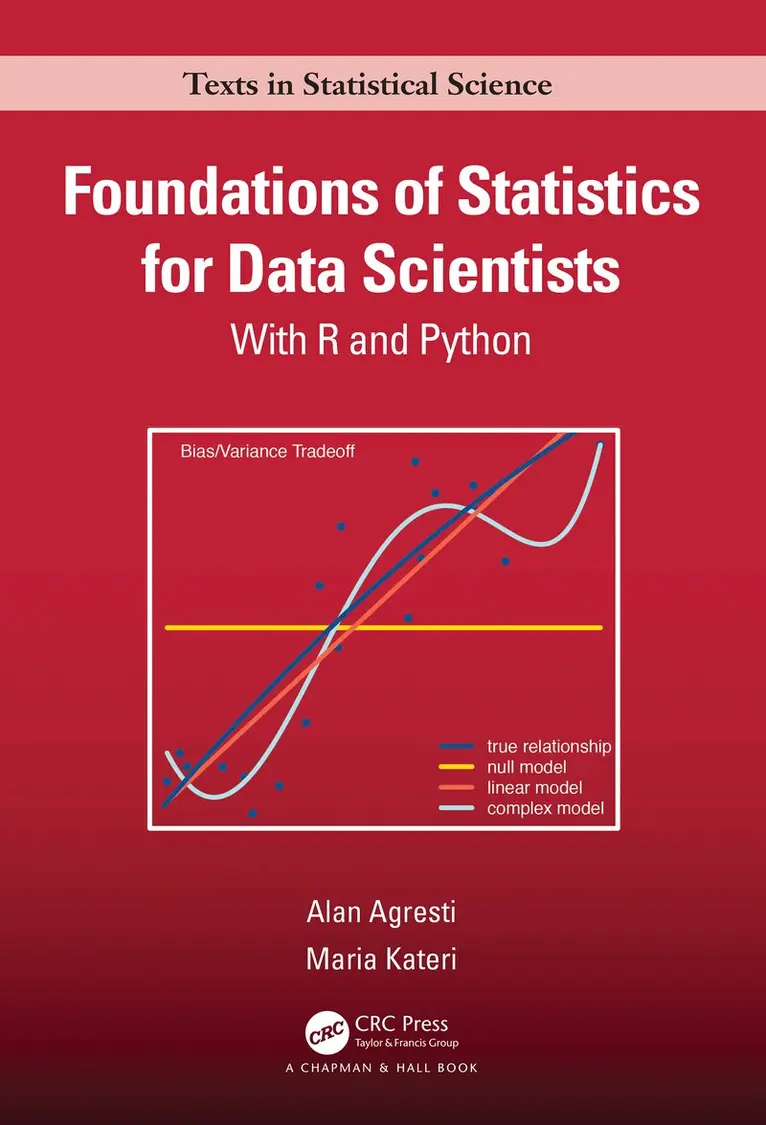
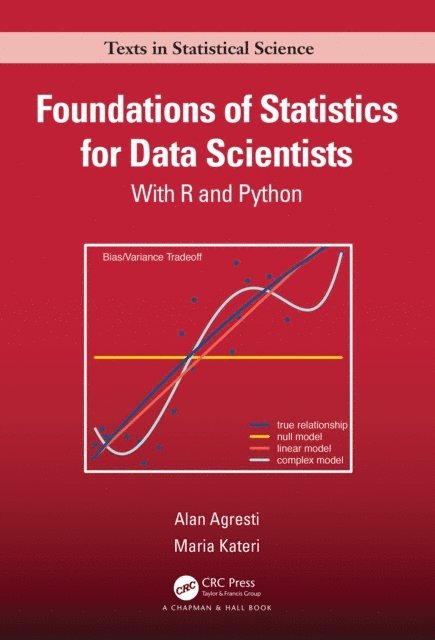
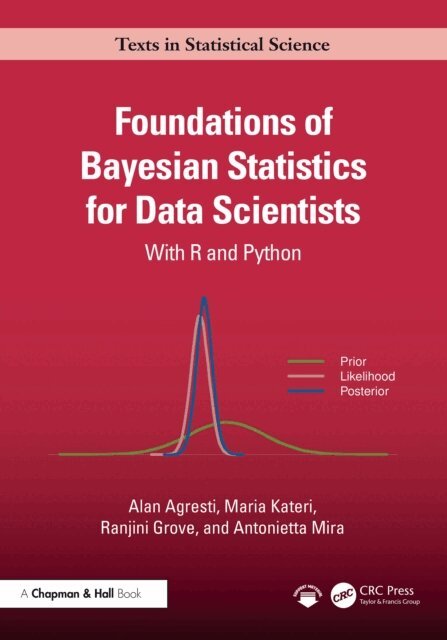
Foundations of Statistics for Data Scientists: With R and Python is designed as a textbook for a one- or two-term introduction to mathematical statistics for students training to become data scientists. It is an in-depth presentation of the topics in statistical science with which any data scientist should be familiar, including probability distributions, descriptive and inferential statistical methods, and linear modeling. The book assumes knowledge of basic calculus, so the presentation can focus on "why it works" as well as "how to do it." Compared to traditional "mathematical statistics" textbooks, however, the book has less emphasis on probability theory and more emphasis on using software to implement statistical methods and to conduct simulations to illustrate key concepts. All statistical analyses in the book use R software, with an appendix showing the same analyses with Python.
Key Features:
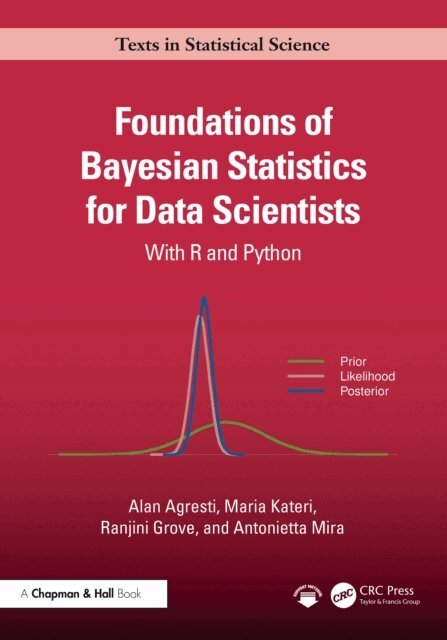
Shows the elements of statistical science that are important for students who plan to become data scientists. Includes Bayesian and regularized fitting of models (e.g., showing an example using the lasso), classification and clustering, and implementing methods with modern software (R and Python). Contains nearly 500 exercises.The book also introduces modern topics that do not normally appear in mathematical statistics texts but are highly relevant for data scientists, such as Bayesian inference, generalized linear models for non-normal responses (e.g., logistic regression and Poisson loglinear models), and regularized model fitting. The nearly 500 exercises are grouped into "Data Analysis and Applications" and "Methods and Concepts." Appendices introduce R and Python and contain solutions for odd-numbered exercises. The book''s website (http://stat4ds.rwth-aachen.de/) has expanded R, Python, and Matlab appendices and all data sets from the examples and exercises.
1 597 kr
Läs direkt efter köp
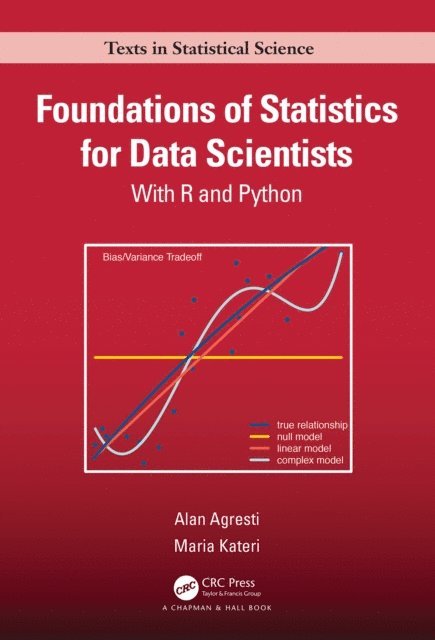
Foundations of Statistics for Data Scientists: With R and Python is designed as a textbook for a one- or two-term introduction to mathematical statistics for students training to become data scientists. It is an in-depth presentation of the topics in statistical science with which any data scientist should be familiar, including probability distributions, descriptive and inferential statistical methods, and linear modeling. The book assumes knowledge of basic calculus, so the presentation can focus on "why it works" as well as "how to do it." Compared to traditional "mathematical statistics" textbooks, however, the book has less emphasis on probability theory and more emphasis on using software to implement statistical methods and to conduct simulations to illustrate key concepts. All statistical analyses in the book use R software, with an appendix showing the same analyses with Python.
Key Features:
Shows the elements of statistical science that are important for students who plan to become data scientists. Includes Bayesian and regularized fitting of models (e.g., showing an example using the lasso), classification and clustering, and implementing methods with modern software (R and Python). Contains nearly 500 exercises.The book also introduces modern topics that do not normally appear in mathematical statistics texts but are highly relevant for data scientists, such as Bayesian inference, generalized linear models for non-normal responses (e.g., logistic regression and Poisson loglinear models), and regularized model fitting. The nearly 500 exercises are grouped into "Data Analysis and Applications" and "Methods and Concepts." Appendices introduce R and Python and contain solutions for odd-numbered exercises. The book''s website (http://stat4ds.rwth-aachen.de/) has expanded R, Python, and Matlab appendices and all data sets from the examples and exercises.
974 kr
Läs direkt efter köp
974 kr
Läs direkt efter köp
2 423 kr
Skickas inom 10-15 vardagar
1 993 kr
Läs direkt efter köp
1 817 kr
Läs direkt efter köp
Praise for the Second Edition
"A must-have book for anyone expecting to do research and/or applications in categorical data analysis." —Statistics in Medicine
"It is a total delight reading this book." —Pharmaceutical Research
"If you do any analysis of categorical data, this is an essential desktop reference." —Technometrics
The use of statistical methods for analyzing categorical data has increased dramatically, particularly in the biomedical, social sciences, and financial industries. Responding to new developments, this book offers a comprehensive treatment of the most important methods for categorical data analysis.
Categorical Data Analysis, Third Edition summarizes the latest methods for univariate and correlated multivariate categorical responses. Readers will find a unified generalized linear models approach that connects logistic regression and Poisson and negative binomial loglinear models for discrete data with normal regression for continuous data. This edition also features:
An emphasis on logistic and probit regression methods for binary, ordinal, and nominal responses for independent observations and for clustered data with marginal models and random effects models Two new chapters on alternative methods for binary response data, including smoothing and regularization methods, classification methods such as linear discriminant analysis and classification trees, and cluster analysis New sections introducing the Bayesian approach for methods in that chapter More than 100 analyses of data sets and over 600 exercises Notes at the end of each chapter that provide references to recent research and topics not covered in the text, linked to a bibliography of more than 1,200 sources A supplementary website showing how to use R and SAS; for all examples in the text, with information also about SPSS and Stata and with exercise solutionsCategorical Data Analysis, Third Edition is an invaluable tool for statisticians and methodologists, such as biostatisticians and researchers in the social and behavioral sciences, medicine and public health, marketing, education, finance, biological and agricultural sciences, and industrial quality control.
1 832 kr
Läs direkt efter köp
Praise for the Second Edition
"A must-have book for anyone expecting to do research and/or applications in categorical data analysis." —Statistics in Medicine
"It is a total delight reading this book." —Pharmaceutical Research
"If you do any analysis of categorical data, this is an essential desktop reference." —Technometrics
The use of statistical methods for analyzing categorical data has increased dramatically, particularly in the biomedical, social sciences, and financial industries. Responding to new developments, this book offers a comprehensive treatment of the most important methods for categorical data analysis.
Categorical Data Analysis, Third Edition summarizes the latest methods for univariate and correlated multivariate categorical responses. Readers will find a unified generalized linear models approach that connects logistic regression and Poisson and negative binomial loglinear models for discrete data with normal regression for continuous data. This edition also features:
An emphasis on logistic and probit regression methods for binary, ordinal, and nominal responses for independent observations and for clustered data with marginal models and random effects models Two new chapters on alternative methods for binary response data, including smoothing and regularization methods, classification methods such as linear discriminant analysis and classification trees, and cluster analysis New sections introducing the Bayesian approach for methods in that chapter More than 100 analyses of data sets and over 600 exercises Notes at the end of each chapter that provide references to recent research and topics not covered in the text, linked to a bibliography of more than 1,200 sources A supplementary website showing how to use R and SAS; for all examples in the text, with information also about SPSS and Stata and with exercise solutionsCategorical Data Analysis, Third Edition is an invaluable tool for statisticians and methodologists, such as biostatisticians and researchers in the social and behavioral sciences, medicine and public health, marketing, education, finance, biological and agricultural sciences, and industrial quality control.
1 422 kr
1 692 kr
Läs direkt efter köp
A valuable overview of the most important ideas and results in statistical modeling
Written by a highly-experienced author, Foundations of Linear and Generalized Linear Models is a clear and comprehensive guide to the key concepts and results of linearstatistical models. The book presents a broad, in-depth overview of the most commonly usedstatistical models by discussing the theory underlying the models, R software applications,and examples with crafted models to elucidate key ideas and promote practical modelbuilding.
The book begins by illustrating the fundamentals of linear models, such as how the model-fitting projects the data onto a model vector subspace and how orthogonal decompositions of the data yield information about the effects of explanatory variables. Subsequently, the book covers the most popular generalized linear models, which include binomial and multinomial logistic regression for categorical data, and Poisson and negative binomial loglinear models for count data. Focusing on the theoretical underpinnings of these models, Foundations ofLinear and Generalized Linear Models also features:
An introduction to quasi-likelihood methods that require weaker distributional assumptions, such as generalized estimating equation methods An overview of linear mixed models and generalized linear mixed models with random effects for clustered correlated data, Bayesian modeling, and extensions to handle problematic cases such as high dimensional problems Numerous examples that use R software for all text data analyses More than 400 exercises for readers to practice and extend the theory, methods, and data analysis A supplementary website with datasets for the examples and exercises An invaluable textbook for upper-undergraduate and graduate-level students in statistics and biostatistics courses, Foundations of Linear and Generalized Linear Models is also an excellent reference for practicing statisticians and biostatisticians, as well as anyone who is interested in learning about the most important statistical models for analyzing data.
1 632 kr
Läs direkt efter köp
A valuable overview of the most important ideas and results in statistical modeling
Written by a highly-experienced author, Foundations of Linear and Generalized Linear Models is a clear and comprehensive guide to the key concepts and results of linearstatistical models. The book presents a broad, in-depth overview of the most commonly usedstatistical models by discussing the theory underlying the models, R software applications,and examples with crafted models to elucidate key ideas and promote practical modelbuilding.
The book begins by illustrating the fundamentals of linear models, such as how the model-fitting projects the data onto a model vector subspace and how orthogonal decompositions of the data yield information about the effects of explanatory variables. Subsequently, the book covers the most popular generalized linear models, which include binomial and multinomial logistic regression for categorical data, and Poisson and negative binomial loglinear models for count data. Focusing on the theoretical underpinnings of these models, Foundations ofLinear and Generalized Linear Models also features:
An introduction to quasi-likelihood methods that require weaker distributional assumptions, such as generalized estimating equation methods An overview of linear mixed models and generalized linear mixed models with random effects for clustered correlated data, Bayesian modeling, and extensions to handle problematic cases such as high dimensional problems Numerous examples that use R software for all text data analyses More than 400 exercises for readers to practice and extend the theory, methods, and data analysis A supplementary website with datasets for the examples and exercises An invaluable textbook for upper-undergraduate and graduate-level students in statistics and biostatistics courses, Foundations of Linear and Generalized Linear Models is also an excellent reference for practicing statisticians and biostatisticians, as well as anyone who is interested in learning about the most important statistical models for analyzing data.
1 695 kr
Skickas
1 839 kr
Läs direkt efter köp
A valuable new edition of a standard reference
The use of statistical methods for categorical data has increased dramatically, particularly for applications in the biomedical and social sciences. An Introduction to Categorical Data Analysis, Third Edition summarizes these methods and shows readers how to use them using software. Readers will find a unified generalized linear models approach that connects logistic regression and loglinear models for discrete data with normal regression for continuous data.
Adding to the value in the new edition is:
• Illustrations of the use of R software to perform all the analyses in the book
• A new chapter on alternative methods for categorical data, including smoothing and regularization methods (such as the lasso), classification methods such as linear discriminant analysis and classification trees, and cluster analysis
• New sections in many chapters introducing the Bayesian approach for the methods of that chapter
• More than 70 analyses of data sets to illustrate application of the methods, and about 200 exercises, many containing other data sets
• An appendix showing how to use SAS, Stata, and SPSS, and an appendix with short solutions to most odd-numbered exercises
Written in an applied, nontechnical style, this book illustrates the methods using a wide variety of real data, including medical clinical trials, environmental questions, drug use by teenagers, horseshoe crab mating, basketball shooting, correlates of happiness, and much more.
An Introduction to Categorical Data Analysis, Third Edition is an invaluable tool for statisticians and biostatisticians as well as methodologists in the social and behavioral sciences, medicine and public health, marketing, education, and the biological and agricultural sciences.
1 774 kr
Läs direkt efter köp
A valuable new edition of a standard reference
The use of statistical methods for categorical data has increased dramatically, particularly for applications in the biomedical and social sciences. An Introduction to Categorical Data Analysis, Third Edition summarizes these methods and shows readers how to use them using software. Readers will find a unified generalized linear models approach that connects logistic regression and loglinear models for discrete data with normal regression for continuous data.
Adding to the value in the new edition is:
• Illustrations of the use of R software to perform all the analyses in the book
• A new chapter on alternative methods for categorical data, including smoothing and regularization methods (such as the lasso), classification methods such as linear discriminant analysis and classification trees, and cluster analysis
• New sections in many chapters introducing the Bayesian approach for the methods of that chapter
• More than 70 analyses of data sets to illustrate application of the methods, and about 200 exercises, many containing other data sets
• An appendix showing how to use SAS, Stata, and SPSS, and an appendix with short solutions to most odd-numbered exercises
Written in an applied, nontechnical style, this book illustrates the methods using a wide variety of real data, including medical clinical trials, environmental questions, drug use by teenagers, horseshoe crab mating, basketball shooting, correlates of happiness, and much more.
An Introduction to Categorical Data Analysis, Third Edition is an invaluable tool for statisticians and biostatisticians as well as methodologists in the social and behavioral sciences, medicine and public health, marketing, education, and the biological and agricultural sciences.
1 445 kr
Skickas inom 7-10 vardagar
827 kr
Läs direkt efter köp
Gain the statistics skills you need for the social sciences with this accessible introductory guide
Statistical Methods for the Social Sciences, 5th Edition, Global Edition, by Alan Agresti, introduces you to statistical methods used in social science disciplines with no previous knowledge of statistics necessary. With an emphasis on concepts and applications, the book requires only a minimal mathematical background, maintaining a low technical level throughout to make it accessible to beginners.
The 5th edition has a strong focus on real examples to help you learn the fundamental concepts of sampling distributions, confidence intervals, and significance tests. This approach also helps you understand how to apply your learning to the real world. This edition also emphasises the interpretation of software output rather than the formulas for performing analysis, reflecting advances in statistical software - which are more frequently used by social scientists to analyse data today.
Other updates include:
Numerous homework exercises included in each chapter. Updated data in most exercises. New sections, such as that on maximum likelihood estimation in chapter 5 New examples ask students to use applets to help them learn the fundamental concepts of sampling distributions, confidence intervals, and significance tests. The text also relies more on applets for finding tail probabilities from distributions such as the Normal, t, and chi-squared.With a wide array of learning features and the latest available information, this text will equip you with the knowledge you need to succeed in your course - an ideal companion for students majoring in social science disciplines.
1 281 kr
Skickas inom 7-10 vardagar
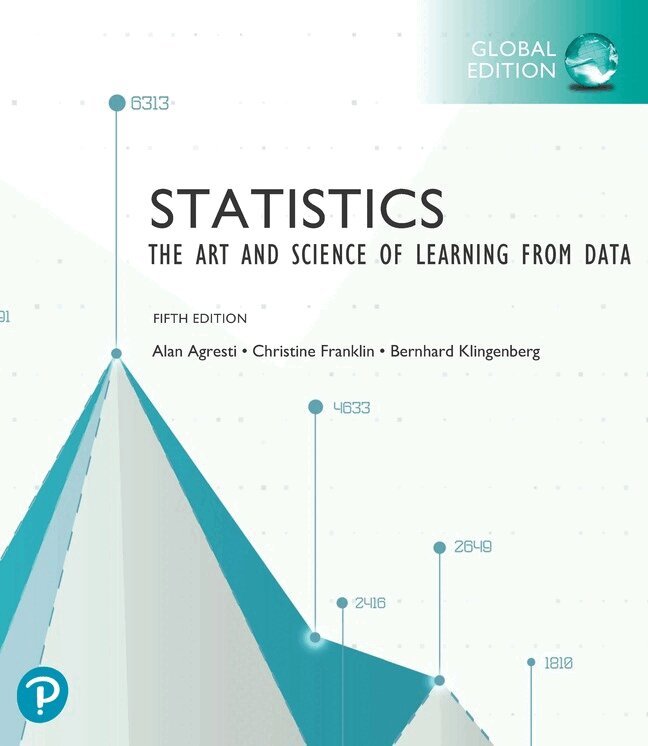
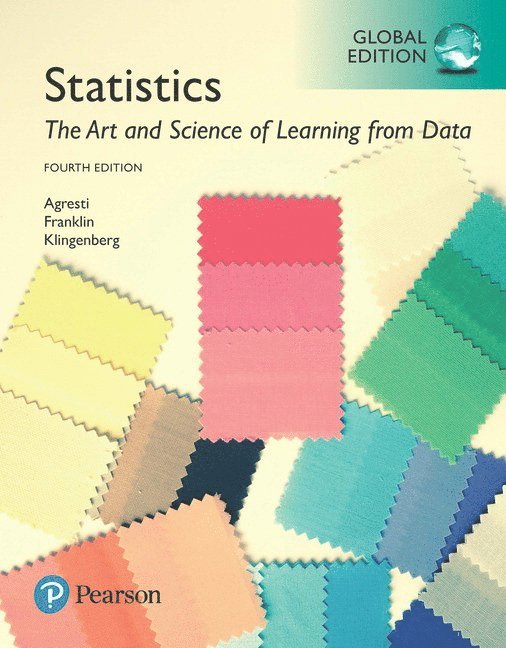
For courses in introductory statistics.
The art and science of learning from data
Statistics: The Art and Science of Learning from Data takes a conceptual approach,helping students understand what statistics is about and learning the rightquestions to ask when analyzing data, rather than just memorizing procedures.This book takes the ideas that have turned statistics into a central science inmodern life and makes them accessible, without compromising the necessaryrigor. Students will enjoy reading this book, and will stay engaged with itswide variety of real-world data in the examples and exercises.
1 008 kr
Skickas inom 7-10 vardagar
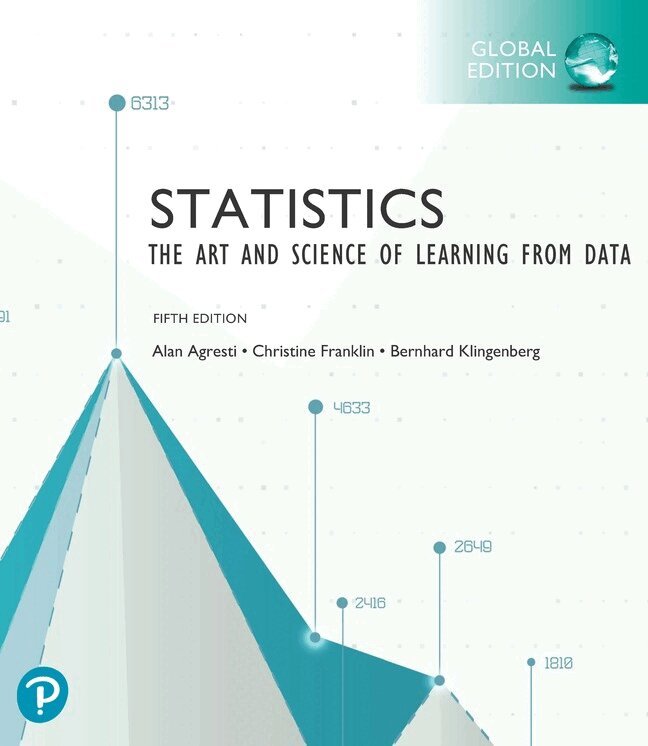
Statistics: The Art and Science of Learning From Data, 5th Edition helps you understand what statistics is all about and learn the right questions to ask when analyzing data, instead of just memorizing procedures. It makes accessible the ideas that have turned statistics into a central science of modern life, without compromising essential material. Students often find this book enjoyable to read and stay engaged with the wide variety of real-world data in the examples and exercises. Based on the authors' belief that it's important for you to learn and analyze both quantitative and categorial data, this text pays greater attention to the analysis of proportions than many other introductory statistics texts.
Key features include:
Greater attention to the analysis of proportions compared to other introductory statistics texts. Introduction to key concepts, presenting the categorical data first, and quantitative data after. A wide variety of real-world data in the examples and exercises New sections and updated content will enhance your learning and understanding.Pearson MyLab® Students, if Pearson Pearson MyLab Statistics is a recommended/mandatory component of the course, please ask your instructor for the correct ISBN. Pearson MyLab Statistics should only be purchased when required by an instructor. Instructors, contact your Pearson representative for more information.
1 146 kr
Skickas inom 10-15 vardagar
1 408 kr
Läs direkt efter köp
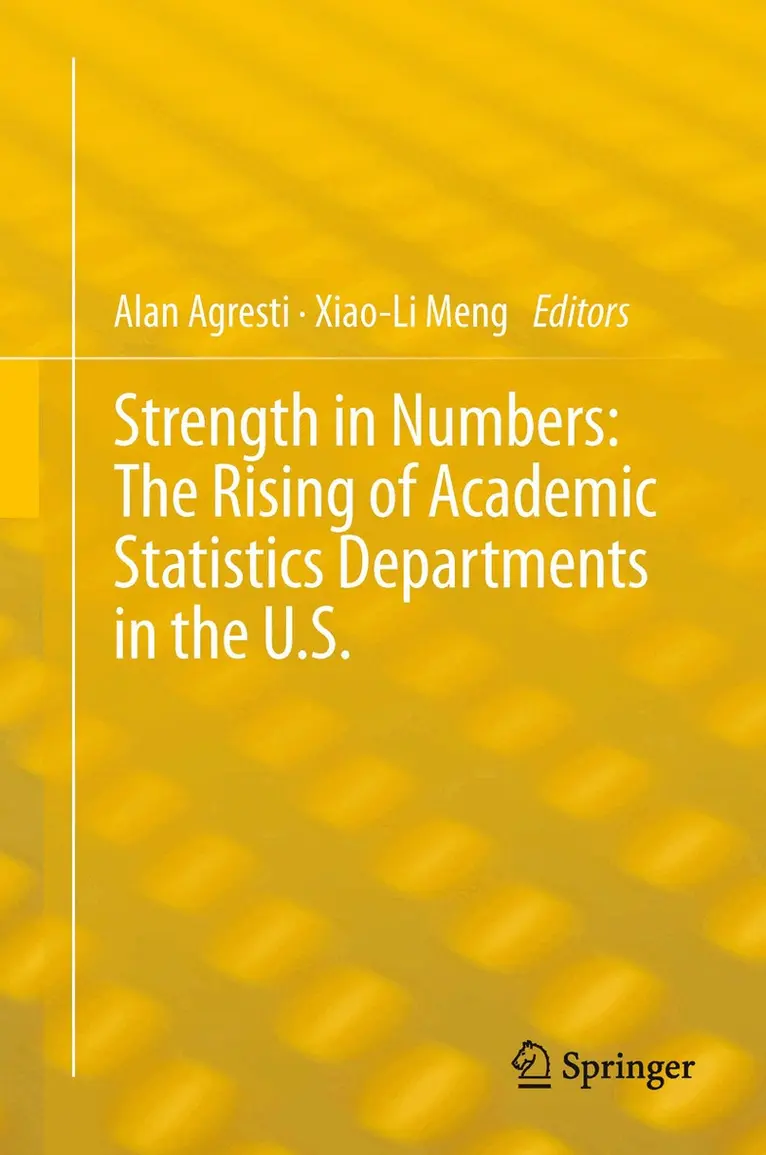
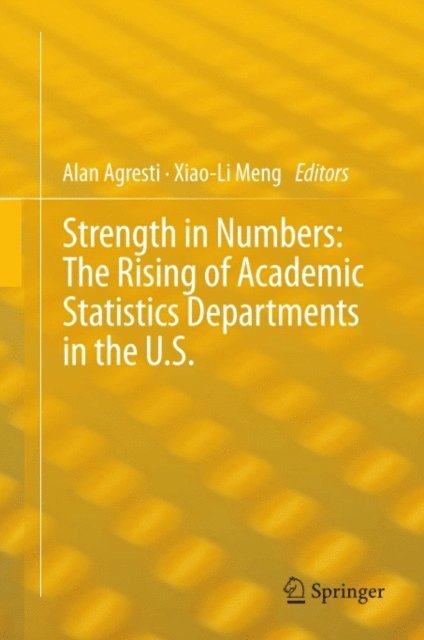
Statistical science as organized in formal academic departments is relatively new. With a few exceptions, most Statistics and Biostatistics departments have been created within the past 60 years. This book consists of a set of memoirs, one for each department in the U.S. created by the mid-1960s. The memoirs describe key aspects of the department’s history -- its founding, its growth, key people in its development, success stories (such as major research accomplishments) and the occasional failure story, PhD graduates who have had a significant impact, its impact on statistical education, and a summary of where the department stands today and its vision for the future. Read here all about how departments such as at Berkeley, Chicago, Harvard, and Stanford started and how they got to where they are today. The book should also be of interests to scholars in the field of disciplinary history.
1 146 kr
Skickas inom 10-15 vardagar
382 kr
Skickas inom 7-10 vardagar
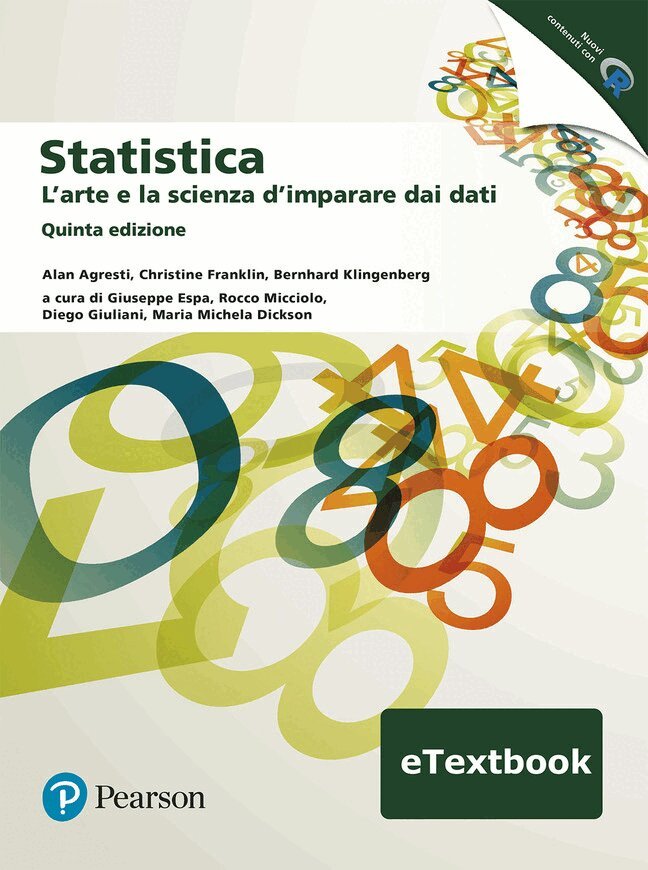
Accesso per 12 mesi a Pearson eTextbook, la versione digitale del testo, arricchita da funzionalità che ne favoriscono l’accessibilità e consentono di:
effettuare lettura audio digitalizzata inserire note e segnalibri, anche su smartphone e tablet generare flashcard cercare parole o concetti nel testo modificare carattere e colore dello sfondo tradurre porzioni di testo in 100+ linguePearson eTextbook è integrato da AI Study Tool, uno strumento di intelligenza artificiale che offre supporto immediato per generare:
spiegazioni e approfondimenti riassunti personalizzati per un ripasso più efficace quiz interattivi per verificare la preparazione