Alan C. Elms – författare
Visar alla böcker från författaren . Handla med fri frakt och snabb leverans.
2 produkter
2 produkter
E-bok
PDF, Engelska, 1997522 kr
Läs direkt efter köp
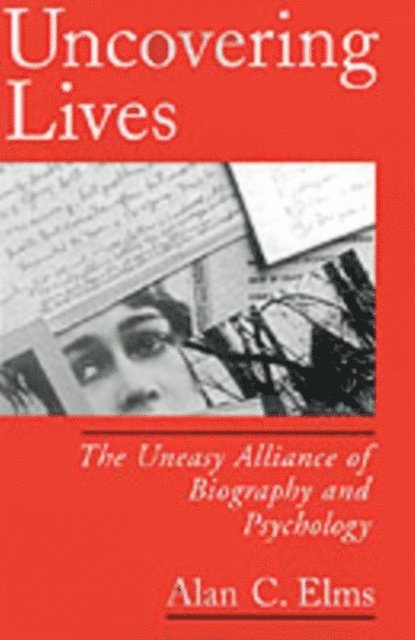
Psychobiography is often attacked by critics who feel that it trivializes complex adult personalities, "explaining the large deeds of great individuals," as George Will wrote, "by some slight the individual suffered at a tender age--say, 7, when his mother took away a lollipop." Worse yet, some writers have clearly abused psychobiography--for instance, to grind axes from the right (Nancy Clinch on the Kennedy family) or from the left (Fawn Brodie on Richard Nixon)--and others have offered woefully inept diagnoses (such as Albert Goldman''s portrait of Elvis Presley as a "split personality" and a "delusional paranoid"). And yet, as Alan Elms argues in Uncovering Lives, in the hands of a skilled practitioner, psychobiography can rival the very best traditional biography in the insights it offers. Elms makes a strong case for the value of psychobiography, arguing in large part from example. Indeed, most of the book features Elms''s own fascinating case studies of over a dozen prominent figures, among them Sigmund Freud (the father of psychobiography), B.F. Skinner, Isaac Asimov, L. Frank Baum, Vladimir Nabokov, Jimmy Carter, George Bush, Saddam Hussein, and Henry Kissinger. These profiles make intriguing reading. For example, Elms discusses the fiction of Isaac Asimov in light of the latter''s acrophobia (fear of heights) and mild agoraphobia (fear of open spaces)--and Elms includes excerpts from a series of letters between himself and Asimov. He reveals an unintended subtext of The Wizard of Oz--that males are weak, females are strong (think of Scarecrow, Tin Man, the Lion, and the Wizard, versus the good and bad witches and Dorothy herself)--and traces this in part to Baum''s childhood heart disease, which kept him from strenuous activity, and to his relationship with his mother-in-law, Matilda Joslyn Gage, a distinguished advocate of women''s rights. And in a fascinating chapter, he examines the abused childhood of Saddam Hussein, the privileged childhood of George Bush, and the radically different psychological paths that led these two men into the Persian Gulf War. Elms supports each study with extensive research, much of it never presented before--for instance, on how some of the most revealing portions of C.G. Jung''s autobiography were deleted in spite of his protests before publication. Along the way, Elms provides much insight into how psychobiography is written. Finally, he proposes clear guidelines for judging high quality work, and offers practical tips for anyone interested in writing in this genre. Written with great clarity and wit, Uncovering Lives illuminates the contributions that psychology can make to biography. Elms''s enthusiasm for his subject is contagious and will inspire would-be psychobiographers as well as win over the most hardened skeptics.
Inbunden, Engelska, 2026
1 121 kr
Kommande
Traditional biography often maintains a clinical distance between author and subject, leaving readers with a fragmented view of the emotional truths that shape a life. But what happens when the biographer steps into the frame-when the act of writing becomes a mirror for mourning, identity, and transformation?In an era where memoir and creative nonfiction blur the boundaries between fact and feeling, the stakes of biography shift. Loss, trauma, and personal history are not just background-they are catalysts. The emotional investment of the biographer can deepen insight, but it also risks distorting the subject. This tension lies at the heart of psychobiography, a genre that demands both rigor and vulnerability.Examining Lives is a rich, interdisciplinary collection of essays from the San Francisco Bay Area Psychobiography Group, spanning over two decades. Contributors-psychologists, historians, literary scholars, and artists-explore the lives of figures like Mark Rothko, Emma Goldman, Glenn Gould, and Alfred Hitchcock, while simultaneously reflecting on their own emotional journeys. Through themes of death, identity, and the porous boundary between self and subject, these essays reveal how biography can become a therapeutic, even transformative act. Whether mourning a loved one, confronting childhood trauma, or wrestling with professional identity, each writer uses psychobiography to illuminate both their subject and themselves.Examining Lives invites readers to see biography not just as a study of others, but as a collaborative, imaginative process that can help us understand our own lives more deeply.