Alan C. Sartorelli – författare
Visar alla böcker från författaren Alan C. Sartorelli. Handla med fri frakt och snabb leverans.
6 produkter
6 produkter
E-bok
PDF, Engelska, 2013779 kr
Läs direkt efter köp
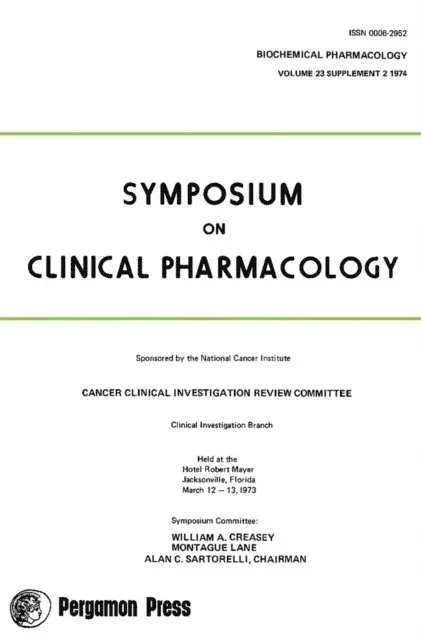
Symposium on Clinical Pharmacology reviews advances in clinical pharmacology, with emphasis on how to materially improve the efficacy of cancer chemotherapy. Topics range from absorption, protein binding, distribution, and excretion of antineoplastic drugs to factors affecting the biotransformation and activity of antitumor drugs. The transport of tumor-inhibitory agents across cell membranes is also examined, together with factors influencing drug selectivity and the mechanisms of clinical drug resistance. This volume is comprised of 23 chapters and begins with a brief summary of the different kinds of pharmacokinetic models and how detailed kinetic investigations of a drug in animals may provide further insight into modes of its clinical use. The next chapter considers the chief factors in determining the effective concentration of a drug at a receptor site as well as the duration and intensity of drug effect, citing antineoplastic agents as examples. The role of enzymatic activation and inactivation in drug selectivity is also discussed, along with the general mechanisms of clinical resistance to cancer chemotherapy; biochemical and pharmacological principles of combination chemotherapy; and the reaction and effects of nitrosoureas. This book will be of interest to clinicians, pharmacologists, and biochemists.
E-bok
PDF, Engelska, 20132 036 kr
Läs direkt efter köp
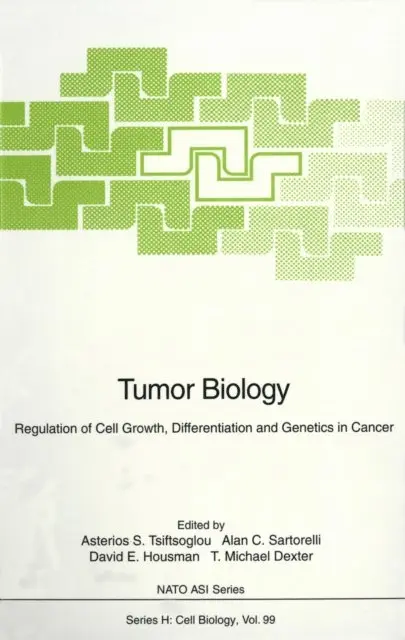
With the aim of providing an international forum for the communication of both the basic and clinical aspects of molecular and cellular biology of cancer, a NATO ASl was held in Porto Carras, Halkidiki, Greece, September 1-12, 1995. The principles as well as recent developments in tumor biology were discussed in depth, with emphasis on the regulation of the cell cycle, differentiation, programmed cell death (apoptosis) and genetics of cancer. This book constitutes the proceedings of that meeting. Specifically, the following areas were addressed: (a) enzymes and proteins (cyclins) that control the cell cycle, as well as the role of m as gene in meiosis and transformation; (b) the structural basis for specificity in protein-tyrosine kinase reactions; (c) the differentiation of normal as well as neoplastic cells with respect to molecular mechanism(s) by which chemical agents or growth factors trigger maturation; (d) phenotypic and genetic aspects of apoptosis; (e) the role of growth factors, like IGF-l, FGF, TN, IL-6, etc. , in cell cycle regulation, apoptosis (cell death) and senescence; (f) molecular mechanisms of transcriptional activation of globin genes and stability of mRNAs related to growth proteins and iron metabolism; (g) the cellular and molecular biology of bone marrow hemopoiesis; and (h) neurotrophic factors and the generation of cellular diversity in the central nervous system. It was obvious from the studies presented that neoplastic cell growth, differentiation and apoptosis in many cell types are regulated at several levels.
Häftad, Engelska, 2011
1 682 kr
Skickas inom 10-15 vardagar
With the aim of providing an international forum for the communication of both the basic and clinical aspects of molecular and cellular biology of cancer, a NATO ASl was held in Porto Carras, Halkidiki, Greece, September 1-12, 1995. The principles as well as recent developments in tumor biology were discussed in depth, with emphasis on the regulation of the cell cycle, differentiation, programmed cell death (apoptosis) and genetics of cancer. This book constitutes the proceedings of that meeting. Specifically, the following areas were addressed: (a) enzymes and proteins (cyclins) that control the cell cycle, as well as the role of m as gene in meiosis and transformation; (b) the structural basis for specificity in protein-tyrosine kinase reactions; (c) the differentiation of normal as well as neoplastic cells with respect to molecular mechanism(s) by which chemical agents or growth factors trigger maturation; (d) phenotypic and genetic aspects of apoptosis; (e) the role of growth factors, like IGF-l, FGF, TN, IL-6, etc. , in cell cycle regulation, apoptosis (cell death) and senescence; (f) molecular mechanisms of transcriptional activation of globin genes and stability of mRNAs related to growth proteins and iron metabolism; (g) the cellular and molecular biology of bone marrow hemopoiesis; and (h) neurotrophic factors and the generation of cellular diversity in the central nervous system. It was obvious from the studies presented that neoplastic cell growth, differentiation and apoptosis in many cell types are regulated at several levels.
E-bok
PDF, Engelska, 20131 408 kr
Läs direkt efter köp
Over the past two decades a number of attempts have been made, with varying degrees of success, to collect in a single treatise available information on the basic and applied pharmacology and biochemical mechanism of action of antineoplastic and immunosuppressive agents. The logarithmic growth of knowledge in this field has made it progressively more difficult to do justice to all aspects of this topic, and it is possible that the present handbook, more than four years in preparation, may be the last attempt to survey in a. single volume the entire field of drugs em ployed in cancer chemotherapy and immunosuppression. Even in the present instance, it has proved necessary for practical reasons to publish the material in two parts, although the plan of the work constitutes, at least in the editors'' view, a single integrated treatment of this research area. A number of factors have contributed to the continuous expansion of research in the areas of cancer chemotherapy and immunosuppression. Active compounds have been emerging at ever-increasing rates from experimental tumor screening systems maintained by a variety of private and governmental laboratories through out the world. At the molecular level, knowledge of the modes of action of estab lished agents has continued to expand, and has permitted rational drug design to playa significantly greater role in a process which, in its early years, depended almost completely upon empirical and fortuitous observations.
Häftad, Engelska, 2011
1 124 kr
Skickas inom 10-15 vardagar
Over the past two decades a number of attempts have been made, with varying degrees of success, to collect in a single treatise available information on the basic and applied pharmacology and biochemical mechanism of action of antineoplastic and immunosuppressive agents. The logarithmic growth of knowledge in this field has made it progressively more difficult to do justice to all aspects of this topic, and it is possible that the present handbook, more than four years in preparation, may be the last attempt to survey in a. single volume the entire field of drugs em ployed in cancer chemotherapy and immunosuppression. Even in the present instance, it has proved necessary for practical reasons to publish the material in two parts, although the plan of the work constitutes, at least in the editors' view, a single integrated treatment of this research area. A number of factors have contributed to the continuous expansion of research in the areas of cancer chemotherapy and immunosuppression. Active compounds have been emerging at ever-increasing rates from experimental tumor screening systems maintained by a variety of private and governmental laboratories through out the world. At the molecular level, knowledge of the modes of action of estab lished agents has continued to expand, and has permitted rational drug design to playa significantly greater role in a process which, in its early years, depended almost completely upon empirical and fortuitous observations.
E-bok
PDF, Engelska, 20131 132 kr
Läs direkt efter köp
Over the past two decades a number of attempts have been made, with varying degrees of success, to collect in a single treatise available information on the basic and applied pharmacology and biochemical mechanism of action of antineoplastic and immunosuppressive agents. The logarithmic growth of knowledge in this field has made it progressively more difficult to do justice to all aspects of this topic, and it is possible that the present handbook, more than four years in preparation, may be the last attempt to survey in a single volume the entire field of drugs employed in cancer chemotherapy and immunosuppression. Even in the present instance, it has proved necessary for practical reasons to publish the material in two parts, although the plan of the work constitutes, at least in the editors'' view, a single integrated treatment of this research area. A number of factors have contributed to the continuous expansion of research in the areas of cancer chemotherapy and immunosuppression. Active compounds have been emerging at ever-increasing rates from experimental tumor screening systems maintained by a variety of private and governmental laboratories through out the world. At the molecular level, knowledge of the modes of action of established agents has continued to expand, and has permitted rational drug design to play a significantly greater role in a process which, in its early years, depended almost completely upon empirical and fortuitous observations.