Alan F. Schatzberg – författare
1 601 kr
Skickas inom 5-8 vardagar
2 049 kr
Skickas inom 5-8 vardagar
3 297 kr
Skickas inom 5-8 vardagar
4 210 kr
Läs direkt efter köp
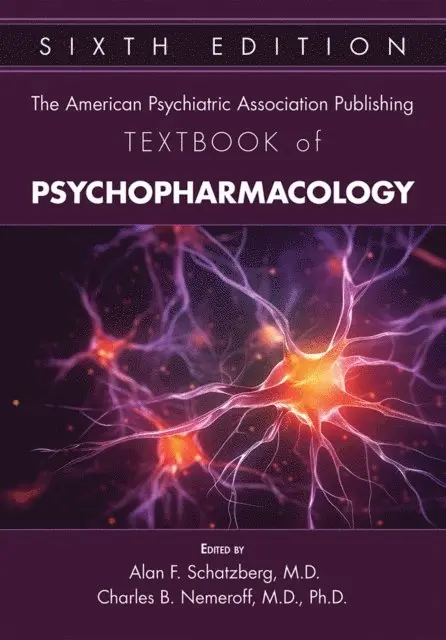
More than 160 authors—including more than 75 new contributors—lent their expertise to this sixth edition of The American Psychiatric Association Publishing Textbook of Psychopharmacology. Featuring 12 all-new chapters and fully aligned with the revised DSM-5-TR classification, this two-volume text offers an unrivaled, in-depth look at the rapidly evolving field of neuropsychopharmacology.
The opening chapters provide a whirlwind tour of the multiple disciplines that undergird the chapters to come, with topics extending from the principles of molecular biology and genomics to the rudiments of neuroimaging and personalized medicine in psychiatry. The main body of the Textbook features an examination of the medication classes that form the basis of psychopharmacological treatment. For each drug within a class, data are reviewed on history and discovery, preclinical and clinical pharmacology, pharmacokinetic parameters, mechanism of action, indications and efficacy, side effects and toxicology, and drug-drug interactions. The Textbook''s second volume focuses on psychopharmacological approaches to treatment of patients with major psychiatric disorders (e.g., mood and anxiety disorders, schizophrenia, substance use disorders) as well as patients in specific populations (e.g., adults with ADHD, pediatric patients). For each specific condition, patient population, or setting, chapters provide guidance on topics such as medication selection, combination and maintenance dosing regimens, side-effect monitoring and management, and optimization of treatment response. Closing this volume is an Appendix of Psychiatric Medications with key information on each of the agents covered in the Textbook, presented in a convenient tabular format.
Noteworthy additions to this textbook include chapters addressing the following topics:
• The potential roles of personalized medicine in psychiatry and of artificial intelligence and machine learning in psychopharmacology• New medications with novel pharmacological mechanisms, including the neurosteroid antidepressant brexanolone and the atypical antipsychotic pimavanserin• Use of investigational agents, such as psychedelics, in psychiatric treatment• Treatment of alcohol use disorder, PTSD, OCD, and autism spectrum disorder• Treatment of ADHD in adults• Treatment of women in all life phases, including during pregnancy and the postpartum period• Treatment of individuals with intellectual developmental disorder
With a level of detail not found in any other source, this new edition of The American Psychiatric Association Publishing Textbook of Psychopharmacology illuminates the path to effective evidence-based practice of psychopharmacology for novice and seasoned clinicians alike.
2 606 kr
Läs direkt efter köp
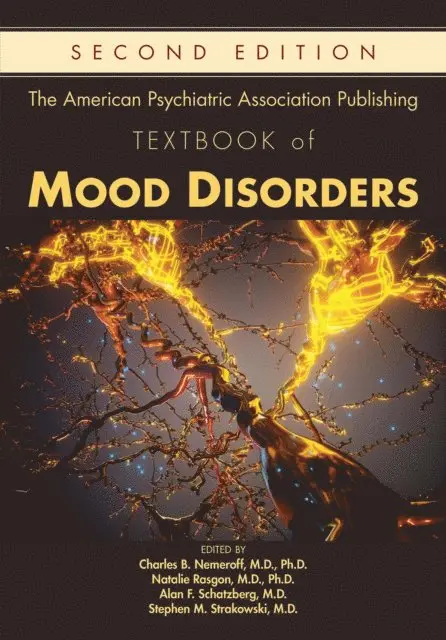
This new edition of The American Psychiatric Association Publishing Textbook of Mood Disorders is a systematic and painstaking reconceptualization of its predecessor. Under new editorial direction and with a revised roster of expert contributors, the second edition is an utterly current, clinically competent, and comprehensive text that will become an instant classic. The book is structured for learning and easy reference, moving deftly from symptomatology and epidemiology to pathogenesis and on to somatic interventions, cognitive-behavioral interventions, and psychotherapy. The latest science on genetics and epigenetics, brain imaging, and neurobiology are also examined in depth. Critically important to the clinician is the section on management of mood disorders, which provides treatment guidelines for major depressive disorder and bipolar disorder, as well as information on understanding, and preventing, suicide in children, adolescents, and adults. Finally, perspectives are offered on depression among women, children, and geriatric patients, as well as on depression across cultures. Practicing psychiatrists, residents, and students alike will benefit from the book''s inclusive coverage.
Topics new to this edition include the following: • Treatment-resistant depression—its definition and approaches to its treatment—is addressed in a dedicated chapter that covers diagnostic accuracy, pseudoresistance, comorbidity, pharmacological management, adjunctive strategies, psychotherapy, neuromodulation, and novel and experimental therapies.• Investigational agents, most notably ketamine and its relatives, constitute an exciting frontier in the treatment of mood disorders, and the clinical application, routes of delivery, dosing, risks, and clinical trials are explored in a dedicated chapter that is both rigorous and thorough.• There is compelling evidence that childhood maltreatment (defined as exposure to emotional, physical, and sexual abuse and neglect before the age of 18 years) is a prominent risk factor for the development of mood disorders as well as for a pernicious course and poor treatment response in mood disorders. These findings, as well as the underlying neurobiological and environmental interactions that may contribute to the development of mood disorders, are examined thoroughly and thoughtfully.• As our understanding of immune function in mood disorders has grown, psychoneuroimmunology has emerged as a focus of study likely to make major contributions to clinical practice in the coming decades. The book updates readers on this promising area of research.
Over the last decade, depression has emerged as the leading cause of disability worldwide, with significant attendant morbidity and mortality. The American Psychiatric Association Publishing Textbook of Mood Disorders equips clinicians and trainees with the knowledge they need to alleviate suffering in their patients with mood disorders.
1 438 kr
Skickas