Alan Kingstone - Böcker
Visar alla böcker från författaren Alan Kingstone. Handla med fri frakt och snabb leverans.
8 produkter
8 produkter
638 kr
Tillfälligt slut
1 396 kr
Skickas inom 3-6 vardagar
629 kr
Skickas inom 10-15 vardagar
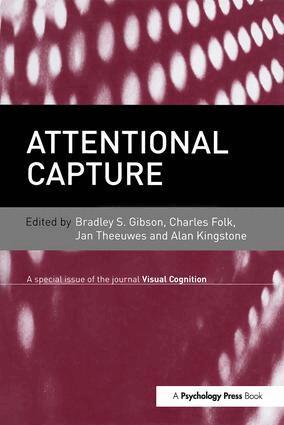
The notion that certain mental or physical events can capture attention has been one of the most enduring topics in the study of attention owing to the importance of understanding how goal-directed and stimulus-driven processes interact in perception and cognition. Despite the clear theoretical and applied importance of attentional capture, a broad survey of this field suggests that the term "capture" means different things to different people. In some cases, it refers to covert shifts of spatial attention, in others involuntary saccades, and in still others general disruption of processing by irrelevant stimuli. The properties that elicit "capture" can also range from abruptly onset or moving lights, to discontinuities in textures, to unexpected tones, to emotionally valenced words or pictures, to directional signs and symbols. Attentional capture has been explored in both the spatial and temporal domains as well as the visual and auditory modalities. There are also a number of different theoretical perspectives on the mechanisms underlying "capture" (both functional and neurophysiological) and the level of cognitive control over capture. This special issue provides a sampling of the diversity of approaches, domains, and theoretical perspectives that currently exist in the study of attentional capture. Together, these contributions should help evaluate the degree to which attentional capture represents a unitary construct that reflects fundamental theoretical principles and mechanisms of the mind.
1 209 kr
Tillfälligt slut
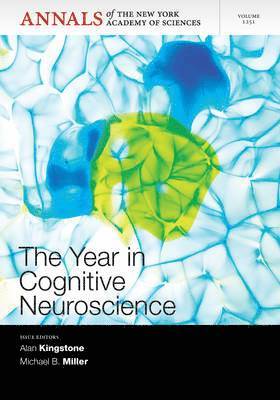
Collection of review articles highlighting the top science and recent developments in the field of cognitive neuroscience. NOTE: Annals volumes are available for sale as individual books or as a journal. For information on institutional journal subscriptions, please visit www.blackwellpublishing.com/nyas.ACADEMY MEMBERS: Please contact the New York Academy of Sciences directly to place your order (www.nyas.org). Members of the New York Academy of Science receive full-text access to the Annals online and discounts on print volumes. Please visit http://www.nyas.org/MemberCenter/Join.aspx for more information about becoming a member
Del 1156 - Annals of the New York Academy
The Year in Cognitive Neuroscience 2009, Volume 1156
Häftad, Engelska
1 321 kr
Tillfälligt slut
Del 79 - Annals of the New York Academy of Sciences
Year in Cognitive Neuroscience 2011, Volume 1224
Häftad, Engelska, 2011
1 085 kr
Tillfälligt slut
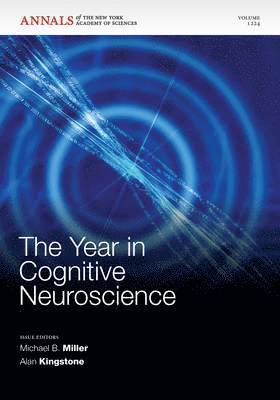
The 2011 volume of The Year in Cognitive Neuroscience presents leading scientists current thinking on topics including: challenges and opportunities in social neuroscience; the neurobiological basis of seeing words; bayesian models of uncertainty, behavior, and the brain; behavioral and neural evidence for the porous boundaries between explicit and implicit memory;perception of auditory signals; human category learning 2.0; animal emotion; and the human connectome. NOTE: Annals volumes are available for sale as individual books or as a journal. For information on institutional journal subscriptions, please click here.ACADEMY MEMBERS: Please contact the New York Academy of Sciences directly to place your order (www.nyas.org). Members of the New York Academy of Science receive full-text access to the Annals online and discounts on print volumes. Please visit http://www.nyas.org/MemberCenter/Join.aspx for more information about becoming a member.
Del 104 - Annals of the New York Academy of Sciences
Year in Cognitive Neuroscience 2012, Volume 1251
Häftad, Engelska, 2012
1 566 kr
Skickas inom 11-20 vardagar
The latest installment of The Year in Cognitive Neuroscience series features in-depth reviews of the major issues and emerging topics in cognitive neuroscience, including the role of strategies in motor learning; efficient coding and the neural representation of value; the emotion paradox in the aging brain; perceptual foundations of bilingual acquisition in infancy; understanding disgust; color through the lens of art practice, history, philosophy and neuroscience; functional imaging studies of emotion regulation; and neuropeptides and social recognitionNOTE: Annals volumes are available for sale as individual books or as a journal. For information on institutional journal subscriptions, please visit http://ordering.onlinelibrary.wiley.com/subs.asp?ref=1749-6632&doi=10.1111/(ISSN)1749-6632.ACADEMY MEMBERS: Please contact the New York Academy of Sciences directly to place your order (www.nyas.org). Members of the New York Academy of Science receive full-text access to Annals online and discounts on print volumes. Please visit http://www.nyas.org/MemberCenter/Join.aspx for more information about becoming a member.
2 039 kr
Skickas inom 7-10 vardagar
The notion that certain mental or physical events can capture attention has been one of the most enduring topics in the study of attention owing to the importance of understanding how goal-directed and stimulus-driven processes interact in perception and cognition. Despite the clear theoretical and applied importance of attentional capture, a broad survey of this field suggests that the term "capture" means different things to different people. In some cases, it refers to covert shifts of spatial attention, in others involuntary saccades, and in still others general disruption of processing by irrelevant stimuli. The properties that elicit "capture" can also range from abruptly onset or moving lights, to discontinuities in textures, to unexpected tones, to emotionally valenced words or pictures, to directional signs and symbols. Attentional capture has been explored in both the spatial and temporal domains as well as the visual and auditory modalities. There are also a number of different theoretical perspectives on the mechanisms underlying "capture" (both functional and neurophysiological) and the level of cognitive control over capture. This special issue provides a sampling of the diversity of approaches, domains, and theoretical perspectives that currently exist in the study of attentional capture. Together, these contributions should help evaluate the degree to which attentional capture represents a unitary construct that reflects fundamental theoretical principles and mechanisms of the mind.