Alan Liu - Böcker
Visar alla böcker från författaren Alan Liu. Handla med fri frakt och snabb leverans.
10 produkter
10 produkter
1 080 kr
Skickas inom 7-10 vardagar
Can today’s society, increasingly captivated by a constant flow of information, share a sense of history? How did our media-making forebears balance the tension between the present and the absent, the individual and the collective, the static and the dynamic—and how do our current digital networks disrupt these same balances? Can our social media, with its fleeting nature, even be considered social at all? In Friending the Past, Alan Liu proposes fresh answers to these innovative questions of connection. He explores how we can learn from the relationship between past societies whose media forms fostered a communal and self-aware sense of history—such as prehistorical oral societies with robust storytelling cultures, or the great print works of nineteenth-century historicism—and our own instantaneous present. He concludes with a surprising look at how the sense of history exemplified in today’s JavaScript timelines compares to the temporality found in Romantic poetry.Interlaced among these inquiries, Liu shows how extensive “network archaeologies” can be constructed as novel ways of thinking about our affiliations with time and with each other. These conceptual architectures of period and age are also always media structures, scaffolded with the outlines of what we mean by history. Thinking about our own time, Liu wonders if the digital, networked future can sustain a similar sense of history.
326 kr
Skickas inom 7-10 vardagar
Can today’s society, increasingly captivated by a constant flow of information, share a sense of history? How did our media-making forebears balance the tension between the present and the absent, the individual and the collective, the static and the dynamic—and how do our current digital networks disrupt these same balances? Can our social media, with its fleeting nature, even be considered social at all? In Friending the Past, Alan Liu proposes fresh answers to these innovative questions of connection. He explores how we can learn from the relationship between past societies whose media forms fostered a communal and self-aware sense of history—such as prehistorical oral societies with robust storytelling cultures, or the great print works of nineteenth-century historicism—and our own instantaneous present. He concludes with a surprising look at how the sense of history exemplified in today’s JavaScript timelines compares to the temporality found in Romantic poetry.Interlaced among these inquiries, Liu shows how extensive “network archaeologies” can be constructed as novel ways of thinking about our affiliations with time and with each other. These conceptual architectures of period and age are also always media structures, scaffolded with the outlines of what we mean by history. Thinking about our own time, Liu wonders if the digital, networked future can sustain a similar sense of history.
908 kr
Skickas inom 7-10 vardagar
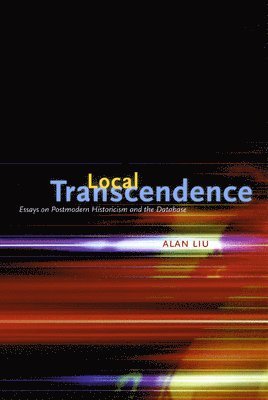
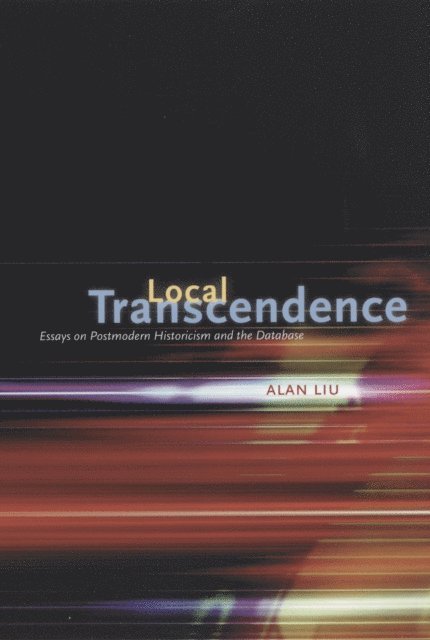
Driven by global economic forces to innovate, today's society paradoxically looks forward to the future while staring only at the nearest, most local present - the most recent financial quarter, the latest artistic movement, the instant message or blog post at the top of the screen. Postmodernity is lived, it seems, at the end of history.In the essays collected in "Local Transcendence", Alan Liu takes the pulse of such postmodern historicism by tracking two leading indicators of its acceleration in the late twentieth and early twenty-first centuries: postmodern cultural criticism - including the new historicism, the new cultural history, cultural anthropology, the new pragmatism, and postmodern and postindustrial theory - and digital information technology. What is the relation between the new historicist anecdote and the database field, Liu asks, and can either have a critical function in the age of postmodern historicism?"Local Transcendence" includes one previously unpublished essay and a synthetic introduction in which Liu traverses from his earlier work on the theory of historicism to his recent studies of information culture to propose a theory of contingent method incorporating a special inflection of history: media history.
317 kr
Skickas inom 7-10 vardagar
Driven by global economic forces to innovate, today's society paradoxically looks forward to the future while staring only at the nearest, most local present - the most recent financial quarter, the latest artistic movement, the instant message or blog post at the top of the screen. Postmodernity is lived, it seems, at the end of history.In the essays collected in "Local Transcendence", Alan Liu takes the pulse of such postmodern historicism by tracking two leading indicators of its acceleration in the late twentieth and early twenty-first centuries: postmodern cultural criticism - including the new historicism, the new cultural history, cultural anthropology, the new pragmatism, and postmodern and postindustrial theory - and digital information technology. What is the relation between the new historicist anecdote and the database field, Liu asks, and can either have a critical function in the age of postmodern historicism?"Local Transcendence" includes one previously unpublished essay and a synthetic introduction in which Liu traverses from his earlier work on the theory of historicism to his recent studies of information culture to propose a theory of contingent method incorporating a special inflection of history: media history.
789 kr
Skickas inom 7-10 vardagar
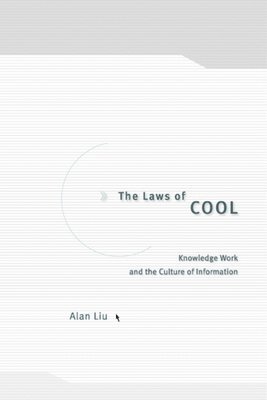
Knowledge work is now the reigning business paradigm and affects even the world of higher education. But what perspective can the knowledge of the humanities and arts contribute to a world of knowledge work whose primary mission is business? And what is the role of information technology as both the servant of the knowledge economy and the medium of a new technological cool? In The Laws of Cool, Alan Liu reflects on these questions as he considers the emergence of new information technologies and their profound influence on the forms and practices of knowledge. Liu first explores the nature of postindustrial corporate culture, studies the rise of digital technologies, and charts their dramatic effect on business. He then shows how such technologies have given rise to a new high-tech culture of cool. At the core of this book are an assessment of this new cool and a measured consideration of its potential and limitations as a popular new humanism. According to Liu, cool at once mimics and resists the postindustrial credo of innovation and creative destruction, which holds that the old must perpetually give way to the new. Information, he maintains, is no longer used by the cool just
355 kr
Skickas inom 7-10 vardagar
Knowledge work is now the reigning business paradigm and affects even the world of higher education. But what perspective can the knowledge of the humanities and arts contribute to a world of knowledge work whose primary mission is business? And what is the role of information technology as both the servant of the knowledge economy and the medium of a new technological cool? In The Laws of Cool, Alan Liu reflects on these questions as he considers the emergence of new information technologies and their profound influence on the forms and practices of knowledge. Liu first explores the nature of postindustrial corporate culture, studies the rise of digital technologies, and charts their dramatic effect on business. He then shows how such technologies have given rise to a new high-tech culture of cool. At the core of this book are an assessment of this new cool and a measured consideration of its potential and limitations as a popular new humanism. According to Liu, cool at once mimics and resists the postindustrial credo of innovation and creative destruction, which holds that the old must perpetually give way to the new. Information, he maintains, is no longer used by the cool just
1 473 kr
Skickas inom 7-10 vardagar
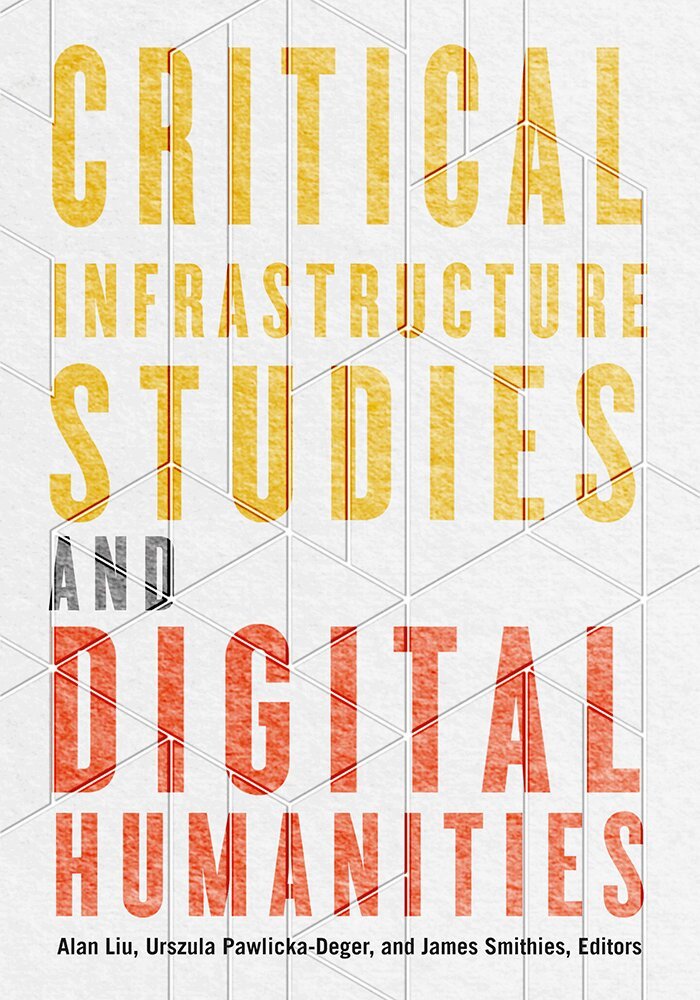
How digital humanities can shape and be shaped by the infrastructures that sustain our worldCritical Infrastructure Studies and Digital Humanities reimagines the digital humanities (DH) through the expanding field of critical infrastructure studies. Featuring voices from around the globe, this volume explores how DH builds on and extends theories and technologies of infrastructure that affect society, culture, and knowledge in different national and regional contexts. Examining DH's own infrastructural genealogy, the contributors offer readers critical reflections and bold visions for the future as they address issues of environmentalism, decolonization, Indigenous sovereignty, multilingualism, labor justice, feminism, national development, and beyond from a variety of disciplinary perspectives embedded in concrete digital systems. Including innovative "infrastructure manifests," the essays in this book illuminate how DH can both study and shape the systems that sustain culture, scholarship, and connection.Contributors: Anne Beaulieu, U of Groningen; Kyle Booten, U of Connecticut; Ann Borda, U of Melbourne; Susan Brown, U of Guelph; Toby Burrows, U of Western Australia; Ashley Caranto Morford, Weber State U; Javier Cha, U of Hong Kong; Jing Chen, Nanjing U; Arianna Ciula, King's College London; Maya Dodd, FLAME U, Pune, India; Martin Paul Eve, Birkbeck, U of London; Allan Gomez, Philly Community Wireless; Matthew N. Hannah, Purdue U; Matthew Hockenberry, Fordham U; Arun Jacob, U of Toronto; Mike Jones, U of Tasmania; Lucie Kolb, Basel Academy of Art and Design FHNW; Ian M. Miller, St. John's U, New York; Sylvia K. Miller, Duke U; Sarah Montoya, Mellon Humanities Postdoctoral Fellow; Saumyaa Naidu, independent researcher; Sharika Parmar, FLAME U, Pune, India; Kush Patel, Srishti Manipal Academy of Higher Education, Bengaluru; Miriam Posner, UCLA; Puthiya Purayil Sneha, International Institute of Information Technology, Hyderabad; Paul Spence, King's College London; Lik Hang Tsui, City U of Hong Kong; Deb Verhoeven, U of Alberta; Miguel Vieira, King's College London; Devren Washington, Philly Community Wireless; Alex Wermer-Colan, Temple U and Philly Community Wireless; Darren Wershler, Concordia U; Grant Wythoff, Princeton U and Philly Community Wireless.Retail e-book files for this title are screen-reader friendly with images accompanied by short alt text and/or extended descriptions.
364 kr
Skickas inom 7-10 vardagar
How digital humanities can shape and be shaped by the infrastructures that sustain our worldCritical Infrastructure Studies and Digital Humanities reimagines the digital humanities (DH) through the expanding field of critical infrastructure studies. Featuring voices from around the globe, this volume explores how DH builds on and extends theories and technologies of infrastructure that affect society, culture, and knowledge in different national and regional contexts. Examining DH's own infrastructural genealogy, the contributors offer readers critical reflections and bold visions for the future as they address issues of environmentalism, decolonization, Indigenous sovereignty, multilingualism, labor justice, feminism, national development, and beyond from a variety of disciplinary perspectives embedded in concrete digital systems. Including innovative "infrastructure manifests," the essays in this book illuminate how DH can both study and shape the systems that sustain culture, scholarship, and connection.Contributors: Anne Beaulieu, U of Groningen; Kyle Booten, U of Connecticut; Ann Borda, U of Melbourne; Susan Brown, U of Guelph; Toby Burrows, U of Western Australia; Ashley Caranto Morford, Weber State U; Javier Cha, U of Hong Kong; Jing Chen, Nanjing U; Arianna Ciula, King's College London; Maya Dodd, FLAME U, Pune, India; Martin Paul Eve, Birkbeck, U of London; Allan Gomez, Philly Community Wireless; Matthew N. Hannah, Purdue U; Matthew Hockenberry, Fordham U; Arun Jacob, U of Toronto; Mike Jones, U of Tasmania; Lucie Kolb, Basel Academy of Art and Design FHNW; Ian M. Miller, St. John's U, New York; Sylvia K. Miller, Duke U; Sarah Montoya, Mellon Humanities Postdoctoral Fellow; Saumyaa Naidu, independent researcher; Sharika Parmar, FLAME U, Pune, India; Kush Patel, Srishti Manipal Academy of Higher Education, Bengaluru; Miriam Posner, UCLA; Puthiya Purayil Sneha, International Institute of Information Technology, Hyderabad; Paul Spence, King's College London; Lik Hang Tsui, City U of Hong Kong; Deb Verhoeven, U of Alberta; Miguel Vieira, King's College London; Devren Washington, Philly Community Wireless; Alex Wermer-Colan, Temple U and Philly Community Wireless; Darren Wershler, Concordia U; Grant Wythoff, Princeton U and Philly Community Wireless.Retail e-book files for this title are screen-reader friendly with images accompanied by short alt text and/or extended descriptions.
2 376 kr
Skickas inom 5-8 vardagar
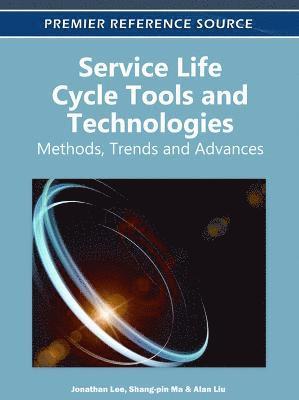
Service Life Cycle Tools and Technologies: Methods, Trends and Advances compiles the latest research on SOC life cycles, detailing methodologies and applications in this emerging field. The development of service-oriented applications not only depends on constructing service providers, but also composition and delivery. Service requesters, service providers, and developers alike will benefit from the views and models in a service life cycle. This volume offers research that has been conducted in both industry and academia to address issues in the SOC domain, including service discovery, service composition, and service management. It serves as a vital reference for those on either side of the service field.
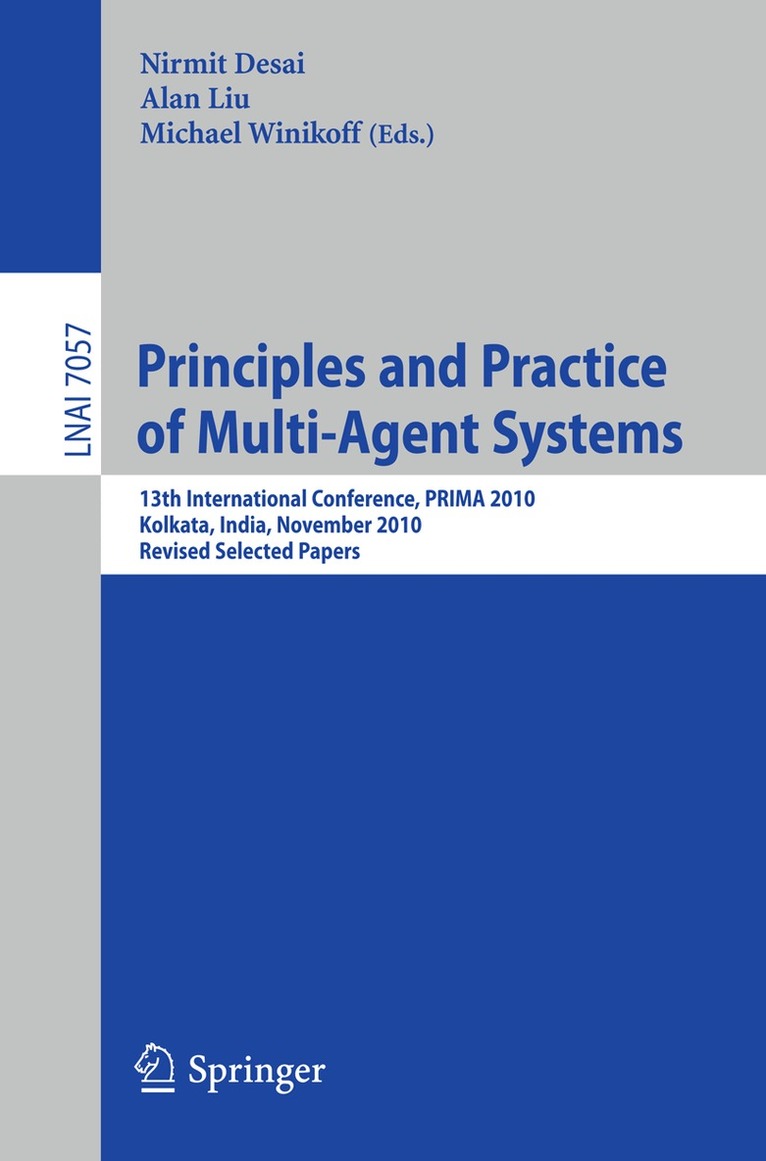
Principles and Practice of Multi-Agent Systems
13th International Conference, PRIMA 2010, Kolkata, India, November 12-15, 2010, Revised Selected Papers
Häftad, Engelska, 2012
554 kr
Skickas inom 10-15 vardagar
This book constitutes the thoroughly refereed post-conference proceedings of the 13th International Conference on Principles and Practice of Multi-Agent Systems, PRIMA 2010, held in Kolkata, India, in November 2010. The 18 full papers presented together with 15 early innovation papers were carefully reviewed and selected from over 63 submissions. They focus on practical aspects of multiagent systems and cover topics such as agent communication, agent cooperation and negotiation, agent reasoning, agent-based simulation, mobile and semantic agents, agent technologies for service computing, agent-based system development, ServAgents workshop, IAHC workshop, and PRACSYS workshop.