Alan Macleod - Böcker
Visar alla böcker från författaren Alan Macleod. Handla med fri frakt och snabb leverans.
7 produkter
7 produkter
333 kr
Skickas inom 10-15 vardagar
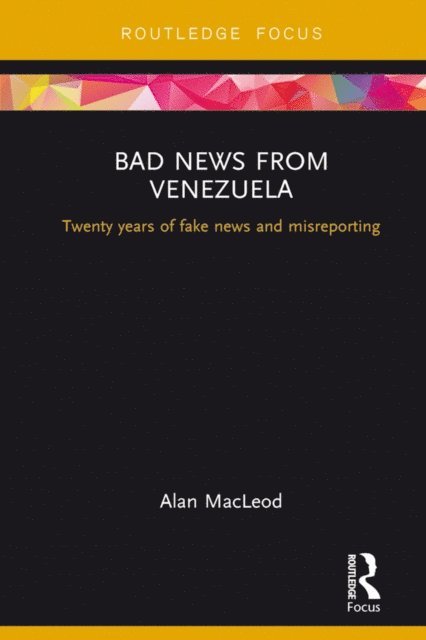
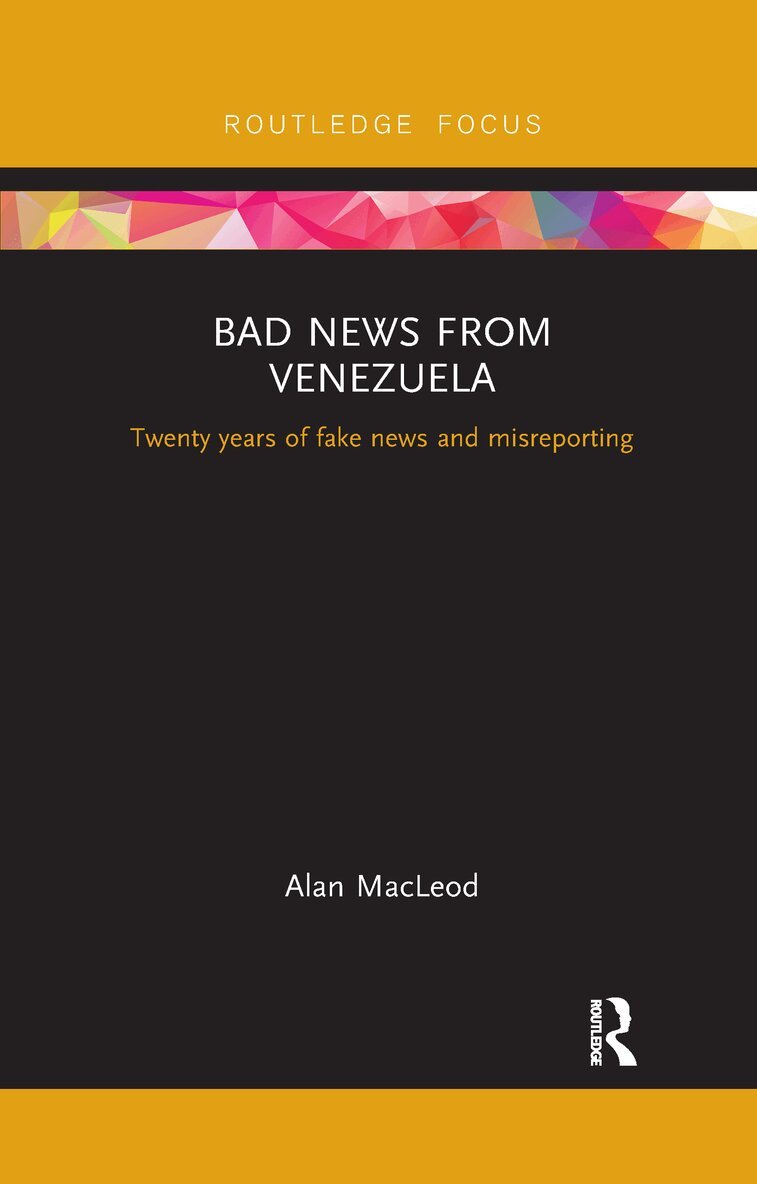
Since the election of President Hugo Chavez in 1998, Venezuela has become an important news item. Western coverage is shaped by the cultural milieu of its journalists, with news written from New York or London by non-specialists or by those staying inside wealthy guarded enclaves in an intensely segregated Caracas. Journalists mainly work with English-speaking elites and have little contact with the poor majority. Therefore, they reproduce ideas largely attuned to a Western, neoliberal understanding of Venezuela. Through extensive analysis of media coverage from Chavez’s election to the present day, as well as detailed interviews with journalists and academics covering the country, Bad News from Venezuela highlights the factors contributing to reportage in Venezuela and why those factors exist in the first place. From this examination of a single Latin American country, the book furthers the discussion of contemporary media in the West, and how, with the rise of ‘fake news’, their operations have a significant impact on the wider representation of global affairs. Bad News from Venezuela is comprehensive and enlightening for undergraduate students and research academics in media and Latin American studies.
2 113 kr
Skickas inom 10-15 vardagar
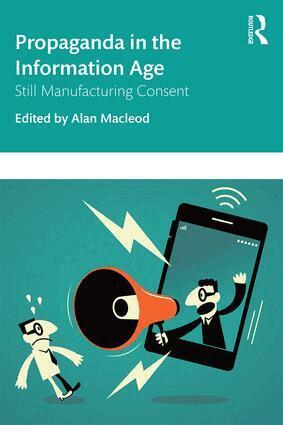
Propaganda in the Information Age is a collaborative volume which updates Herman and Chomsky’s propaganda model for the twenty-first-century media landscape and makes the case for the continuing relevance of their original ideas. It includes an exclusive interview with Noam Chomsky himself.2018 marks 30 years since the publication of Edward Herman and Noam Chomsky’s ground-breaking book Manufacturing Consent, which lifted the veil over how the mass media operate. The book’s model presented five filters which all potentially newsworthy events must pass through before they reach our TV screens, smartphones or newspapers. In Propaganda in the Information Age, many of the world’s leading media scholars, analysts and journalists use this model to explore the modern media world, covering some of the most pressing contemporary topics such as fake news, Cambridge Analytica, the Syrian Civil War and Russiagate. The collection also acknowledges that in an increasingly globalized world, our media is increasingly globalized as well, with chapters exploring both Indian and African media. For students of Media Studies, Journalism, Communication and Sociology, Propaganda in the Information Age offers a fascinating introduction to the propaganda model and how it can be applied to our understanding not only of how media functions in corporate America, but across the world in the twenty-first century.
564 kr
Skickas inom 10-15 vardagar
Propaganda in the Information Age is a collaborative volume which updates Herman and Chomsky’s propaganda model for the twenty-first-century media landscape and makes the case for the continuing relevance of their original ideas. It includes an exclusive interview with Noam Chomsky himself.2018 marks 30 years since the publication of Edward Herman and Noam Chomsky’s ground-breaking book Manufacturing Consent, which lifted the veil over how the mass media operate. The book’s model presented five filters which all potentially newsworthy events must pass through before they reach our TV screens, smartphones or newspapers. In Propaganda in the Information Age, many of the world’s leading media scholars, analysts and journalists use this model to explore the modern media world, covering some of the most pressing contemporary topics such as fake news, Cambridge Analytica, the Syrian Civil War and Russiagate. The collection also acknowledges that in an increasingly globalized world, our media is increasingly globalized as well, with chapters exploring both Indian and African media. For students of Media Studies, Journalism, Communication and Sociology, Propaganda in the Information Age offers a fascinating introduction to the propaganda model and how it can be applied to our understanding not only of how media functions in corporate America, but across the world in the twenty-first century.
822 kr
Skickas inom 10-15 vardagar
Since the election of President Hugo Chavez in 1998, Venezuela has become an important news item. Western coverage is shaped by the cultural milieu of its journalists, with news written from New York or London by non-specialists or by those staying inside wealthy guarded enclaves in an intensely segregated Caracas. Journalists mainly work with English-speaking elites and have little contact with the poor majority. Therefore, they reproduce ideas largely attuned to a Western, neoliberal understanding of Venezuela. Through extensive analysis of media coverage from Chavez’s election to the present day, as well as detailed interviews with journalists and academics covering the country, Bad News from Venezuela highlights the factors contributing to reportage in Venezuela and why those factors exist in the first place. From this examination of a single Latin American country, the book furthers the discussion of contemporary media in the West, and how, with the rise of ‘fake news’, their operations have a significant impact on the wider representation of global affairs. Bad News from Venezuela is comprehensive and enlightening for undergraduate students and research academics in media and Latin American studies.
240 kr
Skickas inom 5-8 vardagar
351 kr
Skickas inom 5-8 vardagar
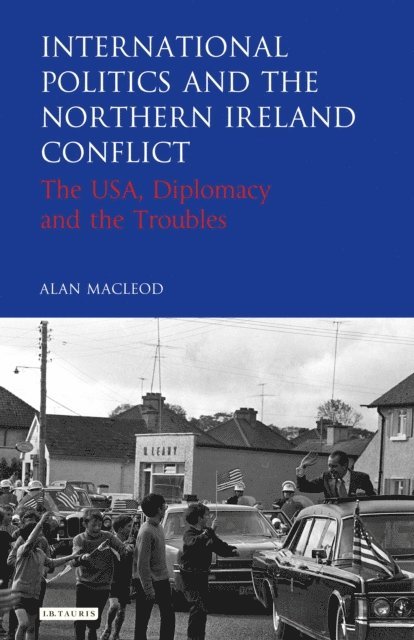
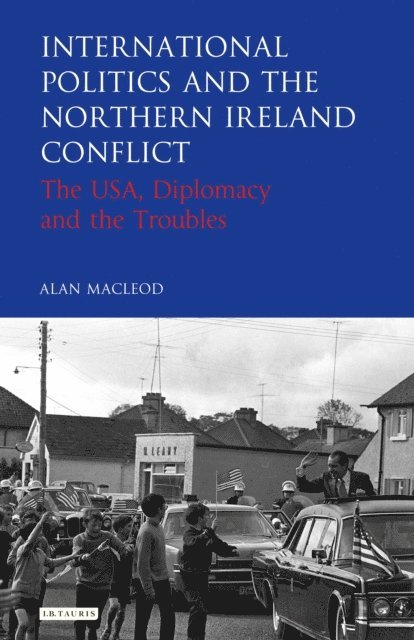
International Politics and the Northern Ireland Conflict
The USA, Diplomacy and the Troubles
Inbunden, Engelska, 2016
1 833 kr
Skickas inom 10-15 vardagar
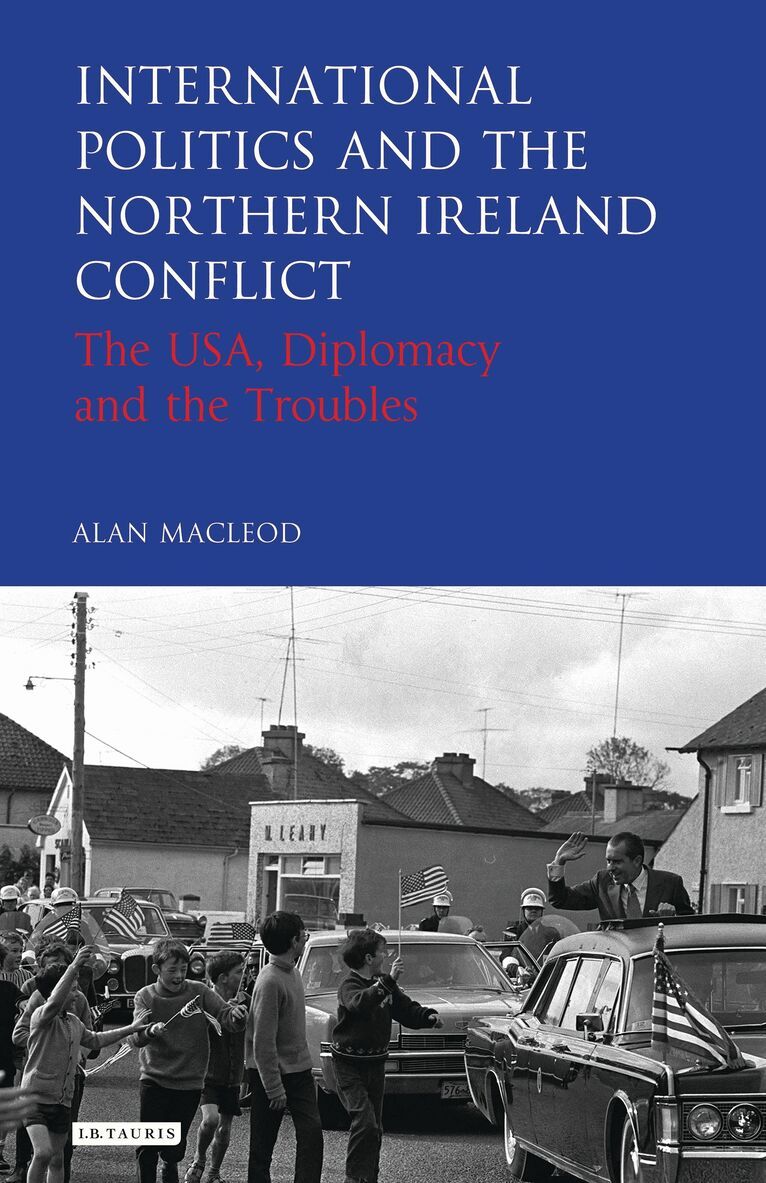
British troops, which arrived as a temporary measure, would remain in Ireland for the next 38 years. Successive British governments initially claimed the Northern Ireland conflict to be an internal matter but the Republic of Ireland had repeatedly demanded a role, appealing to the UN and US, while across the Atlantic, Irish-American groups applied pressure on Nixon's largely apathetic administration to intervene. Following the introduction of internment and the events of Bloody Sunday, the British were forced to recognise the international dimension of the conflict and begrudgingly began to concede that any solution would rely on Washington and Dublin's involvement. Irish governments seized every opportunity to shape the political initiative that led to Sunningdale and Senator Edward Kennedy became the leading US advocate of American intervention while Nixon, who wanted Britain onside for his Cold War objectives, was faced with increasingly influential domestic pressure groups.Eventually, international involvement in Northern Ireland would play a vital role in shaping the principles on which political agreement was reached - even after the breakdown of the Sunningdale Agreement in May 1974. Using recently released archives in the United Kingdom, Republic of Ireland and United States, Alan MacLeod offers a new interpretation of the early period of Northern Ireland's 'Troubles'.