Alan Peshkin – författare
Visar alla böcker från författaren Alan Peshkin. Handla med fri frakt och snabb leverans.
6 produkter
6 produkter
300 kr
Skickas inom 7-10 vardagar
Is Bethany Baptist Academy God's choice? Ask the fundamentalist Christians who teach there or whose children attend the academy, and their answer will be a yes as unequivocal as their claim that the Bible is God's inerrant, absolute word. Is this truth or arrogance? In God's Choice, Alan Peshkin offers readers the opportunity to consider this question in depth. Given the outsider's rare chance to observe such a school firsthand, Peshkin spent eighteen months studying Bethany's high school—interviewing students, parents, and educators, living in the home of Bethany Baptist Church members, and participating fully in the church's activities. From this intimate research he has fashioned a rich account of Christian schooling and an informed analysis of a clear alternative to public education.
268 kr
Skickas inom 7-10 vardagar
Peshkin examines the role played by ethnicity in the daily life of a town he calls "Riverview" and its only high school. Immersing himself in the daily life of halls and classrooms of Riverview's high school and the streets of its neighborhoods, Peshkin coaxes from both young and old their own reflections on the town's early days, on the period of ethnic strife sparked by the assassination of Martin Luther King, Jr., and on the way they see Riverview today. "Peshkin strikes a hopeful cord, revealing what social encounters among ethnic groups--at their best--can be like in America."--Education Digest
2 053 kr
Skickas inom 10-15 vardagar
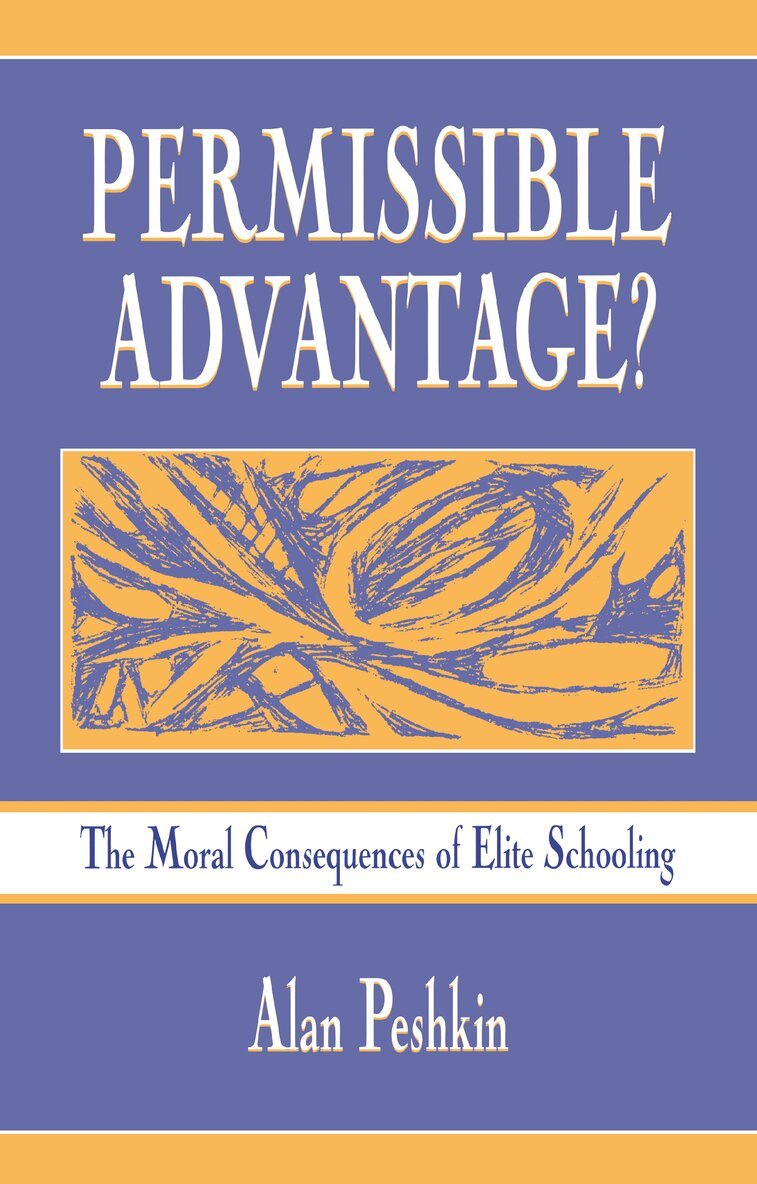
This study of Edgewood Academy--a private, elite college preparatory high school--examines what moral choices look like when they are made by the participants in an exceptionally wealthy school, and what the very existence of a privileged school indicates about American society. It extends Peshkin's ongoing exploration of U.S. high schools and their communities, each focused in a different sociocultural setting. In this particular inquiry, he began with two central questions: * What is a school like whose students enter with a determined disposition to attend college, and all of whom are selected on the promise they display for college success?* What can be learned from studying Edgewood Academy that transcends the particular case of this school? The volume opens with a description of how moral choices look when they are made by the participants in an exceedingly wealthy school. There is a general picture of the Academy, a discussion of the processes the school uses to insure the quality of its students and educators, and an overview of teachers and students that reveals what is commendable about each group. These chapters clarify what a school of ample financial means and wise leadership can do. Peshkin goes on to reflect briefly on privilege and concludes with a discussion of what the very existence of a privileged school indicates about American society. Schools, he suggests, are about much more than what goes on inside them--they mirror what is and is not at stake for their particular constituents--and function similarly for the nation. Edgewood Academy's host community is not a village, town, church, or tribe, as in Peshkin's previous studies. It is a community created by shared aspirations for high-level academic attainment and its associated benefits. Affluence and towering academic achievement are the two most relevant factors. In this book, advantage occupies center stage. The school's excellence is documented not to extol its success, but, rather, to call attention to what is available for its students that is not available for most American children. The focus, ultimately, is on educational justice as illuminated by the advantage of Academy students--that is, on justice denied, not because anyone or any group or agency consciously, planfully sets out to do injustice to other children, but because injustice happens as the artifact of imagined limitations of resources and means. Peshkin's purpose is not to detail the particulars of how educational justice is denied to the many, but to portray and examine the meaning of a privileged school where educational justice prevails for the few.
561 kr
Skickas inom 10-15 vardagar
This study of Edgewood Academy--a private, elite college preparatory high school--examines what moral choices look like when they are made by the participants in an exceptionally wealthy school, and what the very existence of a privileged school indicates about American society. It extends Peshkin's ongoing exploration of U.S. high schools and their communities, each focused in a different sociocultural setting. In this particular inquiry, he began with two central questions: * What is a school like whose students enter with a determined disposition to attend college, and all of whom are selected on the promise they display for college success?* What can be learned from studying Edgewood Academy that transcends the particular case of this school? The volume opens with a description of how moral choices look when they are made by the participants in an exceedingly wealthy school. There is a general picture of the Academy, a discussion of the processes the school uses to insure the quality of its students and educators, and an overview of teachers and students that reveals what is commendable about each group. These chapters clarify what a school of ample financial means and wise leadership can do. Peshkin goes on to reflect briefly on privilege and concludes with a discussion of what the very existence of a privileged school indicates about American society. Schools, he suggests, are about much more than what goes on inside them--they mirror what is and is not at stake for their particular constituents--and function similarly for the nation. Edgewood Academy's host community is not a village, town, church, or tribe, as in Peshkin's previous studies. It is a community created by shared aspirations for high-level academic attainment and its associated benefits. Affluence and towering academic achievement are the two most relevant factors. In this book, advantage occupies center stage. The school's excellence is documented not to extol its success, but, rather, to call attention to what is available for its students that is not available for most American children. The focus, ultimately, is on educational justice as illuminated by the advantage of Academy students--that is, on justice denied, not because anyone or any group or agency consciously, planfully sets out to do injustice to other children, but because injustice happens as the artifact of imagined limitations of resources and means. Peshkin's purpose is not to detail the particulars of how educational justice is denied to the many, but to portray and examine the meaning of a privileged school where educational justice prevails for the few.
2 053 kr
Skickas inom 10-15 vardagar
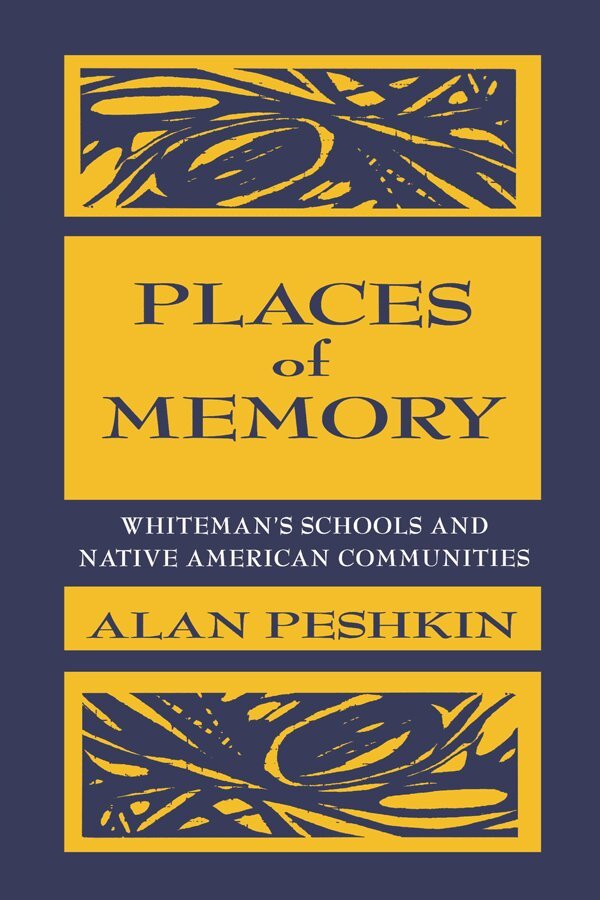
While visiting New Mexico, the author was struck with the opportunity the state presents to explore the school-community relationship in rural, religious, and multiethnic sociocultural settings. In New Mexico, the school-community relationship can be learned within four major culture groups -- Indian, Spanish-American, Mexican, and Anglo. Together, studies of these culture groups form a portrait of schooling in New Mexico, further documenting the range of ways that host communities in our educationally decentralized society use the prerogatives of local control to "create" schools that fit local cultural inclinations. The first of four planned volumes, this book studies the Pueblo Indians and Indian High School. The school is a nonpublic, state-accredited, off-reservation boarding school for more than 400 Indian students. A large majority of the students are from Pueblo tribes, while others are from Navajo and Apache tribes. As a state-accredited school, it subscribes to curricular, safety, and other requirements of New Mexico. As a nonpublic school devoted to Indian students, it has the prerogative to be as distinctive as the ethnic group it serves. USE SHORT BLURB COPY FOR CATALOGS: This ethnography of the Pueblo Indians and Indian High School epxlores some of the ways that host communities in our decentralized society use the perogatives of local consul to create schools that fit local cultural inclinations.
535 kr
Skickas inom 10-15 vardagar
While visiting New Mexico, the author was struck with the opportunity the state presents to explore the school-community relationship in rural, religious, and multiethnic sociocultural settings. In New Mexico, the school-community relationship can be learned within four major culture groups -- Indian, Spanish-American, Mexican, and Anglo. Together, studies of these culture groups form a portrait of schooling in New Mexico, further documenting the range of ways that host communities in our educationally decentralized society use the prerogatives of local control to "create" schools that fit local cultural inclinations. The first of four planned volumes, this book studies the Pueblo Indians and Indian High School. The school is a nonpublic, state-accredited, off-reservation boarding school for more than 400 Indian students. A large majority of the students are from Pueblo tribes, while others are from Navajo and Apache tribes. As a state-accredited school, it subscribes to curricular, safety, and other requirements of New Mexico. As a nonpublic school devoted to Indian students, it has the prerogative to be as distinctive as the ethnic group it serves. USE SHORT BLURB COPY FOR CATALOGS: This ethnography of the Pueblo Indians and Indian High School epxlores some of the ways that host communities in our decentralized society use the perogatives of local consul to create schools that fit local cultural inclinations.