Alan Smart – författare
Visar alla böcker från författaren Alan Smart. Handla med fri frakt och snabb leverans.
8 produkter
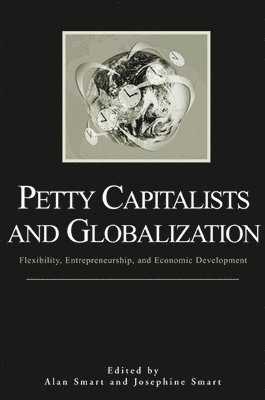
Petty Capitalists and Globalization
Flexibility, Entrepreneurship, and Economic Development
Av Alan Smart, Josephine Smart
Inbunden, 2005
1040 kr
Lägg i varukorg
Examines how small firms, like large ones, are mobilizing to compete in a global economy.Globalization is often seen as driven by large corporations and supranational organizations. Enterprises operated by petty capitalists may be small, but there is nothing petty about their significance for the …
Petty Capitalists and Globalization
Flexibility, Entrepreneurship, and Economic Development
Av Alan Smart, Josephine Smart
Häftad, 2006
383 kr
Lägg i varukorg
Examines how small firms, like large ones, are mobilizing to compete in a global economy.Globalization is often seen as driven by large corporations and supranational organizations. Enterprises operated by petty capitalists may be small, but there is nothing petty about their significance for the …
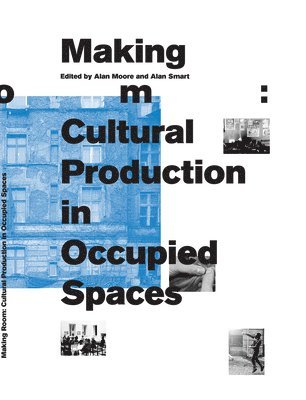
Making Room
Cultural Production in Occupied Spaces
Av Alan Moore, Alan Smart
Häftad, 2016
231 kr
Lägg i varukorg
Posthumanism
Anthropological Insights
Av Alan Smart, Josephine Smart
Häftad, 2017
261 kr
Lägg i varukorg
Designed to explain posthumanism to those outside of academia, this brief and accessible book makes an original argument about anthropology's legacy as a study of "more than human." Smart and Smart return to the holism of classic ethnographies where cattle, pigs, yams, and sorcerers were central to …
Posthumanism
Anthropological Insights
Av Alan Smart, Josephine Smart
E-bok, 2017
294 kr
Lägg i varukorg
Designed to explain posthumanism to those outside of academia, this brief and accessible book makes an original argument about anthropology's legacy as a study of "more than human." Smart and Smart return to the holism of classic ethnographies where cattle, pigs, yams, and sorcerers were central to …
Posthumanism
Anthropological Insights
Av Alan Smart, Josephine Smart
E-bok, 2017
294 kr
Lägg i varukorg
Designed to explain posthumanism to those outside of academia, this brief and accessible book makes an original argument about anthropology's legacy as a study of "more than human." Smart and Smart return to the holism of classic ethnographies where cattle, pigs, yams, and sorcerers were central to …
Hong Kong Public and Squatter Housing
Geopolitics and Informality, 1963-1985
Av Alan Smart, Fung Chi Keung Charles
Häftad, 2023
535 kr
Lägg i varukorg
Shek Kip Mei Myth – Squatters, Fires, and Colonial Rule in Hong Kong, 1950–1963
Av Alan Smart
Inbunden, 2006
395 kr
Tillfälligt slut
"The Shek Kip Mei Myth" provides a new explanation for the beginnings of Hong Kong's massive public housing program, tracing it to the colonial govenrment's inability to resolve the squatter problem due to constraints posed by the geopolitics of the early Cold War.