Albert H Friedlander – författare
Visar alla böcker från författaren Albert H Friedlander. Handla med fri frakt och snabb leverans.
2 produkter
2 produkter
E-bok
PDF, Engelska, 2014410 kr
Läs direkt efter köp
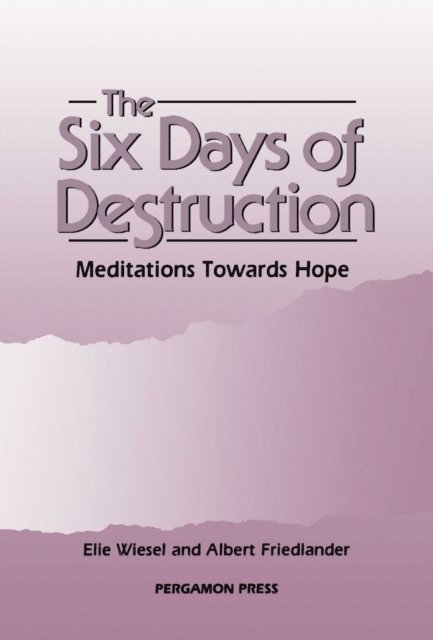
"If you do not take up this text to pray, take it as a book to be studied. Once you have read these stories, they will not leave you, for they are part of human history." (From the Introduction by Albert Friedlander). The Six Days of Destruction is a religious text for use in both Jewish and interfaith services for Yom Ha-Shoah; it also stands on its own as a work of great poignancy. The six stories were written by Nobel Peace Prize Winner, Elie Wiesel, with liturgies by Rabbi Albert Friedlander. The book opens with prefaces by Cardinal Basil Hume, Bishop Richard Harries and Lord Jakobovits, and is illustrated with a collection of drawings by inmates of the Nazi concentration camps, introduced by Elisabeth Maxwell and Roman Halter.
Inbunden, Engelska, 1995
1 999 kr
Skickas inom 3-6 vardagar
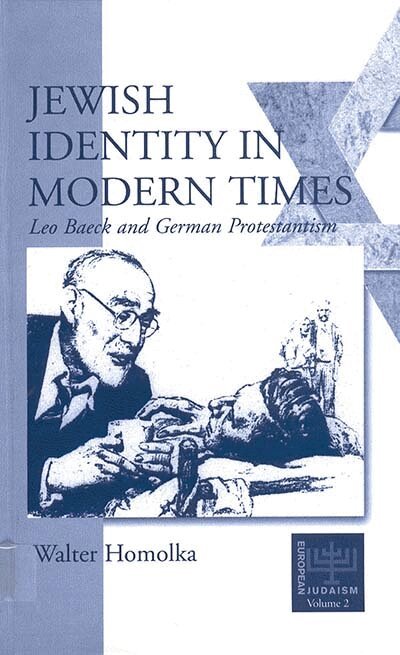
There is no doubt about Baeck's contribution to Jewish theology in the twentieth century: it has been significant. Without ever departing completely from the ancient wellsprings of orthodoxy, he was a studious observer of the intellectual currents of his time and ambience; under theinfluence of liberal Jewish theology, he drew on and reworked those currents, weaving them into his own theological thought. A special aspect of Baeck's work is that he remained in critical confrontation with Christianity throughout his life, acting as a kind of builder of bridges between the two faiths." (From the Introduction.) It is on this aspect that the author focuses his study inwhich he examines Leo Baeck's critical evaluation of Martin Luther and Protestantism. At the same time Homolka shows how close the intellectual links between liberal Christian and liberal Jewish theology had become before the Holocaust: both sides attempted a new definition of the "essence" of their faiths and were searching for a new identity in an increasingly pluralistic and secular society.