Alberto Flores Galindo – författare
Visar alla böcker från författaren Alberto Flores Galindo. Handla med fri frakt och snabb leverans.
4 produkter
4 produkter
Inbunden, Engelska, 2010
1 143 kr
Skickas inom 7-10 vardagar
In Search of an Inca examines how people in the Andean region have invoked the Incas to question and rethink colonialism and injustice, from the time of the Spanish conquest in the sixteenth century until the late twentieth century. It stresses the recurrence of the 'Andean Utopia', that is, the idealization of the pre-colonial past as an era of harmony, justice, and prosperity and the foundation for political and social agendas for the future. In this award-winning work, Alberto Flores Galindo highlights how different groups imagined the pre-Andean world as a model for a new society. These included those conquered by the Spanish in the sixteenth century but also rebels in the colonial and modern era and a heterogeneous group of intellectuals and dissenters. This sweeping and accessible history of the Andes over the last five hundred years offers important reflections on and grounds for comparison of memory, utopianism, and resistance.
Häftad, Engelska, 2010
325 kr
Skickas inom 7-10 vardagar
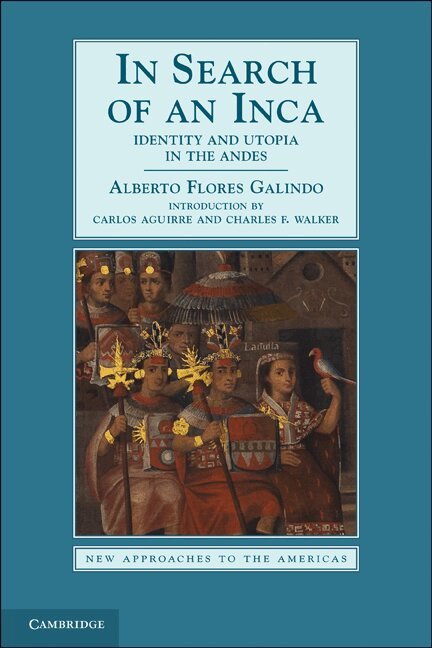
In Search of an Inca examines how people in the Andean region have invoked the Incas to question and rethink colonialism and injustice, from the time of the Spanish conquest in the sixteenth century until the late twentieth century. It stresses the recurrence of the 'Andean Utopia', that is, the idealization of the pre-colonial past as an era of harmony, justice, and prosperity and the foundation for political and social agendas for the future. In this award-winning work, Alberto Flores Galindo highlights how different groups imagined the pre-Andean world as a model for a new society. These included those conquered by the Spanish in the sixteenth century but also rebels in the colonial and modern era and a heterogeneous group of intellectuals and dissenters. This sweeping and accessible history of the Andes over the last five hundred years offers important reflections on and grounds for comparison of memory, utopianism, and resistance.
E-bok
Spanska, 2021136 kr
Läs direkt efter köp
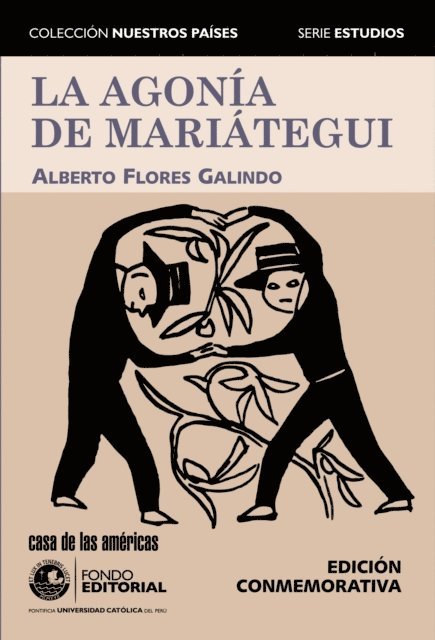
Hace cuarenta años, en noviembre de 1980, apareció la primera edición de La agonía de Mariátegui. Su publicación tuvo un impacto notable en los estudios de este valioso pensador peruano y en los debates al interior de la izquierda de su país, del mismo modo que las diferentes ediciones posteriores evidencian su continua influencia. Dentro del amplísimo campo de los estudios mariateguistas, esta obra ocupa un lugar destacado por la combinación de rigor histórico y talento narrativo desplegado por Flores Galindo, y su esfuerzo por demoler las visiones dogmáticas y ahistóricas sobre Mariátegui. Se trata de un libro significativo sobre un personaje esencial en la historia del pensamiento marxista latinoamericano. La Casa de las Américas y la Pontificia Universidad Católica del Perú, mediante sus respectivos fondos editoriales, han querido publicar una edición conmemorativa, revisada y enriquecida con materiales críticos seleccionados por el historiador Carlos Aguirre, que permitirá una mejor valoración de su aporte y vigencia
E-bok
Spanska, 2023136 kr
Läs direkt efter köp
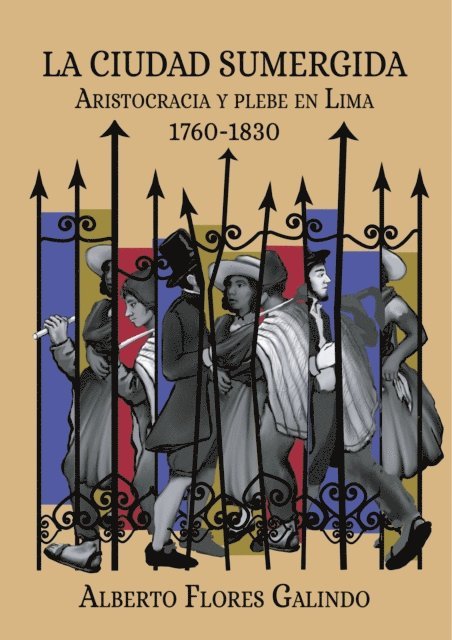
Acabamos de conmemorar los doscientos años del Perú como nación, en un contexto convulso que nos remite, en cierta forma, a la conformación de la sociedad limeña; es decir, su estratificación social y las particularidades de cada grupo que la conforma.En La ciudad sumergida. Aristocracia y plebe en Lima, 1760-1830, Alberto Flores Galindo aborda, de manera lúcida y clara, la composición de las clases sociales en un periodo que bien hubiera podido ser el caldo de cultivo para una revolución de gran magnitud, pero que, sin embargo, se vio influido por diversos sucesos que fueron dando forma a la separación de clases en la Ciudad de los Reyes, con matices raciales, pero también económicos.Con la mirada puesta en «el entramado de la vida cotidiana», Flores Galindo nos ofrece una aproximación tanto cronológica como social, al delinear las miradas, los temores y el día a día de «los de arriba» y «los de abajo». Un tema que sigue vigente y que —esperamos— seguirá abriendo paso al diálogo en el país.