Alberto L. Siani - Böcker
Visar alla böcker från författaren Alberto L. Siani. Handla med fri frakt och snabb leverans.
6 produkter
6 produkter
1 108 kr
Skickas inom 7-10 vardagar
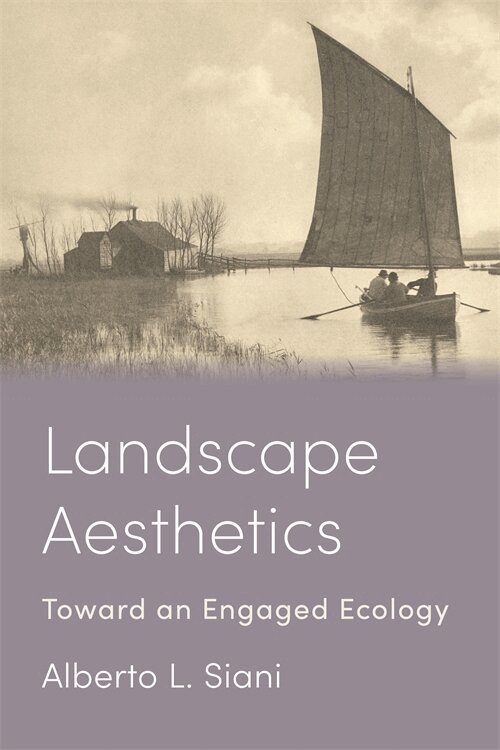
Winner, 2025 International Original Work, Italian Society for AestheticsThe notion of landscape typically seems innocuous, associated with leisure and contemplation. Likewise, aesthetics is often seen as apolitical, a matter of subjective tastes and preferences. This book challenges the common understanding of these categories as disengaged and demonstrates how uniting landscape studies and philosophical aesthetics opens new ways of addressing both the environmental crisis and the crisis of the humanities.Alberto L. Siani argues that the concept of landscape helps us overcome deeply ingrained oppositions, such as nature and culture, spirit and flesh, or the environment and the human. Landscape represents the intersection of these categories and therefore provides a helpful vantage point on contemporary predicaments that cannot be understood within dualistic frameworks. An engaged aesthetics shows that landscapes are not simply ways of seeing the world but ways of being in the world, offering practical guidance for inhabiting places ethically. Landscape Aesthetics sheds new light on issues spanning art and its interpretation, environmentalism, temporality, lived spaces, justice, education, and interdisciplinarity. Bringing together a wide range of sources across philosophy and other disciplines as well as personal experience, Siani reveals the key role of landscape and aesthetics in responding to the pressing crises we face today.
420 kr
Skickas inom 7-10 vardagar
Winner, 2025 International Original Work, Italian Society for AestheticsThe notion of landscape typically seems innocuous, associated with leisure and contemplation. Likewise, aesthetics is often seen as apolitical, a matter of subjective tastes and preferences. This book challenges the common understanding of these categories as disengaged and demonstrates how uniting landscape studies and philosophical aesthetics opens new ways of addressing both the environmental crisis and the crisis of the humanities.Alberto L. Siani argues that the concept of landscape helps us overcome deeply ingrained oppositions, such as nature and culture, spirit and flesh, or the environment and the human. Landscape represents the intersection of these categories and therefore provides a helpful vantage point on contemporary predicaments that cannot be understood within dualistic frameworks. An engaged aesthetics shows that landscapes are not simply ways of seeing the world but ways of being in the world, offering practical guidance for inhabiting places ethically. Landscape Aesthetics sheds new light on issues spanning art and its interpretation, environmentalism, temporality, lived spaces, justice, education, and interdisciplinarity. Bringing together a wide range of sources across philosophy and other disciplines as well as personal experience, Siani reveals the key role of landscape and aesthetics in responding to the pressing crises we face today.
630 kr
Skickas inom 10-15 vardagar
We encounter autonomy in virtually every area of philosophy: in its relation with rationality, personality, self-identity, authenticity, freedom, moral values and motivations, and forms of government, legal, and social institutions. At the same time, the notion of autonomy has been the subject of significant criticism. Some argue that autonomy outweighs or even endangers interpersonal or collective values, while others believe it alienates subjects who don’t possess a strong form of autonomy. These marginalized subjects and communities include persons with physical or psychological disabilities, those in dire economic conditions, LGBTI persons, ethnic and religious minorities, and women in traditional communities or households.This volume illuminates possible patterns in these criticisms of autonomy by bringing to light and critically assessing the contribution of women throughout the history of philosophy on this important subject. The essays in this collection cover a wide range of historical periods and influential female philosophers and thinkers, from medieval philosophy through to contemporary debates. Important authors whose work is considered, among many others, include Hildegard of Bingen, Margaret Cavendish, Anne Conway, Mary Wollstonecraft, Susan Moller Okin, Hélène Cixous, Iris Marion Young, and Judith Jarvis Thomson. Women Philosophers on Autonomy will enlighten and inform contemporary debates on autonomy by bringing into the conversation previously neglected female perspectives from throughout history.
2 088 kr
Skickas inom 10-15 vardagar
This book reclaims Hegel’s notion of the “end of art”—or, more precisely, of “art’s past character”—not just as a piece of the history of philosophy but as a living critical and interpretive methodology. It addresses the presence of the past character of art in both Hegel and contemporary philosophy and aesthetics. The book’s innovative contribution lies in unifying the Hegelian thesis with discussions of contemporary art and philosophy. The author not only offers a Hegelian exegesis but also applies the idea of the past character of art to themes that are related to both Hegel’s philosophy, such as the French Revolution and the modern state, Kantian aesthetics, and religion and the sacred space disclosed for art, and going beyond Hegel, such as Celan's poetry, Gramsci's criticism of Croce, human rights, and even the grunge rock band Pearl Jam. Conversely, such non-Hegelian explorations will help enlighten what may look like a specific thread of Hegel’s aesthetics, but can be used to shed light on some core motives of his philosophy. The author’s interpretation of art’s past character reclaims the full value, attractiveness, and philosophical soundness of Hegel’s thesis, while rejecting its interpretation in terms of a complete dissolution of the aesthetic element into the philosophical one. Hegel and the Present of Art’s Past Character will be of interest to scholars and advanced students working on Hegel, philosophy of art and aesthetics, history of philosophy, political philosophy, and art theory.
576 kr
Skickas inom 10-15 vardagar
This book reclaims Hegel’s notion of the “end of art”—or, more precisely, of “art’s past character”—not just as a piece of the history of philosophy but as a living critical and interpretive methodology. It addresses the presence of the past character of art in both Hegel and contemporary philosophy and aesthetics. The book’s innovative contribution lies in unifying the Hegelian thesis with discussions of contemporary art and philosophy. The author not only offers a Hegelian exegesis but also applies the idea of the past character of art to themes that are related to both Hegel’s philosophy, such as the French Revolution and the modern state, Kantian aesthetics, and religion and the sacred space disclosed for art, and going beyond Hegel, such as Celan's poetry, Gramsci's criticism of Croce, human rights, and even the grunge rock band Pearl Jam. Conversely, such non-Hegelian explorations will help enlighten what may look like a specific thread of Hegel’s aesthetics, but can be used to shed light on some core motives of his philosophy. The author’s interpretation of art’s past character reclaims the full value, attractiveness, and philosophical soundness of Hegel’s thesis, while rejecting its interpretation in terms of a complete dissolution of the aesthetic element into the philosophical one. Hegel and the Present of Art’s Past Character will be of interest to scholars and advanced students working on Hegel, philosophy of art and aesthetics, history of philosophy, political philosophy, and art theory.
2 088 kr
Skickas inom 10-15 vardagar
We encounter autonomy in virtually every area of philosophy: in its relation with rationality, personality, self-identity, authenticity, freedom, moral values and motivations, and forms of government, legal, and social institutions. At the same time, the notion of autonomy has been the subject of significant criticism. Some argue that autonomy outweighs or even endangers interpersonal or collective values, while others believe it alienates subjects who don’t possess a strong form of autonomy. These marginalized subjects and communities include persons with physical or psychological disabilities, those in dire economic conditions, LGBTI persons, ethnic and religious minorities, and women in traditional communities or households. This volume illuminates possible patterns in these criticisms of autonomy by bringing to light and critically assessing the contribution of women throughout the history of philosophy on this important subject. The essays in this collection cover a wide range of historical periods and influential female philosophers and thinkers, from medieval philosophy through to contemporary debates. Important authors whose work is considered, among many others, include Hildegard of Bingen, Margaret Cavendish, Anne Conway, Mary Wollstonecraft, Susan Moller Okin, Hélène Cixous, Iris Marion Young, and Judith Jarvis Thomson. Women Philosophers on Autonomy will enlighten and inform contemporary debates on autonomy by bringing into the conversation previously neglected female perspectives from throughout history.