
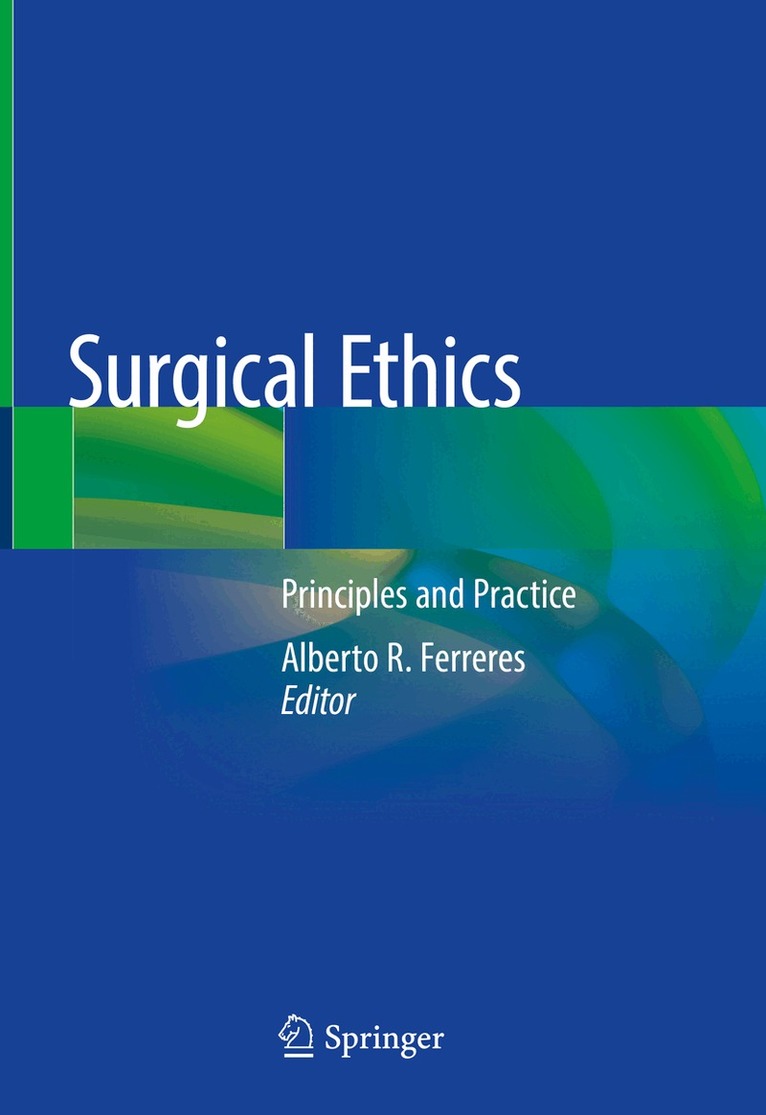
This book encompasses the theoretical and practical aspects of surgical ethics, with a focus on the application of ethical standards to everyday surgical practice and the resolution of ethical conflicts in the surgical arena. It provides surgeons (both prospective and practicing) in the different surgical fields with deep, practical insights into the topic.A 21st century surgeon requires complete competence (superb clinical skills, expert surgical decision-making and outstanding performance and technical skills) as well as solid ethical values. Ethics are placed at the core of surgical professionalism, so surgeons must be not only proficient and expert but also ethically and morally reliable. Surgical decision-making can be considered as a two-step process: the “how to treat” aspect is a matter of surgical science, while “why to treat” issues are a matter of surgical ethics and are based on ethical principles. As such, every surgeon should have a moral compass to guide his or her actions, always placing the welfare and rights of the patients above their own. The book provides invaluable background and insights for solving the ethical conflicts surgeons around the globe encounter in their daily practice.Each chapter will also include features such as key point summaries in the beginning of the chapters, explanatory boxes, a glossary and suggested readings.Surgical Ethics - Principles and Practice is an authoritative work in the field designed for experienced surgeons, surgical residents, and fellows, all of whom are confronted with ethics issues and conflicts in practice.
This book encompasses the theoretical and practical aspects of surgical ethics, with a focus on the application of ethical standards to everyday surgical practice and the resolution of ethical conflicts in the surgical arena. It provides surgeons (both prospective and practicing) in the different surgical fields with deep, practical insights into the topic. A 21st century surgeon requires complete competence (superb clinical skills, expert surgical decision-making and outstanding performance and technical skills) as well as solid ethical values. Ethics are placed at the core of surgical professionalism, so surgeons must be not only proficient and expert but also ethically and morally reliable. Surgical decision-making can be considered as a two-step process: the “how to treat” aspect is a matter of surgical science, while “why to treat” issues are a matter of surgical ethics and are based on ethical principles. As such, every surgeon should have a moral compass to guide his or her actions, always placing the welfare and rights of the patients above their own. The book provides invaluable background and insights for solving the ethical conflicts surgeons around the globe encounter in their daily practice.Each chapter will also include features such as key point summaries in the beginning of the chapters, explanatory boxes, a glossary and suggested readings. Surgical Ethics - Principles and Practice is an authoritative work in the field designed for experienced surgeons, surgical residents, and fellows, all of whom are confronted with ethics issues and conflicts in practice.
Health care decision-making requires answers to two fundamental questions: “How should we treat?”, which pertains to scientific and medical knowledge, and “Why should we treat?”, which highlights the ethical foundations of therapeutic decisions by placing the patient at the center of the care provided.This book aims to offer more than a basic understanding of ethics and its application to medical and surgical practice. Its purpose is to foster greater awareness and sensitivity among its target readership regarding ethical issues encountered in everyday clinical settings, while equipping them with a practical framework to address conflicts and dilemmas. In addition, the book explores the full scope of medical professionalism from the perspective of altruism, in contrast to self-interest.The content encompasses not only a robust theoretical foundation in ethics but also 100 clinical cases drawn from the authors’ daily practice and reflecting patient care experiences worldwide. The authors consider that Medical and Surgical Ethics must rest on solid ethical concepts and include a working knowledge of Medical Law and Human Rights. The cases and vignettes are designed to stimulate discussion and can serve as a framework for role‑playing exercises, pro/con debates, and educational assignments, thereby facilitating the development of competencies and learning outcomes. They may also be used as catalysts for reflection on one’s own clinical experience.Ethics in Medicine and Surgery – A Case‑Based Framework for Teaching and Learning seeks to cultivate, in new generations of physicians, surgeons, trainees, and medical students, the knowledge, skills, attitudes, and virtues regarded as essential to guiding professional conduct and ethical decision‑making in everyday clinical practice.
This book encompasses the theoretical and practical aspects of surgical ethics, with a focus on the application of ethical standards to everyday surgical practice and the resolution of ethical conflicts in the surgical arena. It provides surgeons (both prospective and practicing) in the different surgical fields with deep, practical insights into the topic.A 21st century surgeon requires complete competence (superb clinical skills, expert surgical decision-making and outstanding performance and technical skills) as well as solid ethical values. Ethics are placed at the core of surgical professionalism, so surgeons must be not only proficient and expert but also ethically and morally reliable. Surgical decision-making can be considered as a two-step process: the “how to treat” aspect is a matter of surgical science, while “why to treat” issues are a matter of surgical ethics and are based on ethical principles. As such, every surgeon should have a moral compass to guide his or her actions, always placing the welfare and rights of the patients above their own. The book provides invaluable background and insights for solving the ethical conflicts surgeons around the globe encounter in their daily practice.Each chapter will also include features such as key point summaries in the beginning of the chapters, explanatory boxes, a glossary and suggested readings.Surgical Ethics - Principles and Practice is an authoritative work in the field designed for experienced surgeons, surgical residents, and fellows, all of whom are confronted with ethics issues and conflicts in practice.
This book encompasses the theoretical and practical aspects of surgical ethics, with a focus on the application of ethical standards to everyday surgical practice and the resolution of ethical conflicts in the surgical arena. It provides surgeons (both prospective and practicing) in the different surgical fields with deep, practical insights into the topic. A 21st century surgeon requires complete competence (superb clinical skills, expert surgical decision-making and outstanding performance and technical skills) as well as solid ethical values. Ethics are placed at the core of surgical professionalism, so surgeons must be not only proficient and expert but also ethically and morally reliable. Surgical decision-making can be considered as a two-step process: the “how to treat” aspect is a matter of surgical science, while “why to treat” issues are a matter of surgical ethics and are based on ethical principles. As such, every surgeon should have a moral compass to guide his or her actions, always placing the welfare and rights of the patients above their own. The book provides invaluable background and insights for solving the ethical conflicts surgeons around the globe encounter in their daily practice.Each chapter will also include features such as key point summaries in the beginning of the chapters, explanatory boxes, a glossary and suggested readings. Surgical Ethics - Principles and Practice is an authoritative work in the field designed for experienced surgeons, surgical residents, and fellows, all of whom are confronted with ethics issues and conflicts in practice.
Health care decision-making requires answers to two fundamental questions: “How should we treat?”, which pertains to scientific and medical knowledge, and “Why should we treat?”, which highlights the ethical foundations of therapeutic decisions by placing the patient at the center of the care provided.This book aims to offer more than a basic understanding of ethics and its application to medical and surgical practice. Its purpose is to foster greater awareness and sensitivity among its target readership regarding ethical issues encountered in everyday clinical settings, while equipping them with a practical framework to address conflicts and dilemmas. In addition, the book explores the full scope of medical professionalism from the perspective of altruism, in contrast to self-interest.The content encompasses not only a robust theoretical foundation in ethics but also 100 clinical cases drawn from the authors’ daily practice and reflecting patient care experiences worldwide. The authors consider that Medical and Surgical Ethics must rest on solid ethical concepts and include a working knowledge of Medical Law and Human Rights. The cases and vignettes are designed to stimulate discussion and can serve as a framework for role‑playing exercises, pro/con debates, and educational assignments, thereby facilitating the development of competencies and learning outcomes. They may also be used as catalysts for reflection on one’s own clinical experience.Ethics in Medicine and Surgery – A Case‑Based Framework for Teaching and Learning seeks to cultivate, in new generations of physicians, surgeons, trainees, and medical students, the knowledge, skills, attitudes, and virtues regarded as essential to guiding professional conduct and ethical decision‑making in everyday clinical practice.