Aldo Schiavone - Böcker
Visar alla böcker från författaren Aldo Schiavone. Handla med fri frakt och snabb leverans.
8 produkter
8 produkter
680 kr
Skickas
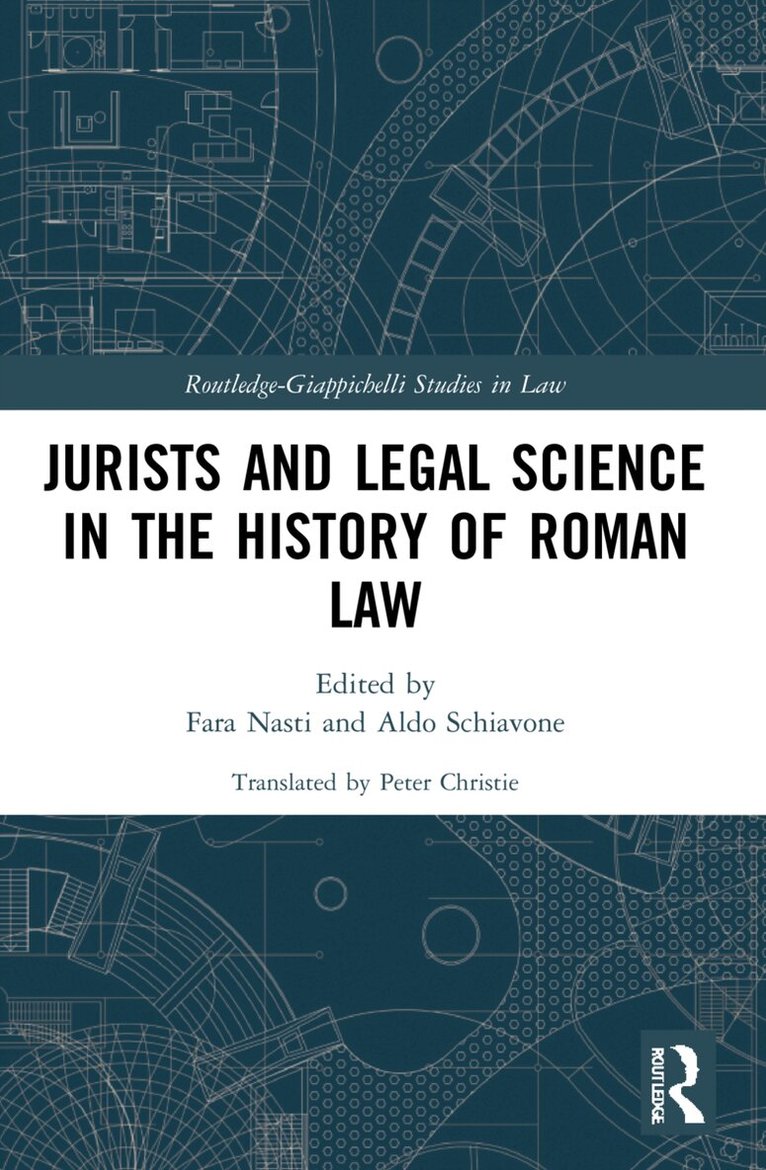
This book provides a new approach to the study of the History of Roman Law. It collects the first results of the European Research Council Project, Scriptores iuris Romani - dedicated to a new collection of the texts of Roman jurisprudence, highlighting important methodological issues, together with innovative reconstructions of the profiles of some ancient jurists and works. Jurists were great protagonists of the history of Rome, both as producers and interpreters of law, since the Republican Age and as collaborators of the principes during the Empire. Nevertheless, their role has been underestimated by modern historians and legal experts for reasons connected to the developments of Modern Law in England and in Continental Europe. This book aims to address this imbalance. It presents an advanced paradigm in considering the most important aspects of Roman law: the Justinian Digesta, and other juridical late antique anthologies. The work offers an historiographic model which overturns current perspectives and makes way for a different path for legal and historical studies. Unlike existing literature, the focus is not on the Justinian Codification, but on the individualities of ancient Roman Jurists. As such, it presents the actual legal thought of its experts and authors: the ancient iuris prudentes. The book will be of interest to researchers and academics in Classics, Ancient History, History of Law, and contemporary legal studies.
352 kr
Skickas inom 10-15 vardagar
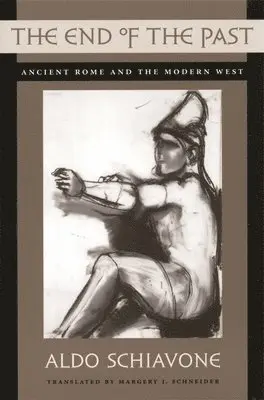
This searching interpretation of past and present addresses fundamental questions about the fall of the Roman Empire. Why did ancient culture, once so strong and rich, come to an end? Was it destroyed by weaknesses inherent in its nature? Or were mistakes made that could have been avoided—was there a point at which Greco-Roman society took a wrong turn? And in what ways is modern society different?Western history is split into two discontinuous eras, Aldo Schiavone tells us: the ancient world was fundamentally different from the modern one. He locates the essential difference in a series of economic factors: a slave-based economy, relative lack of mechanization and technology, the dominance of agriculture over urban industry. Also crucial are aspects of the ancient mentality: disdain for manual work, a preference for transcending (rather than transforming) nature, a basic belief in the permanence of limits.Schiavone’s lively and provocative examination of the ancient world, “the eternal theater of history and power,” offers a stimulating opportunity to view modern society in light of the experience of antiquity.
552 kr
Skickas inom 7-10 vardagar
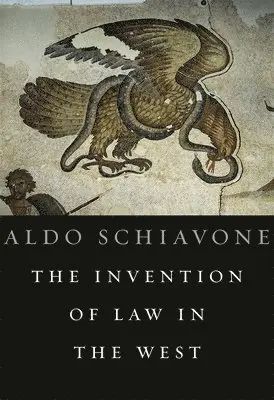
Law is a specific form of social regulation distinct from religion, ethics, and even politics, and endowed with a strong and autonomous rationality. Its invention, a crucial aspect of Western history, took place in ancient Rome. Aldo Schiavone, a world-renowned classicist, reconstructs this development with clear-eyed passion, following its course over the centuries, setting out from the earliest origins and moving up to the threshold of Late Antiquity.The invention of Western law occurred against the backdrop of the Roman Empire's gradual consolidation—an age of unprecedented accumulation of power which transformed an archaic predisposition to ritual into an unrivaled technology for the control of human dealings. Schiavone offers us a closely reasoned interpretation that returns us to the primal origins of Western legal machinery and the discourse that was constructed around it—formalism, the pretense of neutrality, the relationship with political power. This is a landmark work of scholarship whose influence will be felt by classicists, historians, and legal scholars for decades.
175 kr
Skickas inom 7-10 vardagar
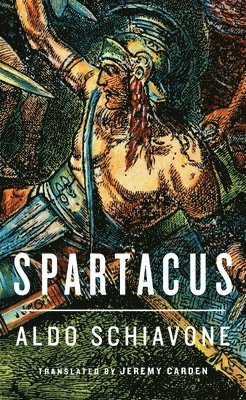
Spartacus (109?–71 BCE), the slave who rebelled against Rome, has been a source of endless fascination: the subject of myth-making in his own time, and of movie-making in ours. Hard facts about the man have always yielded to romanticized tales and mystifications. In this riveting, compact account, Aldo Schiavone rescues Spartacus from the murky regions of legend and brings him squarely into the arena of serious history.Schiavone transports us to Italy in the first century BCE, where the pervasive institution of slavery dominates all aspects of Roman life. In this historic landscape, carefully reconstructed by the author, we encounter Spartacus, who is enslaved after deserting from the Roman army to avoid fighting against his native Thrace. Imprisoned in Capua and trained as a gladiator, he leads an uprising that will shake the empire to its foundations.While the grandeur of the Spartacus story has always been apparent, its political significance has been less clear. What were his ambitions? Often depicted as the leader of a class rebellion that was fierce in intent but ragtag in makeup and organization, Spartacus emerges here in a very different light: the commander of an army whose aim was to incite Italy to revolt against Rome and to strike at the very heart of the imperial system. Surprising, persuasive, and highly original, Spartacus challenges the lore and illuminates the reality of a figure whose achievements, and whose ultimate defeat, are more extraordinary and moving than the fictions we make from them.
385 kr
Skickas inom 10-15 vardagar
One of the world’s foremost historians of Western political and legal thought proposes a bold new model for thinking about equality at a time when its absence threatens democracies everywhere.How much equality does democracy need to survive? Political thinkers have wrestled with that question for millennia. Aristotle argued that some are born to command and others to obey. Antiphon believed that men, at least, were born equal. Later the Romans upended the debate by asking whether citizens were equals not in ruling but in standing before the law. Aldo Schiavone guides us through these and other historical thickets, from the first democracy to the present day, seeking solutions to the enduring tension between democracy and inequality.Turning from Antiquity to the modern world, Schiavone shows how the American and the French revolutions attempted to settle old debates, introducing a new way of thinking about equality. Both the French revolutionaries and the American colonists sought democracy and equality together, but the European tradition (British Labour, Russian and Eastern European Marxists, and Northern European social democrats) saw formal equality—equality before the law—as a means of obtaining economic equality. The American model, in contrast, adopted formal equality while setting aside the goal of economic equality.The Pursuit of Equality in the West argues that the United States and European models were compatible with industrial-age democracy, but neither suffices in the face of today’s technological revolution. Opposing both atomization and the obsolete myths of the collective, Schiavone thinks equality anew, proposing a model founded on neither individualism nor the erasure of the individual but rather on the universality of the impersonal human, which coexists with the sea of differences that makes each of us unique.
292 kr
Kommande
The life of one of history’s most powerful women, retold through seven crucial episodes that shook the ancient worldCleopatra: A Woman of Power is a major new biography of one of history’s most misunderstood figures. Far from the common portrayal of her as seductress and betrayer, Cleopatra emerges as a brilliant strategist and visionary leader determined to reshape the balance of power between Rome and the Hellenistic East.In a propulsive historical narrative, Aldo Schiavone recovers Cleopatra the woman and queen, a complex individual who was seductive not just for her beauty but for her extraordinary force of personality. Schiavone reconstructs her story through seven pivotal moments in her life: the night before the battle of Actium, which sets the stage; her meeting with Julius Caesar in Alexandria; the day of Caesar’s assassination; her first meeting with Antony on the banks of the Cydnus River; her fateful alliance with him in Antioch; the day of Actium; and her encounter with the victorious Octavian and subsequent suicide in 30 BC. Schiavone reveals a woman willing to put everything on the line to achieve her aims. Had she been successful, she would have turned the political and cultural axis of Rome permanently to the East, placing her at the center of a new nexus of power—and possibly changing the course of history.Monumental in scope, Cleopatra: A Woman of Power paints a riveting portrait of a daring ruler who adroitly navigated the shifting alliances of Rome and the ancient Mediterranean, and whose ruinous downfall was born of her ambition to remake the world.
638 kr
Skickas inom 10-15 vardagar
This book provides a new approach to the study of the History of Roman Law. It collects the first results of the European Research Council Project, Scriptores iuris Romani - dedicated to a new collection of the texts of Roman jurisprudence, highlighting important methodological issues, together with innovative reconstructions of the profiles of some ancient jurists and works. Jurists were great protagonists of the history of Rome, both as producers and interpreters of law, since the Republican Age and as collaborators of the principes during the Empire. Nevertheless, their role has been underestimated by modern historians and legal experts for reasons connected to the developments of Modern Law in England and in Continental Europe. This book aims to address this imbalance. It presents an advanced paradigm in considering the most important aspects of Roman law: the Justinian Digesta, and other juridical late antique anthologies. The work offers an historiographic model which overturns current perspectives and makes way for a different path for legal and historical studies. Unlike existing literature, the focus is not on the Justinian Codification, but on the individualities of ancient Roman Jurists. As such, it presents the actual legal thought of its experts and authors: the ancient iuris prudentes. The book will be of interest to researchers and academics in Classics, Ancient History, History of Law, and contemporary legal studies.
239 kr
Skickas inom 7-10 vardagar
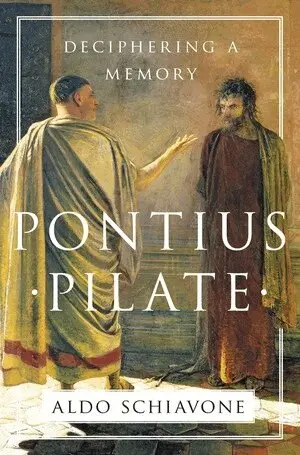
The only historic figure outside the early Christian tradition to whom the Gospels ascribe a dialogue with Jesus is the first-century Roman prefect Pontius Pilate. Presiding over the trial and execution of Jesus, Pilate is a figure who has straddled history and legend for over two thousand years. Now, Aldo Schiavone presents a comprehensive, revisionist biography of Pilate that meticulously reconstructs the social, religious and political context in which his fateful encounter with Jesus took place.Drawing on a wealth of original research, Schiavone weaves together the sources, from epigraphs to the Gospels, from Josephus to Tacitus and Philon, to create a portrait that approaches its subject as if for the first time, without any other intent than to try to explain what happened.