Alejandro García-Montón - Böcker
Visar alla böcker från författaren Alejandro García-Montón. Handla med fri frakt och snabb leverans.
3 produkter
3 produkter
2 159 kr
Skickas inom 10-15 vardagar
This book explains how Genoese entrepreneurs transformed the structures of global trade during the second half of the seventeenth century. The author reconstructs the business network built by the Genoese merchant Domenico Grillo between the 1650s and the 1680s. Grillo’s business interests stretched from the Mediterranean to Pacific South America, traversing and joining the Spanish, Dutch, and English Atlantics. He and his associates created a new business model that was to be emulated by Dutch, French, and English traders in subsequent decades: the monopolistic asientos for the exploitation of the trans-imperial and intra-American slave trade to Spanish America. Offering a connected history of capitalism across trans-continental geographies and different empires, this book challenges established views of a period which has traditionally been interrogated from a northern European mercantile perspective. Cutting across the histories of the slave trade in the Atlantic world, early modern capitalism, and early modern empire, this study has much to offer to students and scholars interested in the agents, economic practices, and geographies of trade that do not easily fit into and therefore disrupt the traditional narratives of the Rise of the West.Chapter 6 of this book is freely available as a downloadable Open Access PDF under a Creative Commons Attribution-Non Commercial-No Derivatives 4.0 license available at http://www.taylorfrancis.com
590 kr
Skickas inom 10-15 vardagar
This book explains how Genoese entrepreneurs transformed the structures of global trade during the second half of the seventeenth century. The author reconstructs the business network built by the Genoese merchant Domenico Grillo between the 1650s and the 1680s. Grillo’s business interests stretched from the Mediterranean to Pacific South America, traversing and joining the Spanish, Dutch, and English Atlantics. He and his associates created a new business model that was to be emulated by Dutch, French, and English traders in subsequent decades: the monopolistic asientos for the exploitation of the trans-imperial and intra-American slave trade to Spanish America. Offering a connected history of capitalism across trans-continental geographies and different empires, this book challenges established views of a period which has traditionally been interrogated from a northern European mercantile perspective. Cutting across the histories of the slave trade in the Atlantic world, early modern capitalism, and early modern empire, this study has much to offer to students and scholars interested in the agents, economic practices, and geographies of trade that do not easily fit into and therefore disrupt the traditional narratives of the Rise of the West.Chapter 6 of this book is freely available as a downloadable Open Access PDF under a Creative Commons Attribution-Non Commercial-No Derivatives 4.0 license available at http://www.taylorfrancis.com
Del 21 - Library of Economic History
Hydra of Business and Men: The Habsburg Asiento de Negros in Structuring the European Transatlantic Slave Trade
Inbunden, Engelska, 2025
1 613 kr
Skickas inom 3-6 vardagar
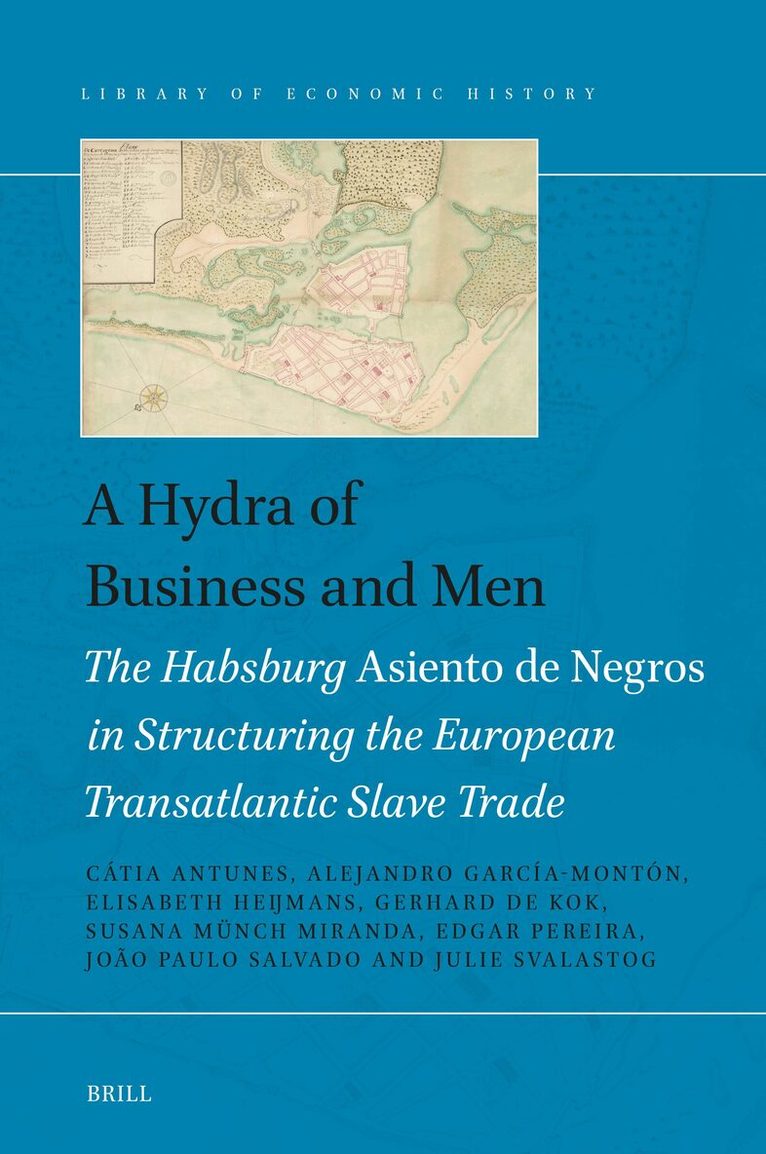
This book offers a historical and historiographical analysis of the Spanish asiento de negros, a contract between the Spanish Monarchy and private parties to introduce specific number of enslaved Africans to Spanish America. As the Spanish American market was the largest single market for enslaved people prior to 1720, studying this colonial contract is essential for understanding the development of the most significant colonial contract of the long 17th century. The asiento framed the European transatlantic slave trade for nearly two centuries and shaped much of the political economy of the Spanish Atlantic empire.This book is unique in providing the first comprehensive study of the asiento since George Scelle’s 1906 work (La traite négrière aux Indes de Castille. Contracts et traités d’assiento, 2 vols.). Unlike Scelle, who focused on legal frameworks and presented the monarchy’s perspective, this book examines the asientistas themselves, offering insights into their business decisions and organizations. It concentrates on the period that gave rise to the idea of an asiento and the Habsburg-era asientos (1595–1713), preceding the so-called Bourbon reforms.