Aleksandra Cichocka – författare
Visar alla böcker från författaren Aleksandra Cichocka. Handla med fri frakt och snabb leverans.
7 produkter
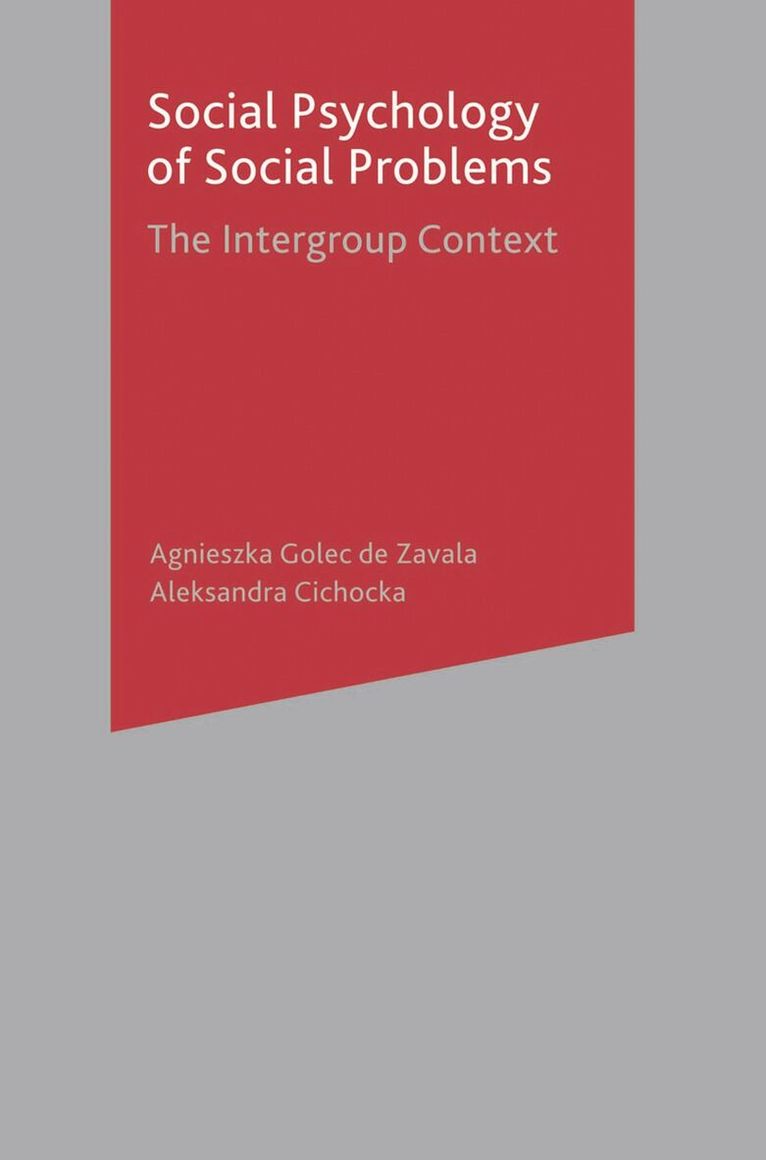
Social Psychology of Social Problems
The Intergroup Context
Av Agnieszka Golec de Zavala, Aleksandra Cichocka m. fl.
Häftad, 2012
611 kr
Lägg i varukorg
Why do we protest? What compels us to participate in crowd violence? Can gender discrimination in the workplace be explained in psychological terms?From terrorist attacks to political uprisings, the social problems that have shaped the beginning of the new millenium can be explained using the …
Social Psychology of Social Problems
The Intergroup Context
Av Agnieszka Golec de Zavala, Aleksandra Cichocka
E-bok, 2020
667 kr
Lägg i varukorg
Why do we protest? What compels us to participate in crowd violence? Can gender discrimination in the workplace be explained in psychological terms? From terrorist attacks to political uprisings, the social problems that have shaped the beginning of the new millenium can be explained using the …
Psychology of Conspiracy
Av Michal Bilewicz, Aleksandra Cichocka m. fl.
Inbunden, 2015
2433 kr
Lägg i varukorg
Why did the third World Trade Center building (WTC7) collapse on September 11th , even though it was not struck by any aircraft?Why did Princess Diana’s "drunk" driver look sober as he climbed into the car minutes before their deadly accident? Could a slender birch tree really have caused the plane …
Psychology of Conspiracy
Av Michal Bilewicz, Aleksandra Cichocka m. fl.
Häftad, 2015
712 kr
Lägg i varukorg
Why did the third World Trade Center building (WTC7) collapse on September 11th , even though it was not struck by any aircraft?Why did Princess Diana’s "drunk" driver look sober as he climbed into the car minutes before their deadly accident? Could a slender birch tree really have caused the plane …
Psychology of Conspiracy
Av Wiktor Soral, Aleksandra Cichocka m. fl.
E-bok, 2015
842 kr
Lägg i varukorg
Why did the third World Trade Center building (WTC7) collapse on September 11th , even though it was not struck by any aircraft? Why did Princess Diana’s "drunk" driver look sober as he climbed into the car minutes before their deadly accident? Could a slender birch tree really have caused the …
Psychology of Conspiracy
Av Wiktor Soral, Aleksandra Cichocka m. fl.
E-bok, 2015
842 kr
Lägg i varukorg
Why did the third World Trade Center building (WTC7) collapse on September 11th , even though it was not struck by any aircraft? Why did Princess Diana’s "drunk" driver look sober as he climbed into the car minutes before their deadly accident? Could a slender birch tree really have caused the …
Just Bureaucracy
Managing Claims Fairly in the Modern Welfare State
Av Aleksandra Cichocka, Simon Halliday m. fl.
Häftad, 2027
391 kr
Kommande
Every year, millions of people claim Universal Credit and disability benefits, but far fewer feel justly treated. Just Bureaucracy asks why, and what can be done about it. Drawing on empirical research with thousands of welfare claimants, it reveals what justice actually means to the people who …